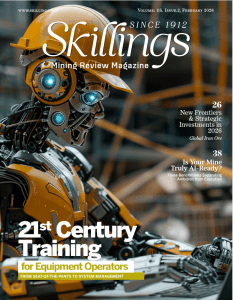
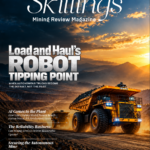
Skillings Mining Review February 2020: February 2020 reflected both the global ambitions and the political flashpoints shaping the mining industry at the dawn of a turbulent year. In the Americas, diversification and regional expansion dominated headlines. A Sudbury mining equipment manufacturer announced plans to enter the Mexican market, while Kogi secured its fourth iron ore lease in Nigeria, pointing to rising African opportunities. Peru also looked promising, with BBVA projecting increased mining investment for 2020 before the anticipated slowdown later in the year.

Environmental and regulatory issues, however, cast long shadows. In the U.S., Representative Betty McCollum introduced legislation to ban copper-nickel mining near the Boundary Waters, intensifying debates over balancing resource extraction with environmental stewardship. Similarly, institutional divestment from coal gained momentum, while MSHA pledged tighter oversight on contractor safety and compliance.
The private sector’s pivot toward innovation was evident. Apple pushed its ‘Daisy’ recycling robot as part of broader circular economy efforts, while miners and utilities increasingly embraced renewables-plus-storage for decarbonization as costs became competitive. Legal disputes also surfaced, with companies fighting for gold claim rights linked to the Pogo mine sale.
The equipment sector showcased rapid transformation. The world’s first production D11 dozer entered service, Hexagon acquired BMT to expand its Smart Mine solutions, and new breakthroughs in remote diagnostics, smart mining operations, and manufactured sand signaled the growing role of digitalization and sustainability.
Globally, a wave of projects and policy moves shifted momentum. Russian waste dumps were re-evaluated as sources of rare earths and gold, and India’s NMDC prepared to mine a massive diamond deposit. In South America, Brazil moved to allow mining on Indigenous lands, sparking international scrutiny, while in North America, the Minnesota Court rejected major PolyMet permits, further delaying one of the region’s most contentious projects. Meanwhile, geopolitical trade reshaped supply chains: the U.S. agreed to sell rare earths to China under a trade deal, even as Core Gold resisted a takeover bid by Titan.
The statistics of the month painted a picture of resilience. Raw steel production and November 2019 crude steel output offered benchmarks for industry performance heading into the Covid-19 era, before widespread lockdowns began altering the landscape.

The February 2020 edition captures an industry at a pivot: aggressively innovating and globalizing, while simultaneously confronting intensifying environmental, political, and regulatory constraints.