Home › Mining
Mining: What It Is, How It Works, and Why It Matters
By Skillings Mining Review Editorial Team · Reviewed for technical accuracy · Updated July 13, 2026 · 14 min read
Mining is the process of locating, extracting, and processing valuable minerals, metals, coal, and other geological materials from the earth's crust. It supplies the raw inputs that agriculture and laboratories cannot provide on their own — the iron in steel, the copper in wiring, the lithium in batteries, and the aggregate in concrete. This guide explains how mining works, the methods used at every stage, and the economic and environmental factors that shape the modern industry.
What Is Mining?
In technical terms, a mineral is a naturally occurring inorganic substance with a defined chemical composition, while an ore, by contrast, is a mineral-bearing rock that can be mined profitably. Put simply, mining is the set of activities — prospecting, exploration, extraction, and processing — used to turn a mineral deposit into a usable commodity. In addition, the term is sometimes extended to cover other non-renewable resource extraction, such as oil, natural gas, and groundwater, although this guide focuses specifically on solid mineral and metal extraction.
Overall, two things distinguish a workable mineral deposit from an ordinary rock formation: concentration and accessibility. Specifically, a deposit must contain enough of a valuable mineral, at a shallow enough depth or favorable enough geometry, so that the cost of extraction is lower than the value of what's recovered. Otherwise, the deposit simply isn't worth mining, regardless of how much of the mineral it contains.
A Brief History of Mining
People have extracted stone and metal from the ground since prehistoric times. Initially, early societies mined flint for tools, and over time they progressed to copper, gold, silver, and eventually iron as smelting techniques matured. In fact, some of the earliest known mining sites — including flint shafts in Europe and ochre mines in southern Africa — date back tens of thousands of years.
For millennia, mining methods changed slowly, relying mainly on hand tools, fire-setting, and simple hoists. Eventually, the introduction of black powder, and later dynamite and ammonium-nitrate blasting agents, transformed rock breaking altogether. Similarly, steam power solved the persistent problem of water flooding underground workings, and as a result, the 20th century brought mechanized drilling, electric haulage, and, eventually, the massive trucks and shovels that define large-scale surface mining today.
Types of Mining
Mining methods are chosen based on a deposit's depth, shape, grade, and the strength of the surrounding rock. The four broad categories are described below.
1. Surface Mining
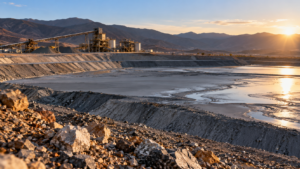
Surface mining accounts for the majority of the world's mineral production by volume. Typically, it's used when a deposit lies close to the surface, since this makes it cheaper to remove the overlying waste rock (overburden) than to tunnel underground.
- Open-pit mining — Ore is removed in a series of benches, creating a stepped pit that deepens over time. Common for copper, iron ore, and gold.
- Strip mining — Long, narrow strips of overburden are removed sequentially, most often for shallow, flat coal seams.
- Quarrying — The extraction of dimension stone (granite, marble, limestone) or aggregate materials like sand and gravel.
2. Underground Mining
When a deposit is too deep to strip economically, operators instead go underground. Generally, vertical shafts or inclined ramps provide access, with horizontal drifts driven out toward the ore at regular working levels. From there, ore is broken loose in openings called stopes and hauled to the surface via skips, conveyors, or trucks. As a result, underground mining is more selective and generates less waste rock per ton of ore; however, production rates per worker are typically far lower than in surface operations.
3. Placer Mining
Placer mining, by comparison, recovers minerals — most often gold, tin, or diamonds — that have weathered out of their original rock and settled in riverbeds, beach sands, or glacial deposits. Because these minerals are already loose and often dense, they can be separated using gravity-based methods such as sluicing, panning, or dredging rather than drilling and blasting.
4. In-Situ and Solution Mining
In-situ leaching, on the other hand, dissolves a soluble mineral — potash, some uranium ores, and certain copper deposits — directly underground using a chemical solution, then pumps the resulting liquid to the surface for processing. Consequently, this method avoids the need to excavate rock at all, which reduces surface disturbance, though it does require careful groundwater management.
The Mine Life Cycle
A mine passes through several distinct stages from discovery to closure:
| Stage | What Happens |
|---|---|
| Prospecting | Geologic, geophysical, and geochemical surveys identify anomalies that may indicate a deposit. |
| Exploration | Core drilling and trenching define the size, shape, and grade of a prospect. |
| Feasibility Study | Engineers and economists assess whether the deposit can be mined profitably. |
| Development | Access roads, shafts, or pit infrastructure are built; the ore body is prepared for extraction. |
| Production | Ore and waste are systematically extracted, hauled, and processed. |
| Closure & Reclamation | Once mining ends, the site is stabilized, waste facilities are secured, and land is restored for future use. |
Equipment and Unit Operations
Regardless of method, most hard-rock mining relies on four core unit operations: drilling, blasting, loading, and hauling. First, rotary and percussion drills bore blastholes in carefully engineered patterns. Next, ammonium-nitrate-based explosives fragment the rock, after which large hydraulic or electric shovels load the broken material into haul trucks that can carry well over 300 tons per trip. In addition, underground operations require ventilation, ground support (rock bolts and shotcrete), and specialized haulage such as conveyors and rail systems.
Mining Economics: Grade, Reserves, and Cutoff
Not every mineral in the ground, in fact, is worth mining. The grade of a deposit is the concentration of the valuable mineral it contains, while the cutoff grade is the minimum grade at which extraction remains profitable given current costs and commodity prices. Accordingly, material above the cutoff is classified as ore, whereas everything else is waste. Because commodity prices and extraction costs shift over time, a deposit's classification as ore or waste can therefore change even without any new drilling: for example, a rise in metal prices can turn previously uneconomic mineral into profitable ore, while a price collapse can do the reverse.
Environmental and Safety Considerations
Environmental Impact
Mining inevitably disturbs land, and as a result it generates large volumes of waste rock and tailings. If these materials are poorly managed, they can, in turn, contribute to habitat loss, water contamination, and acid mine drainage. Because of this risk, regulatory frameworks in most major mining jurisdictions now require environmental impact assessments, tailings management plans, and funded closure and reclamation commitments before a mine can even begin operating. Even so, enforcement varies significantly between countries, and it therefore remains an ongoing policy challenge, particularly around artisanal and small-scale operations.
Worker Safety and Regulation
Occupational safety, meanwhile, has also improved substantially thanks to mechanization, better ventilation, and modern ground-support techniques. Nevertheless, underground mining in particular still carries risks from rockfalls, gas exposure, and dust-related respiratory illness. To address these hazards, regulatory bodies such as the U.S. Mine Safety and Health Administration set exposure limits and inspection requirements, and as a result, fatality rates in regulated jurisdictions have fallen considerably over the past several decades.
The Global Mining Industry Today
Today, modern mining is dominated by large, often multinational companies, alongside a substantial population of junior exploration firms that rely on equity financing to fund drilling programs. Meanwhile, key producing regions include Australia, Canada, Chile, South Africa, the United States, and China, and demand is increasingly driven by materials needed for clean-energy technology — lithium, cobalt, nickel, copper, and rare earth elements chief among them. As global electrification accelerates, moreover, metal demand is projected to grow substantially faster than it has historically. Consequently, the industry is placing renewed emphasis on responsible sourcing, recycling, and more efficient extraction techniques.
Frequently Asked Questions
What is mining?
Mining is the process of locating and extracting valuable minerals, metals, coal, and other geological materials from the earth so they can be processed and used in manufacturing, construction, energy production, and technology.
What are the main types of mining?
The main types are surface mining (open-pit, strip mining, and quarrying), underground mining (shaft and drift methods for deep deposits), placer mining (recovering minerals from riverbeds and sediment), and in-situ leaching (dissolving minerals like uranium or potash in place and pumping the solution to the surface).
What is the difference between surface and underground mining?
Surface mining removes soil and rock above a deposit to expose ore near the surface, and is used when a deposit is shallow. Underground mining uses shafts, ramps, and tunnels to reach deposits too deep for surface removal to be economical, and generally costs more per ton of material moved.
Why is mining important to the economy?
Mining supplies the raw materials — iron, copper, coal, lithium, rare earth elements, and industrial minerals — that underpin construction, electronics, transportation, and clean energy technology. It also generates employment, tax revenue, and export earnings for many national and regional economies.
What environmental impacts does mining cause?
Mining can disturb land and vegetation, generate waste rock and tailings, and, if not properly managed, contribute to water contamination through acid mine drainage. Regulated modern operations are required to plan for environmental monitoring, tailings management, and site reclamation once mining ends.
What is a mine's cutoff grade?
The cutoff grade is the minimum concentration of a valuable mineral that makes extraction profitable. Material below the cutoff grade is classified as waste rather than ore, even though it still contains some of the mineral.
How deep can mines go?
Some of the world's deepest underground mines, such as gold mines in South Africa, extend roughly 4 kilometers (about 2.5 miles) below the surface, while the deepest open-pit mines reach depths of over a kilometer.
Skillings Mining Review Editorial Team
Skillings Mining Review has covered the mining industry since 1878, reporting on operations, technology, and policy across metal, coal, and industrial mineral sectors. This guide was compiled and technically reviewed by our editorial staff using publicly available industry, government, and academic sources.
- Encyclopædia Britannica, "Mining" — overview of mining methods, history, and economics.
- Wikipedia, "Mining" — history, techniques, environmental effects, and industry overview.
- U.S. Mine Safety and Health Administration (MSHA) — occupational safety standards for mining.
- International Resource Panel, UNEP — metal stocks and recycling rate reporting.