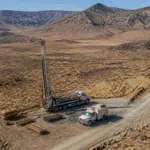
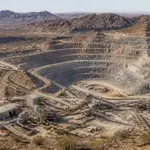
Grota do Cirilo has become a test of how Brazil balances critical-minerals development with community consultation and environmental safeguards.

By Charles Pitts
A Brazilian federal judge’s order suspending environmental licenses and mining activity at Sigma Lithium’s Grota do Cirilo complex has turned a local permitting dispute into a national test of Brazil’s critical-minerals strategy.
The Sept. 4 ruling affects the company’s mine in Araçuaí, Minas Gerais, in the region marketed as the Vale do Lítio. It found that the project sits within the direct area of influence of the Baú Quilombola community, triggering requirements for additional environmental studies and free, prior and informed consultation.
The order also bars Minas Gerais from issuing new environmental licenses for the project until those obligations are met. Sigma faces a daily fine of 100,000 Brazilian reais, or approximately $18,000, if it continues activities in breach of the ruling.
More Read

The immediate question is how long the suspension lasts. The larger question is whether Brazil’s fast-growing lithium sector can continue to treat consultation and social-license issues as conditions to be managed after permits are issued, rather than as part of the permitting floor itself.


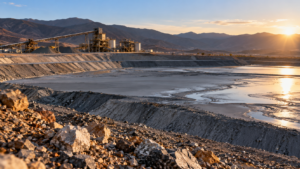
Community consultation has become a central issue in the legal dispute surrounding Grota do Cirilo.
More Read

What the ruling changes
The court found sufficient evidence that the Baú territory falls within Grota do Cirilo’s direct area of influence. Studies cited in reporting place the community about 2.7 kilometers from the directly affected area, inside the 8-kilometer threshold used in Brazil for enhanced review and consultation procedures.
The judge also cited the proximity of blasting and earthmoving activities to the traditional territory. That finding is important because the case is not limited to whether Sigma holds conventional environmental permits. It concerns whether those permits were legally adequate without consultation with an affected traditional community.
The ruling requires an independent georeferencing review to establish the precise distance between the project and the community. It also calls for a full impact assessment and formal consultation before the company can lawfully resume the suspended activities.
Reporting by Reuters and Brasil de Fato places the decision within a wider series of disputes involving dust, blasting, water, waste piles, access roads and community rights around Grota do Cirilo.
Those proceedings are not identical. Some involve state environmental authorities, labor inspectors or civil courts. Taken together, however, they show how environmental, safety and human-rights issues can converge around a producing mine.
Supply impact: significant for Sigma, limited for the global market
Sigma is a major hard-rock lithium producer, and Grota do Cirilo is the company’s principal producing complex. A suspension therefore has a direct effect on its operating profile, cash flow and expansion timetable.
It does not, on its own, remove a large share of global lithium supply. The global market is much larger and includes major producers in Australia, Chile, China, Argentina and elsewhere. But lithium markets are increasingly sensitive to the timing and reliability of individual projects.
The market has been moving from deep oversupply toward a more balanced outlook. Skillings’ lithium price forecast places the central 2026 battery-grade carbonate range around $18,000 to $25,000 per tonne, while noting that project delays and stronger energy-storage demand could create a deficit.
That backdrop increases the commercial importance of any unexpected interruption. A mine halt during a weak market can be absorbed through inventories or higher-cost supply. A halt during a tightening market can magnify price volatility and raise the value of producers that can deliver qualified material consistently.
For now, the most defensible conclusion is that the ruling adds a project-level supply risk rather than creating a global lithium shortage. The supply effect will depend on three variables:
| Variable | Near-term question | Potential market effect |
|---|---|---|
| Duration | How quickly can Sigma complete studies and consultation? | Short suspension limits lost output; a prolonged halt affects annual guidance |
| Scope | Does the order cover all mining and processing or defined licenses and activities? | Wider scope increases production and working-capital risk |
| Restart conditions | Will new permits require redesign, mitigation or additional monitoring? | Higher compliance costs and a slower expansion timeline |
The ruling also matters because Grota do Cirilo is part of the supply pipeline that helped position Brazil as a credible hard-rock lithium jurisdiction. Delays at a flagship project could make buyers, lenders and policymakers more cautious about assuming that permitted capacity will become operating capacity on schedule.
Brazil’s R$7 billion policy now faces a credibility test
The decision arrives days after Brazil’s Senate approved legislation creating a national policy for critical and strategic minerals. The package combines a proposed R$2 billion mineral-activity guarantee fund with R$5 billion in tax incentives for domestic processing and industrial transformation.
As reported by Rare Earth Exchanges, the policy is intended to move Brazil beyond the export of raw concentrates. It covers minerals including lithium, rare earths, nickel, graphite and other materials tied to the energy transition.
The policy’s logic is straightforward: use public guarantees and tax credits to attract investment into beneficiation, refining and higher-value industrial activity. But the Sigma ruling highlights the other side of that strategy. Processing incentives cannot compensate for weak project-level consultation or environmental evidence.
That is especially relevant because the new policy is designed to accelerate strategic-minerals investment. If project approvals move faster without stronger community and environmental controls, the result may be a larger pipeline of projects facing injunctions, appeals and operating interruptions.
In that sense, the ruling may strengthen rather than weaken the policy’s long-term credibility. It signals that critical-minerals status does not automatically override legal obligations to traditional communities.
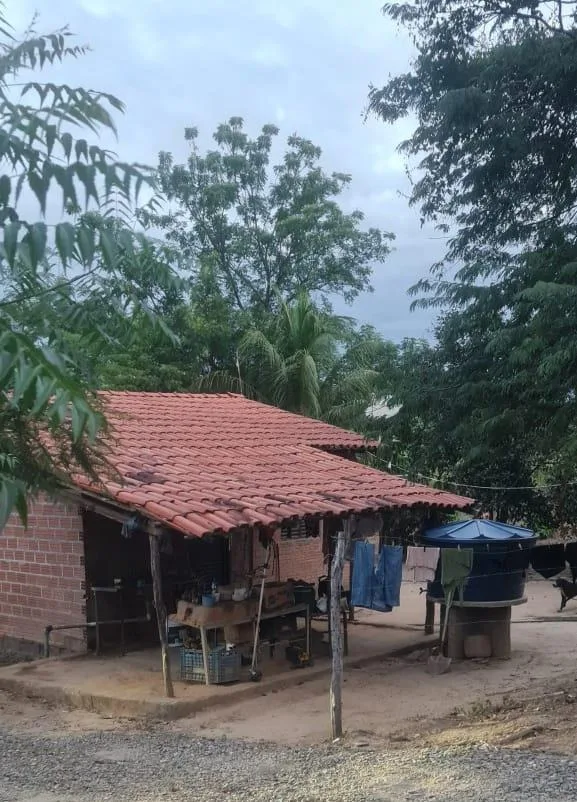
The dispute has focused attention on the physical proximity between mining infrastructure and neighboring communities.
ESG risk is becoming a production variable
For mining investors, the dispute illustrates why ESG risk should be modeled as an operating variable rather than treated as a reporting category.
A company may disclose strong carbon performance, low chemical use or a modern processing design. Those factors can matter commercially, particularly for battery-material customers. They do not remove the need to establish whether affected communities were identified, consulted and given a meaningful role before permits were granted.
The Skillings analysis of mining ESG compliance identifies several controls that increasingly affect permitting and financing:
- A complete map of affected communities and traditional territories.
- Site-level evidence on water, blasting, dust, noise and biodiversity.
- Consultation records that show timing, representation and outcomes.
- Independent technical support for affected communities where required.
- Clear ownership of permit conditions and remediation commitments.
- Closure, rehabilitation and monitoring obligations included in project economics.
Grota do Cirilo shows the cost of a gap in that system. Even if a company ultimately prevails on some environmental or technical claims, a court-ordered stoppage can interrupt production, delay expansion, increase legal expenses and alter how lenders assess the asset.
It can also make future permitting more difficult. Regulators may request more information, communities may seek independent advisers and project opponents may use the ruling as a precedent in other cases.
The read-through for Minas Gerais’ lithium projects
The decision is not necessarily a ruling against all lithium development in Minas Gerais. It is more precisely a warning that the definition of an affected community and the timing of consultation will receive closer scrutiny.
That could affect projects across the Vale do Lítio, a 17-municipality development corridor that includes Araçuaí and Itinga. CNN Brasil has reported that the initiative has attracted billions of reais in private investment and generated strong economic growth in the region, while still facing infrastructure, financing and downstream-processing constraints.
For other developers, the practical implications are clear:
- Map the direct area of influence early. Distance from the mine site is only one factor; blasting, traffic, water use, waste storage and access routes may expand the relevant impact area.
- Treat consultation as a project milestone. It should be included in the development schedule and financing model, not added after technical permitting is complete.
- Maintain independent evidence. Community-selected technical advisers, transparent monitoring and publicly available data can reduce disputes over impacts.
- Model restart conditions. A project plan should account for the possibility that a court requires new studies, redesigned infrastructure or additional mitigation.
- Separate legal compliance from social acceptance. Meeting a permit condition does not always mean that a project has earned a durable social license.
Investor view: Sigma’s asset quality is not the same as its risk profile
A Cramer-style comparison would normally ask which company offers the clearest operating upside. The more useful question in this case is which producer can convert resource quality into reliable, permitted output.
Sigma retains exposure to a large hard-rock lithium district, an operating processing plant and Brazil’s effort to build a domestic critical-minerals chain. Those are meaningful strategic advantages.
But the company’s risk profile now includes a court-ordered suspension, a daily penalty, an unresolved consultation process and a history of regulatory and community disputes. Investors should not treat the company’s resource base or product positioning as a substitute for a clear restart path.
Relative to peers with fewer active permitting disputes and documented consultation processes, Sigma may carry a higher execution discount until the court order is clarified and operations resume under legally durable conditions. That is a risk assessment, not a buy or sell recommendation.
The key comparison points are:
| Investor question | Sigma Lithium after the ruling | Lower-risk peer profile |
|---|---|---|
| Operating continuity | Dependent on court and consultation outcomes | Supported by stable permits and fewer active disputes |
| Expansion visibility | More uncertain while new licenses are blocked | Advanced projects have clearer approval pathways |
| ESG evidence | Subject to heightened external scrutiny | Consultation and impact records are more established |
| Lithium-price leverage | Potentially high if production resumes into a firmer market | More predictable exposure to improving prices |
| Downside risk | Legal delay can affect output, cash flow and capex timing | Lower probability of sudden operational interruption |
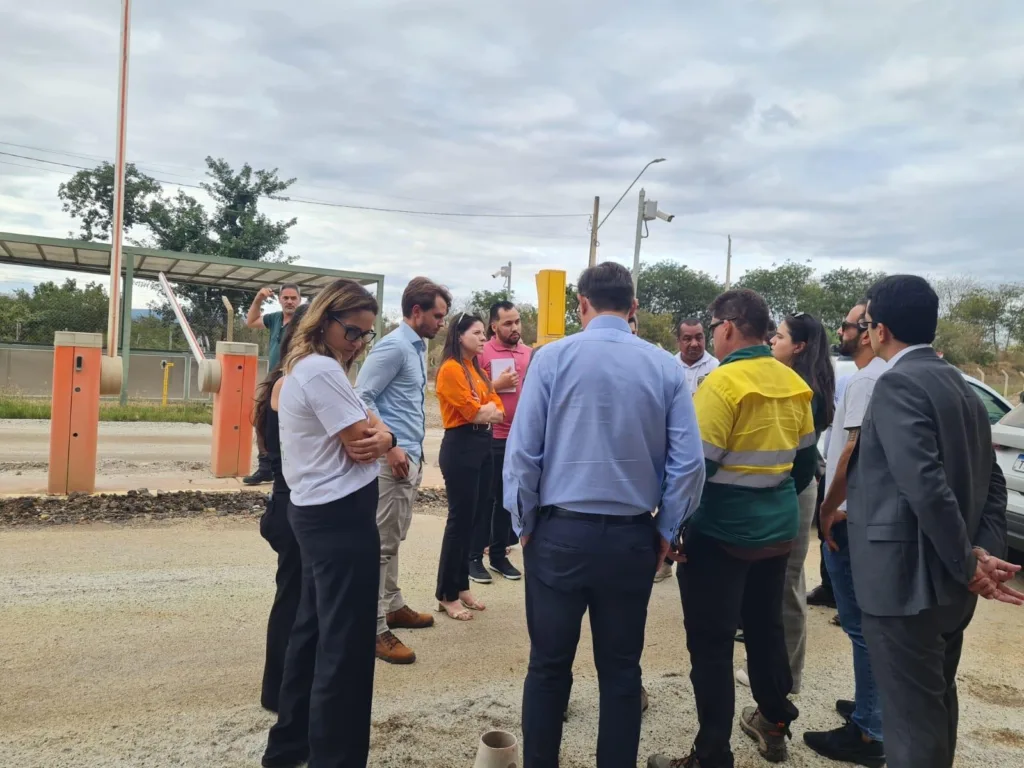
Judicial inspections and independent evidence are likely to shape the next phase of the case.
What to watch next
The next important developments are procedural rather than promotional:
- Publication of the complete ruling and its precise definition of suspended licenses.
- The independent georeferencing review.
- Sigma’s appeal or request for clarification.
- The timetable for environmental studies and consultation with the Baú community.
- Any response from Minas Gerais environmental authorities.
- Updates to production guidance, working capital and expansion spending.
- Whether other lithium projects in the state face similar challenges.
The ruling does not decide Brazil’s lithium future. It does establish a higher bar for projects seeking to operate near quilombola and other traditional communities.
For Brazil, that bar is now part of the investment environment. For Sigma, the immediate priority is not only restarting the mine but demonstrating that the restart can withstand legal, regulatory and community scrutiny.
Sources
- Reuters: Brazilian court suspends licenses for Sigma Lithium mine
- Brasil de Fato: Decision on lithium mining in Jequitinhonha could change the sector
- CNN Brasil: Vale do Lítio reaches three years amid development and bottlenecks
- Rare Earth Exchanges: Brazil’s critical-minerals processing policy
- Skillings: Lithium price forecast, supply, demand and project risk
- Skillings: Mining ESG compliance, disclosure, permitting and operating risk