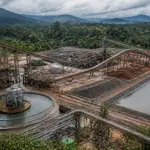
Processing infrastructure is becoming a central source of strategic value in mining transactions.

Mining M&A is increasingly being shaped by a question that sits beyond resource size: who controls the route from ore to saleable product?
Recent transactions involving USA Rare Earth and Serra Verde, Forrestania Resources and Edna May, Stanmore Resources and Moranbah South, and Copper Giant Resources’ Mocoa financing show how buyers are pursuing control over processing, infrastructure, logistics and market access. The structures differ, but the strategic logic is similar. A mine without a reliable processing route can remain a stranded resource, while a processing hub can support several deposits, shorten development timelines and improve supply-chain visibility.
The trend is particularly important for critical minerals, copper and gold, where technical complexity, permitting delays and limited midstream capacity can constrain new supply.
Processing is becoming the strategic bottleneck
Mining companies have traditionally competed for large, long-life deposits. That remains important, but the value equation is changing.

For many commodities, the commercial product is not run-of-mine material. It is a refined oxide, separated rare earth element, copper concentrate, molybdenum concentrate, gold doré or high-quality coking coal product. Producing that material requires mills, concentrators, chemical separation plants, rail links, water systems, power connections, tailings facilities and qualified operating teams.

Those assets are expensive and time-consuming to build. They also carry technical and permitting risks that can be difficult to capture in a conventional project feasibility study.
As a result, strategic buyers are increasingly assessing four layers of control:

- Resource control: ownership of the orebody or mining tenements.
- Processing control: ownership of the mill, concentrator or separation facility.
- Infrastructure control: access to power, water, rail, roads and tailings capacity.
- Market control: offtake, customer qualification and logistics into end markets.
The four transactions below illustrate how those layers can be combined.
Transaction comparison: four routes to strategic control
| Transaction | Structure | Commodity and location | Processing or infrastructure angle | Key disclosed figures |
|---|---|---|---|---|
| USA Rare Earth–Serra Verde | Acquisition of 100% of Serra Verde Group | Rare earths, Goiás, Brazil | Combines the Pela Ema mine with an operating processing plant and supports a mine-to-magnet strategy | About US$2.8 billion; US$300 million cash plus approximately 126.9 million shares |
| Forrestania–Edna May | Acquisition of Edna May Gold Hub from Ramelius Resources | Gold, Western Australia | Adds a second processing hub to Lake Johnston and creates a potential hub-and-spoke network | A$300 million; A$210 million cash plus A$90 million in shares; more than 6 million tonnes per year targeted across two hubs |
| Stanmore–Moranbah South | Conditional acquisition of tenements and related subsidiaries from Exxaro | Metallurgical coal, Queensland, Australia | Expands a contiguous resource and may enable shared mine, rail and processing infrastructure | US$105 million; 724 million tonnes of measured and indicated resources |
| Copper Giant–Trafigura/Mocoa | Strategic equity financing alongside long-term offtake | Copper and molybdenum, Putumayo, Colombia | Links project funding with future market access rather than acquiring an existing plant | C$31 million financing; Trafigura offtake for 20% of copper and molybdenum concentrate for 10 years |
Source: company disclosures and reporting from Mining Technology and Finance Colombia. Terms remain subject to the conditions disclosed by the companies.
USA Rare Earth and Serra Verde: buying the middle of the chain
USA Rare Earth’s proposed acquisition of Serra Verde is the clearest example of a strategic buyer targeting an integrated supply chain.
The transaction covers 100% of Serra Verde Group, owner of the Pela Ema rare earth mine and processing plant in Goiás. USA Rare Earth agreed to pay approximately US$300 million in cash and issue about 126.9 million shares, implying a transaction value of roughly US$2.8 billion based on the reference share price disclosed in the acquisition announcement.
The strategic value is not limited to the resource. Pela Ema is an ionic clay operation producing rare earths with a significant focus on heavy elements, including dysprosium and terbium. Those elements are important inputs for high-performance permanent magnets, but processing and separation capacity remains concentrated and technically demanding.
By combining Serra Verde with its broader mine-to-magnet ambitions, USA Rare Earth would gain control over an operating mine and processing plant while expanding access to separated rare earth oxides. The company has also disclosed a 15-year offtake framework covering Phase 1 production, with price floors for key magnet rare earths and a government-backed special purpose vehicle designed to support the supply chain.
The transaction demonstrates why processing can command a strategic premium. A buyer is not only acquiring tonnes in the ground. It is acquiring a route to qualified products, customer relationships and a platform that can connect upstream production with downstream magnet manufacturing.

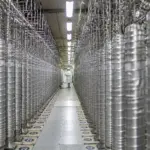
Rare earth processing depends on specialized separation equipment and operating expertise.
Forrestania and Edna May: a processing hub can be an acquisition platform
Forrestania Resources’ acquisition of the Edna May Gold Hub shows a different version of the same strategy.
According to Mining Technology’s report, Forrestania completed the acquisition from Ramelius Resources for A$300 million. The consideration comprised A$210 million in cash and 225 million Forrestania shares valued at A$90 million.
The transaction included the Edna May and Tampia operations, exploration interests and the Edna May processing infrastructure. The central asset is a conventional carbon-in-leach mill with nameplate capacity of approximately 2.9 million tonnes per year, supported by site infrastructure including accommodation, tailings capacity, power and administration facilities.
The acquisition gives Forrestania control of two processing hubs in Western Australia when combined with Lake Johnston. Management has described a hub-and-spoke model with combined target milling capacity of more than 6 million tonnes per year after refurbishment and recommissioning.
That changes the company’s development options. Rather than building a standalone plant for each deposit, Forrestania can potentially direct ore to the facility best suited to its grade, metallurgy, distance and operating schedule. The processing hubs can therefore serve as regional platforms, while nearby deposits become feed sources.
The risks are also clear. A processing acquisition does not eliminate metallurgical, maintenance or restart risk. Refurbishment costs, commissioning performance and the availability of consistent ore feed will determine whether the theoretical capacity becomes productive capacity.
Stanmore and Moranbah South: infrastructure adjacency matters
Stanmore Resources’ proposed acquisition of Moranbah South illustrates how processing value can be embedded in tenement position and infrastructure access.
Stanmore agreed to acquire 100% of the Moranbah South tenements and related Australian subsidiaries from Exxaro for US$105 million, subject to conditions including regulatory approvals and Exxaro first completing its own acquisition of the remaining joint-venture interest.
Moranbah South contains approximately 724 million tonnes of measured and indicated resources, predominantly premium hard coking coal. The project is located near Stanmore’s existing Isaac Plains Complex, Isaac Downs Extension and the Eagle Downs project.
Unlike the Serra Verde and Edna May examples, the central processing asset is not an operating plant being acquired outright. Instead, the strategic value comes from adjacency and the potential to use shared infrastructure. Stanmore has indicated that Moranbah South may potentially be accessed through Eagle Downs infrastructure if that project is developed.
That could support shared mine layouts, haulage routes, water, power, rail and coal-handling infrastructure. The deal also extinguishes up to US$60 million in deferred and contingent consideration associated with access for the Isaac Downs Extension.
For operators, the lesson is that processing control does not always mean owning a mill. It can also mean controlling the land, corridors and access rights that determine whether nearby resources can be developed as one integrated system.
Copper Giant and Trafigura: financing can create processing optionality
The Copper Giant–Trafigura arrangement at Mocoa shows how strategic control can be established before a processing plant exists.
Copper Giant entered into a C$30,999,996 private placement led by Denarius Metals. Denarius subscribed for 40 million shares for C$28.8 million and was expected to hold approximately 15.6% of Copper Giant after closing.
Separately, Trafigura agreed to purchase 20% of the copper concentrate and 20% of the molybdenum concentrate produced at Mocoa for 10 years from the start of commercial production. The agreement includes minimum delivered volumes and an extension option if those volumes are not met.
The financing gives Copper Giant capital to advance exploration and project studies. The offtake provides a potential route to market and a commercial relationship with a global commodities trader. Together, the agreements reduce some of the uncertainty between a mineral resource and a future development decision, although they do not remove permitting, engineering, financing or construction risk.
Mocoa has an inferred resource of 1.12 billion tonnes at 0.51% copper equivalent, according to the resource information cited by Finance Colombia. The project remains at an earlier development stage than the operating or near-operating processing hubs in the other examples.
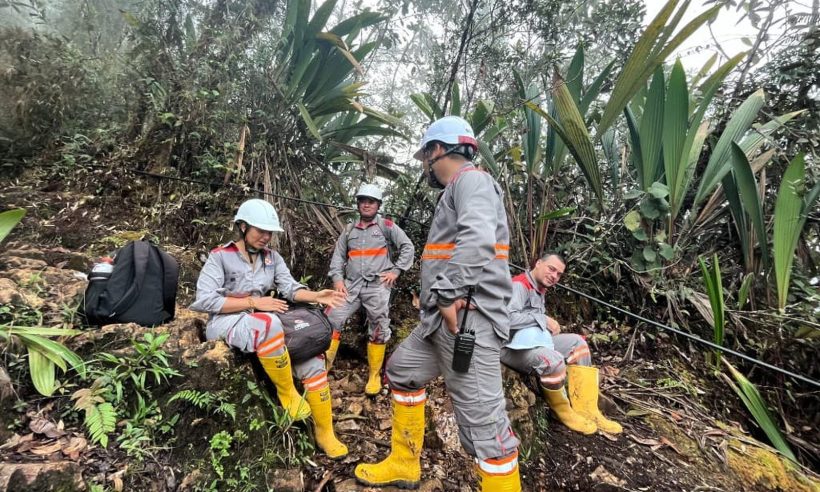
Exploration and financing agreements can establish market access before construction begins.
What strategic buyers are likely to measure next
These transactions point to a practical framework for evaluating mining M&A:
1. Is the processing asset operating, restartable or conceptual?
An operating plant carries production history but may require expansion. A restart project can offer speed but may need substantial refurbishment. A conceptual processing route offers flexibility but leaves the greatest execution risk.
2. Can the facility accept third-party or satellite ore?
A mill that can process feed from multiple deposits may have greater strategic value than a plant tied to one mine. This is central to Forrestania’s dual-hub strategy and relevant to regional consolidation across gold, copper and other commodities.
3. Who controls the critical infrastructure?
Power, water, rail, roads, tailings and land access can determine whether a resource is developable. Stanmore’s Moranbah South transaction underlines the value of tenement position and infrastructure corridors.
4. Does the buyer control the product specification and customer route?
For rare earths, separated oxides can be more strategically valuable than mixed concentrate. For copper and molybdenum, an offtake partner can provide logistics, marketing and customer access. The value lies in the quality and reliability of the product, not simply in the contained metal.
5. Are the commercial agreements bankable?
Offtake terms, minimum volumes, price floors, extension rights and financing conditions can materially affect project economics. They should be assessed alongside resource size, recovery assumptions and capital requirements.
The broader M&A implication
The current mining M&A cycle is moving from a simple race for deposits toward competition for integrated supply-chain positions.
For strategic buyers, processing can protect against external bottlenecks, support production from several resources and improve visibility over the final product. For sellers, an existing plant or infrastructure network can make an asset more attractive than an otherwise similar greenfield deposit.
That does not make processing acquisitions automatically lower risk. Mills can underperform, restart budgets can expand, and offtake agreements remain dependent on future production. But the transactions show why buyers are increasingly willing to pay for control beyond the mine gate.
In the next phase of mining consolidation, the most valuable question may not be “How many tonnes are in the resource?” It may be: Can the buyer reliably turn those tonnes into a product customers can use?
LinkedIn snippet
Mining M&A is shifting from resource size toward supply-chain control.
USA Rare Earth–Serra Verde, Forrestania–Edna May, Stanmore–Moranbah South and Copper Giant–Trafigura/Mocoa show four different ways buyers are securing processing capacity, infrastructure, logistics or offtake.
The common theme: strategic value increasingly sits between the mine and the customer.
X snippet
Mining M&A is increasingly about control beyond the mine gate.
Four recent examples show buyers targeting rare earth separation, gold milling hubs, coal infrastructure corridors and copper offtake.
Processing, logistics and market access are becoming strategic assets in their own right.