Afghanistan’s neighbors stand ready to take advantage of the Taliban’s return to power in a nation known to house al-Qaeda, the terrorist organization responsible for the 9/11 attacks. The landlocked country shares borders with China to the east, Iran to the west, and Russia to the north — three powers that now see both opportunity and risk in Taliban-controlled Kabul.
Three Anglo-Afghan Wars in the 19th and early 20th centuries failed to expand British authority over Afghanistan or counter Russian expansion into Central Asia. In 1979, the former Soviet Union invaded the country and occupied it for ten years before suffering a humiliating military defeat and withdrawing in 1989.
Iran: Trade Partner Despite a Bloody History
The Taliban murdered 10 Iranian diplomats in 1998, yet relations between the two nations have improved significantly since that low point. Iran now ranks as one of Afghanistan’s main trade partners. Geography and shared economic interests bind the two countries together, and Tehran calculates that engagement with the Taliban serves its interests better than isolation.
China Targets Afghanistan’s $1 Trillion in Minerals and Oil
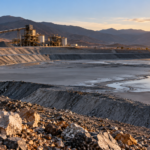
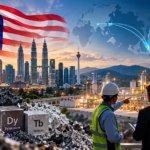
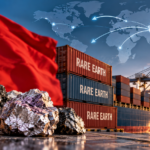
China sees a major opportunity to exploit valuable oil and gas projects that security threats, poor infrastructure, and technical problems have long delayed. Analysts estimate Afghanistan’s deposits of copper, iron, lithium, and rare earth minerals at approximately $1 trillion in value — resources that sit at the heart of the global green energy supply chain.
Beijing has already announced $31 million in emergency assistance for the Taliban, including 3 million COVID-19 vaccine doses, signaling its intent to build working ties with the new regime.
China first moved into Afghanistan’s mineral sector in 2007, when state-owned Metallurgical Corp won a nearly $3 billion contract to develop Mes Aynak in Kabul — the country’s largest copper mine. Security concerns and the discovery of major Buddhist archaeological relics at the site have kept the project incomplete ever since. The Hajigak iron ore project, the only other significant mining prospect in Afghanistan, has likewise failed to advance.
Xinjiang: China’s Security Anxiety Next Door
China also worries deeply about radicalism spreading into Xinjiang, where authorities hold hundreds of thousands of Uyghurs and Muslim ethnic minorities in detention facilities. Beijing has urged the Taliban to break with terrorist organizations and prevent Afghan territory from becoming a base for Uyghur militant groups. In 2009, militants murdered 140 Muslim Uyghurs and Han Chinese and wounded hundreds more in Xinjiang — an event that sharpened Beijing’s strategic anxiety about its western neighbor.
As a result of these security concerns, Beijing covets Afghanistan’s mineral wealth as leverage — though some analysts now believe the deposits may not hold as much value as earlier assessments suggested.
The Belt and Road Initiative: Afghanistan at the Center of a $900 Billion Network
Afghanistan holds enormous economic and geopolitical importance within China’s $900 billion Belt and Road Initiative (BRI). China plans a network of overland road and rail links and oil and gas pipelines to run along the main Eurasian land bridges, connecting China–Mongolia–Russia, China–Central Asia–West Asia, and the China–Indochina peninsula. These corridors will extend from Xi’an in central China all the way to Moscow, Rotterdam, and Venice.
The maritime component of the BRI — the “Road” — covers ports and coastal infrastructure stretching from South and Southeast Asia to East Africa and the northern Mediterranean Sea. The plan requires participating nations to fund Chinese state-owned infrastructure companies. China offers less fortunate nations low-cost loans and credit to do so — a structure critics compare to banks issuing zero-percent mortgages to low-income households, raising long-term debt concerns.
Western institutional investors naturally avoid Afghanistan, especially now that the Taliban holds power. That retreat only widens the opening for Chinese state enterprises to move in on resource and infrastructure deals without competition.
Shared Fears: Regional Instability and the Return of Terrorism
All three nations — China, Iran, and Russia — fear that the US departure from Afghanistan will trigger regional instability and drag them into Afghan domestic conflicts. Each worries about terrorism re-emerging under Taliban cover. Afghanistan currently ranks as the world’s most dangerous country for terrorism, with both IS-K and al-Qaeda maintaining active operations inside its borders.
You might be interested in: