Key Takeaways
- Loma Larga mine in Ecuador’s páramo region receives final environmental clearance.
- Conservationists warn of irreversible harm to high-altitude ecosystems and water sources.
- Critics allege consultation failures, intimidation, and environmental oversight rollback.
- President Noboa accelerates pro-mining agenda, sparking national and international alarm.
The Loma Larga mine Ecuador is at the center of a fierce national debate. Set in the biodiverse highlands of Quimsacocha, the gold and copper project—recently approved by Ecuador’s government—is facing growing resistance from scientists, Indigenous groups, and local communities.

On June 23, Ecuador’s environment ministry granted final approval for Loma Larga mine Ecuador, greenlighting Dundee Precious Metals to begin operations. Days later, President Daniel Noboa abolished the ministry entirely, consolidating its powers under the pro-mining Ministry of Energy and Mines.
Activists warn this decision could irreversibly damage the páramo ecosystem and mark a turning point in Ecuador’s extractive future.
Conflict Erupts Over Loma Larga Mine Ecuador Approval
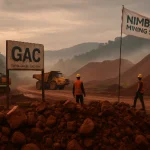
Located in the Quimsacocha páramo, the Loma Larga mine Ecuador is projected to yield over $6 billion in gold and copper. The site sits at nearly 4,000 meters above sea level in the Cajas Highlands—an area designated a UNESCO biosphere reserve.
Despite the designation, more than 100,000 hectares of this high-altitude region are now under mining concession. Dundee Precious Metals Ecuador controls 15,000 hectares, including land surrounding vital water sources.
“You can’t damage one part of the páramo without affecting the whole,” says Juan Carlos Sánchez-Nivicela, a herpetologist who studies the region. “The Loma Larga mine Ecuador directly threatens endemic species and water for millions.”

Scientific Dissent on Loma Larga Mine Ecuador Impact
Dundee’s environmental impact report labeled its operations low-risk. Yet a parallel assessment by Cuenca’s municipal water company (ETAPA) challenged this claim, warning that Loma Larga mine Ecuador could permanently pollute water flowing to six major rivers.
“Contamination doesn’t stop at concession lines,” said Sandra Barros, lead author of the ETAPA report. “The Loma Larga mine Ecuador project risks undermining the entire Andean watershed.”
Dundee dismissed the ETAPA study as misinformation, maintaining that Dundee Precious Metals Ecuador operates under global environmental standards. But local officials remain unconvinced.
Rights, Consultation, and the Loma Larga Mine Ecuador Vote
Under Ecuadorian law, all major resource projects must include consultation with Indigenous and affected communities. Yet residents near the Loma Larga mine Ecuador site claim they were never informed or consulted.
“They always follow us when we visit the páramo,” said activist Esther Remache, referring to surveillance by mine security. “We never agreed to any of this.”
A January attempt to conduct a local vote on the Loma Larga mine Ecuador was canceled when 200 soldiers arrived to “oversee” the process. UN human rights officials later criticized Ecuador for failing to uphold free and informed consultations.
The Broader Stakes: Loma Larga Mine Ecuador Sets Precedent
For President Noboa, Loma Larga mine Ecuador represents more than a single project. In April, he extended the mining concession by 25 years and pitched Ecuador as Latin America’s next mining frontier at a Toronto investor conference.
The government projects that Loma Larga mine Ecuador will create 1,200 jobs and generate hundreds of millions in revenue. Yet critics say the economic arguments overshadow ecological and human costs.
“This isn’t just about gold,” Sánchez-Nivicela says. “The Loma Larga mine Ecuador could become the blueprint for sacrificing the páramo—our water and biodiversity—for short-term gain.”