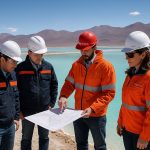
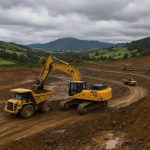
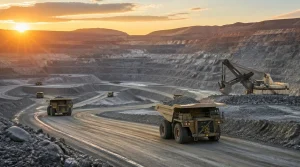
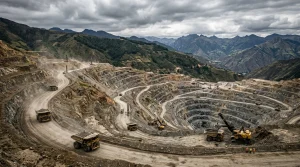
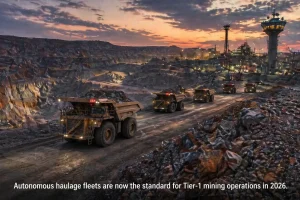
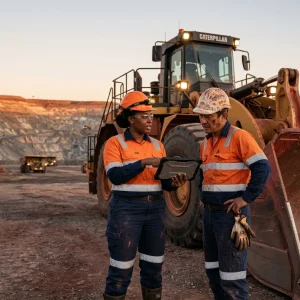
WA mining jobs have surged to a record high, with nearly 136,000 people now employed in the Western Australia resources sector—driven by global demand for minerals and robust project expansion.

Data released by the Department of Mines, Industry Regulation and Safety (DMIRS) shows employment in the resources industry rose to 135,985 in the March quarter, the highest ever recorded. The expansion reflects growing international appetite for critical minerals such as lithium, nickel, and rare earths—materials central to clean energy and electric vehicle supply chains
Related News
- India’s MECL Ramps Up Global Lithium Exploration Amid EV Surge
- 289 Miners Trapped in Kloof Gold Mine: Rescue Efforts Underway
- TOMRA LASER Sorting Revolutionizes Gold Mining at Vertex’s Hill End Project
- Refining Concentration in Critical Minerals Poses Global Supply Risk, IEA Warns
Demand for Critical Minerals Drives WA Mining Jobs Growth
The continued global transition to low-emissions technologies has turned Western Australia into a mining hotspot, attracting capital and workforce alike. New and existing projects are actively recruiting, particularly in lithium-rich regions such as the Pilbara and the Goldfields.
“The Western Australia resources sector is undergoing unprecedented transformation,” said Mines and Petroleum Minister David Michael. “From iron ore to rare earths, WA mining jobs are growing across every corner of the state.”
Companies including Albemarle, IGO Ltd, and Lynas Rare Earths are expanding their workforce footprints to meet aggressive production timelines, capitalizing on commodity tailwinds and favorable government policy.
More Read
Western Australia Resources Sector Underpins State Economy
The Western Australia resources sector accounts for more than 40% of the state’s gross product and nearly two-thirds of Australia’s mining workforce, according to the Australian Bureau of Statistics. With over 1,000 active mining tenements, WA remains a critical player in the global resource supply chain.

Iron ore continues to anchor exports, but employment growth is increasingly tied to battery-grade minerals. WA mining jobs have diversified, with technicians, engineers, and environmental consultants in high demand.
Training, Infrastructure, and Migration Reform on the Agenda
To meet the workforce challenge, the WA government is scaling training initiatives through the WA Jobs Plan and industry TAFE partnerships. There’s a push for more flexible visa pathways as well, amid warnings of skilled labor shortages threatening long-term project viability.
“Without a sustained pipeline of qualified workers, this growth could stall,” said Rebecca Tomkinson, CEO of the Chamber of Minerals and Energy WA. “It’s not just about jobs today—it’s about building a resilient, future-ready workforce.”
The Minerals Council of Australia has advocated for better alignment between tertiary institutions and industry needs, highlighting the importance of education reform and regional workforce support.
What’s Ahead for WA Mining Jobs?
Analysts caution that global commodity markets may face short-term fluctuations, but the long-term trajectory for critical minerals remains strong. As countries race to secure supply chains, the Western Australia resources sector is positioned as a strategic hub.
Government reports anticipate another 40,000 jobs could be created over the next decade, with investments in green hydrogen, carbon capture, and rare earths processing playing a central role.
“WA mining jobs aren’t just plentiful—they’re strategic,” said Minister Michael. “They’re powering both the state economy and the energy transition.”