Rio Tinto is injecting up to $900 million into Chile’s lithium sector through a nearly 50% stake in the Salar de Maricunga project, a high-altitude lithium brine deposit co-managed with Codelco, Chile’s state mining company. The investment signals Rio Tinto’s sharpened focus on strategic battery materials amid intensifying competition to dominate the electric vehicle (EV) supply chain.

The Anglo-Australian mining major will acquire a 49.99% interest in the Maricunga asset, located in Chile’s Atacama Region, a move framed as essential to diversifying its critical minerals portfolio. The transaction, structured as a joint venture with Codelco, positions Rio Tinto at the heart of Latin America’s lithium reserves, which account for a large share of the global resource base.
Related News
- Egypt Targets Mining Boom with 5-Year Strategy to Become Regional Power
- Solaris Secures $200M from Royal Gold to Advance Warintza Copper-Gold Project in Ecuador
- BASF Strengthens R&D in Copper Hydrometallurgy Amid Global Push for Sustainable Mining
- Hindalco Secures Future Fuel Supply with EMIL Mines Acquisition
Strengthening a Strategic Lithium Foothold
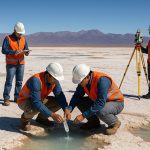
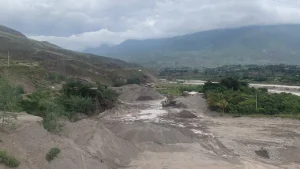
The Salar de Maricunga is Chile’s second-most advanced lithium development, after the prolific Salar de Atacama. Unlike Australia’s hard-rock deposits, Chile’s lithium is extracted from underground brine reservoirs, which are evaporated in vast solar ponds. Maricunga is expected to produce over 20,000 tonnes of lithium carbonate equivalent (LCE) annually, aligning with Rio Tinto’s ambitions to become a leading supplier of battery-grade material.
“This investment underscores our conviction that lithium will remain a cornerstone of the energy transition,” said Rio Tinto’s Chief Executive Jakob Stausholm. “We’re proud to work alongside Codelco to responsibly develop one of Chile’s most promising deposits.”
Public-Private Partnership in a Politically Charged Sector
The deal is significant not only for its scale but for its structure. Partnering with Codelco offers Rio Tinto strategic insulation from regulatory turbulence. The Chilean government has been recalibrating its lithium policy under President Gabriel Boric, advocating greater state control over mineral wealth while maintaining openness to foreign capital.
By joining forces with Codelco, Rio Tinto aligns itself with Santiago’s push for “strategic partnerships”, wherein the state retains ownership while leveraging foreign expertise and capital.

Lithium Demand Soars, Supply Race Accelerates
Global lithium demand is forecast to rise fourfold by 2030, according to the International Energy Agency, driven largely by EV adoption and energy storage needs. China currently refines about 75% of the world’s lithium, leaving Western automakers and governments scrambling to diversify sourcing.
This investment follows Rio Tinto’s recent acquisition of Rincon Lithium in Argentina and its ongoing lithium borate development at Jadar in Serbia—though the latter faces ongoing environmental and legal hurdles.
Maricunga, by contrast, benefits from environmental permits and advanced technical studies, making it one of the few shovel-ready projects outside China.
Balancing Risk and Resource Nationalism
Still, challenges remain. The high-altitude setting of the Maricunga salar makes logistics and water access complex. Moreover, Chile’s political landscape continues to evolve, with constitutional reform and Indigenous land claims playing a role in mining operations.
Rio Tinto, long criticized for its handling of heritage sites and environmental impacts in Australia and Mongolia, will likely face intense scrutiny over water usage and sustainability practices at Maricunga.
Nevertheless, the project is a calculated risk. With governments and automakers racing to lock in stable lithium supplies, Rio Tinto’s move reflects the escalating urgency to control upstream materials. If executed efficiently, the venture could offer a blueprint for future public-private collaboration in a resource-constrained world.