Key Takeaways
- China rebukes G7 over accusations of overcapacity and rare earth monopolization.
- Von der Leyen calls China’s trade surge a new “China Shock.”
- EU freezes economic dialogue with Beijing; summit rhetoric signals hardened stance.
G7 Confronts China Over Trade, Rare Earths; Beijing Strikes Back
The latest salvo in the escalating economic standoff between China and the West unfolded this week as the Group of Seven nations rebuked Beijing for destabilizing trade practices and weaponizing its dominance in key industries. China, in turn, denounced the accusations as political coercion and a pretext for protectionism, underscoring a deepening fracture in global industrial diplomacy.

In a sharp communiqué issued after the G7 summit in Alberta, leaders urged China to curb “market distortions and harmful overcapacity,” citing concerns over subsidized exports that are increasingly undercutting Western industries. Canadian Prime Minister Mark Carney, chairing the meeting, said G7 partners shared “grave concern” over Beijing’s manipulation of trade flows and its expanding strategic leverage.
Beijing’s response was immediate and combative. Foreign Ministry spokesman Guo Jiakun dismissed the G7’s language as “manipulative,” “irresponsible,” and a “smear” on China’s economic policies. He framed the criticism as a violation of sovereignty and international norms.
“There is no so-called overcapacity caused by China,” Guo said at a press briefing in Beijing. “This is merely a manufactured excuse to suppress Chinese industries under the guise of fairness.”
Von der Leyen Warns of a ‘New China Shock’
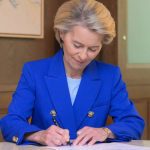
European Commission President Ursula von der Leyen intensified the confrontation with her declaration that the global economy is facing a “new China Shock.” Speaking at the summit, she accused Beijing of saturating international markets with excess production it can no longer absorb domestically.
More Read

“As China’s economy slows, Beijing floods global markets with subsidized overcapacity,” von der Leyen said. “It’s not just a competitive distortion—it’s a deliberate tactic to weaponize its quasi-monopoly over critical sectors.”

Her warning comes amid growing frustration in Brussels, where the European Union has suspended a planned economic dialogue with China, citing a lack of progress on trade imbalances and market access.
The European Commission is also pursuing anti-subsidy probes, particularly into Chinese electric vehicle manufacturers, whose surge in exports threatens the bloc’s automotive sector.
Rare Earths, Strategic Leverage
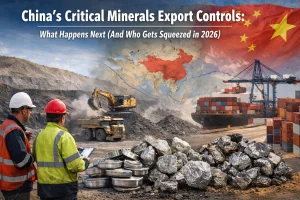
Central to the dispute is China’s grip on the global supply of rare earth elements—materials vital to producing electric vehicles, wind turbines, and semiconductors. Beijing controls more than 60% of rare earth production, a position critics say it is increasingly using as leverage.
Von der Leyen accused China of converting this strategic dominance into a geopolitical tool. “It is not only a bargaining chip,” she said. “It is a weapon against competitors in industries that define future economic leadership.”
A Global Trade Order in Flux
The clash reflects broader anxiety among Western policymakers that China’s state-directed model is remaking global trade on Beijing’s terms. G7 leaders warned that Beijing’s industrial subsidies threaten not just fair competition, but global market stability.
The concerns echo those raised during the original “China Shock” era of the early 2000s, when a surge of Chinese imports reshaped Western labor markets. Economists now warn of a repeat—this time across green technologies and high-value manufacturing.
In March, the International Energy Agency warned of “excessive solar manufacturing capacity,” driven by Chinese subsidies that could push prices below sustainable levels for producers elsewhere.
Alicia García-Herrero, chief Asia-Pacific economist at Natixis, said, “What we’re witnessing is not just a price war—it’s a systemic challenge to global industrial equilibrium.”
China Stands Firm
Despite the backlash, Beijing shows no sign of recalibrating. Guo reiterated that China’s industrial policy follows principles of openness and transparency, adding that accusations of economic aggression are “a narrative trap meant to justify trade restrictions.”
“We hope the EU and others will return to a spirit of cooperation,” he said, hinting that von der Leyen’s visit to China next month could offer a forum for de-escalation—though expectations are muted.
Recent surveys by the European Chamber of Commerce in China show growing pessimism. Nearly 70% of European firms say doing business in China has become more difficult, citing opaque regulations and unaddressed market barriers.
Outlook: Trade Confrontation, Not Dialogue
The G7’s increasingly direct approach—and China’s uncompromising pushback—suggest that the global economic architecture is splintering into competing blocs. Without consensus on rules of engagement, analysts warn that trade friction could harden into strategic decoupling.
“The guardrails are off,” said one EU trade official briefed on the summit deliberations. “We’re not managing a disagreement anymore—we’re managing divergence.”
Whether von der Leyen’s scheduled trip to Beijing can reverse course or merely confirm the decoupling remains an open question. Either way, the geopolitical tone has shifted: dialogue is no longer the default.
FAQ
What was the G7 summit’s position on China in 2025?
The G7 criticized China’s industrial overcapacity, rare earth dominance, and alleged economic coercion during the 2025 summit in Alberta.
What is the “China Shock” mentioned by Von der Leyen?
The term refers to a renewed surge in subsidized Chinese exports disrupting global markets, particularly in green tech and manufacturing.
How did China respond to the G7’s accusations?
Beijing rejected the claims as politically motivated and labeled them a pretext for Western trade protectionism.