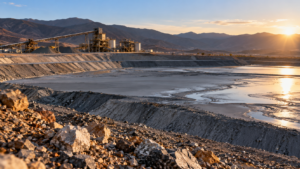
Argentina’s ambassador to India, Mariano Caucino, has again pitched Buenos Aires as a lithium supplier New Delhi can lean on without geopolitical strings attached — the latest signal in a diplomatic push that has quietly produced real exploration ground for Indian companies in South America’s Lithium Triangle.
The relationship isn’t new, but it’s compounding. India’s state-run Khanij Bidesh India Ltd. (KABIL) holds five lithium exploration blocks in Argentina’s Catamarca province, secured through a roughly $24 million exploration agreement, with permission already granted for non-invasive exploration on three of them. Private Indian firms have followed KABIL into the same province, and interest has broadened beyond lithium into copper and gold. The cooperation was reinforced when Prime Minister Narendra Modi visited Buenos Aires in 2025 — the first bilateral visit by an Indian head of government to Argentina in 57 years — and Argentine officials have since framed the relationship as one built on supply security rather than commercial opportunism alone.
Small Stakes, Deliberate Strategy
In absolute terms, India’s position in Argentine lithium is still early-stage. Exploration blocks and non-binding permissions are a long way from producing lithium carbonate at scale, and none of the Indian-backed projects in Catamarca has reached production. What makes the push worth watching isn’t volume — it’s intent.
India has classified lithium among roughly 30 minerals it considers critical to its clean-energy transition, and its mines ministry has been explicit that diversification, not any single deal, is the point. Argentine officials have echoed that framing directly, with Caucino describing it as “wise” for India not to depend on a single supplier and positioning Argentina as a partner that comes without the geopolitical pressure India associates with its dominant current source.
More Read
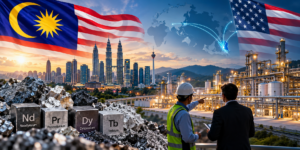
That source is China. Beijing controls the large majority of global lithium refining capacity and has shown a willingness to use its position as leverage — most visibly through export restrictions on rare earth magnets aimed at Western supply chains during trade disputes with the US. India’s own manufacturers have felt that exposure directly, which is part of why New Delhi has been pursuing parallel tracks in Argentina, Chile, and Australia rather than betting on any one partner.

What It Means for the Global Lithium Market
For the global lithium market, India’s Argentina push is a marginal but real data point in a broader trend: buyers are increasingly willing to fund early-stage exploration in politically stable jurisdictions specifically to avoid Chinese-controlled midstream processing, even where the economics are less favorable than an established supply relationship would offer.
Argentina, Chile, and Bolivia’s Lithium Triangle holds some of the world’s largest brine-based lithium resources, and Chile in particular — the world’s second-largest producer — has separately signaled openness to Indian investment through its state miner ENAMI, which is already fielding bids from Chinese automaker BYD and other international players. That puts India in direct competition with Chinese capital for access to the same deposits, even as it tries to reduce dependence on Chinese processing downstream.
More Read
The practical effect on global supply is limited for now. China’s dominance sits mainly in refining and cathode production, not just raw extraction, and Indian-backed exploration blocks in Catamarca don’t change that balance on their own. What they do is create option value: if Indian firms can move blocks from exploration to production, and pair that with domestic or allied refining capacity, India edges toward a lithium supply chain that doesn’t route through Beijing at any stage.
What to Watch
The next markers worth tracking are whether KABIL’s Catamarca blocks convert from exploration into resource definition, whether India and Mercosur expand their preferential trade agreement in a way that eases capital flow into mining, and whether India pairs its upstream lithium bets with investment in processing capacity — the stage where China’s grip is hardest to dislodge. Diplomatic warmth is easy to produce. A lithium supply chain that bypasses China end to end is not.