Protectionism and Green Steel Shape a Tumultuous 2025
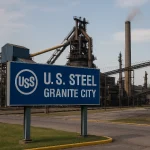
The Biden administration’s decision to block Nippon Steel’s acquisition of US Steel, coupled with Donald Trump’s return to the White House, has intensified geopolitical risks for iron ore and steel. The global steel industry is now entering a new era of economic nationalism marked by protectionist trade policies and government intervention.

While 2024 was shaped by green steel initiatives and the European Union’s Carbon Border Adjustment Mechanism (CBAM), early 2025 is witnessing a surge in trade barriers, industrial policy shifts, and supply chain disruptions.
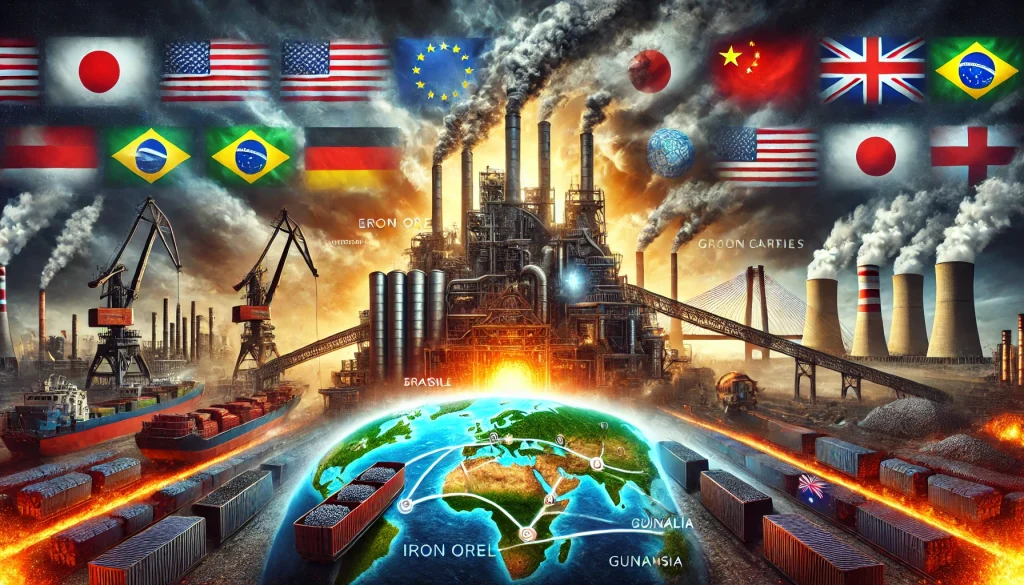
Steel is at the center of global trade and geopolitics, with supply chains stretching from iron ore producers in Brazil, Australia, and Guinea to blast furnaces in China and electric arc furnaces (EAF) in the United States and Europe. As nations compete for dominance in steel production, price volatility, demand fluctuations, and supply chain constraints are becoming key challenges for industry stakeholders.
US and EU Trade Barriers Reshape Global Steel Supply Chains
The US steel industry is highly sensitive to protectionist policies, and Washington’s recent moves indicate a tightening of trade restrictions.
- Trump’s re-election has revived the potential expansion of Section 232 steel tariffs, which could lead to higher prices and supply chain shifts.
- The Biden administration’s rejection of the US Steel-Nippon Steel deal signals a broader “Buy American” policy, discouraging foreign investment in the US steel sector.
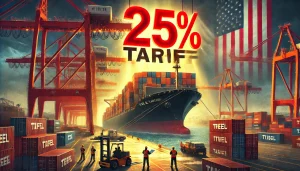
- Trump has also threatened 25% tariffs on Mexican and Canadian steel, despite the United States-Mexico-Canada Agreement (USMCA), which could strain North American trade relations.
Although Brazilian iron ore has so far avoided direct tariffs, Trump has hinted at broader economic measures against BRICS nations, particularly if they deprioritize the US dollar in trade.
European Union Extends Steel Tariffs Until 2026
Across the Atlantic, the European Union (EU) has extended its steel safeguard measures until 2026, maintaining a 25% duty on steel imports exceeding quotas. However, this primarily applies to finished steel products, not raw iron ore, which saw a 2.3% import increase in 2024.

The ongoing Russia-Ukraine war has also disrupted iron ore trade routes:
- Russian iron ore exports to the EU dropped 88.2% in 2024, according to the GMK Center.
- China now receives 90% of Russia’s iron ore exports, strengthening its position in global raw material supply chains.
Green Steel Revolution Boosts Demand for High-Grade Iron Ore
While trade barriers reshape supply chains, the steel industry faces another major transformation—decarbonization.
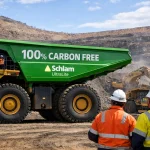
The push for low-emission steel production has heightened demand for high-purity iron ore, particularly direct reduction (DR)-grade ore, which is essential for hydrogen-based steelmaking. Since DR-grade ore represents only 5% of global iron ore supply, competition for high-quality reserves is intensifying.
The Impact of CBAM on Global Steel Markets
The EU’s Carbon Border Adjustment Mechanism (CBAM), set to take full effect in 2026, will increase costs for carbon-intensive steel, driving investments in green steel technologies like:
- Hydrogen-based direct reduced iron (DRI) production
- Carbon capture technologies
According to Wood Mackenzie, CBAM-related costs will drive up Indian steel prices by 56% and Chinese steel prices by 49% by 2034, pressuring both nations to accelerate green steel adoption.
New Investments in High-Grade Iron Ore Mining
The rising demand for DR-grade iron ore has fueled multi-billion-dollar investments in key mining projects worldwide:
- Vale (Brazil) is investing $2.7 billion to expand its S11D project, adding 30 million tons of DR-grade iron ore annually by 2028.
- Guinea’s Simandou project, backed by China, will supply 120 million tons annually by 2025, accounting for 4% of global demand by 2030. However, political instability and infrastructure challenges pose risks.
- Kazakhstan, home to vast magnetite reserves, is emerging as a potential DR-grade supplier, though Chinese investment remains uncertain.
- Rio Tinto and Baowu Steel (Australia) are developing the Western Range project, targeting 25 million tons of annual production by 2025 despite ongoing geopolitical tensions between China and Australia.
China’s strategic investments in Brazil, Guinea, and Kazakhstan highlight its “security-first” approach to securing critical raw materials. The establishment of China Mineral Resources Group is further centralizing iron ore procurement, giving Beijing more pricing control over the global iron ore market.
Iron Ore: A New Critical Mineral?
As iron ore supply risks grow, several governments are reclassifying it as a strategic resource:
- The UK designated iron ore as a critical mineral in 2024, citing geopolitical uncertainties.
- Canada added high-purity iron ore to its critical minerals list to protect domestic steel supply chains.
- The US has yet to follow suit, as its steel industry relies more on recycled scrap than mined iron ore. However, growing competition for high-grade ore may soon drive a policy shift.
Despite increased EAF-based steel recycling, demand for DR-grade iron ore remains strong. Direct reduced iron (DRI) and hot briquetted iron (HBI) are complementary to scrap-based production, ensuring continued demand for high-purity iron ore.
Conclusion: Navigating a Volatile Future for US Steel and Iron Ore
As geopolitical tensions escalate, the US steel industry and global iron ore markets face an increasingly complex and protectionist landscape. Key trends shaping the industry include:
- US steel tariffs and investment restrictions under Trump’s second term, potentially disrupting North American trade.
- The EU’s CBAM, which will force steel producers to decarbonize or lose market access.
- China’s strategic investments in iron ore mining, giving it greater control over global supply chains.
For investors, policymakers, and industry leaders, adapting to this shifting trade landscape will be crucial. Those who can navigate supply chain disruptions, evolving regulations, and decarbonization pressures will emerge strongest in the years ahead.