
In January 2006, Standard Bank asked the engineer reviewing an Indiana coal mine to change the wording of its report. The existing version identified the mine buyer as the party that had retained the engineer. Standard wanted that reference removed before approaching other banks, concerned it might raise doubts about independence. Pincock, Allen & Holt complied, according to federal court records.
Standard had provided $35 million to finance the purchase. Within months, the mine was in trouble, and its owner filed for bankruptcy in May. The lender sued the engineering firm, alleging that the viability assessment had missed serious problems. Standard also alleged that thin rock layers made parts of the coal seam unworkable, undermining production forecasts. The bank also disputed reserves of Clean Air Act-compliant coal. The Tenth Circuit upheld dismissal of the claims in 2011 under Colorado’s economic loss rule. It did not rule that the underlying technical estimates were sound.
What makes the episode revealing is the distance between a report’s commercial influence and the responsibilities established in the engagement behind it.
What does independent mean?
In mining, independent is used across work that serves different audiences. Canada’s NI 43-101 requires a Qualified Person for specified mineral disclosure, with independence mandatory in particular circumstances. Under Australia’s JORC Code, a Competent Person may work for the reporting company, provided relevant relationships are disclosed. SEC Regulation S-K 1300 likewise permits an employee to act as a qualified person, subject to disclosure requirements.
A lender’s technical advisor occupies another position. The mandate may concentrate on repayment risk, a proposed construction schedule or whether a borrower has met conditions for another loan drawdown. That advisor does not automatically assume the responsibilities of a qualified person signing a public resource statement. The lender’s mandate may cover construction risk while leaving public reserve disclosure outside its scope.
A $2.9 billion financing decision
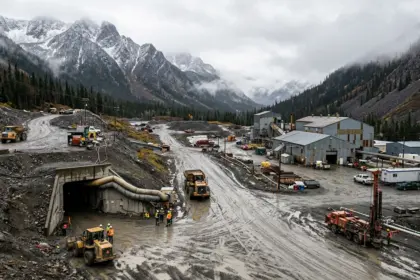
The stakes are visible at Perpetua Resources’ Stibnite gold-antimony project in Idaho. In May 2026, the Export-Import Bank of the United States approved a proposed $2.9 billion loan through its Make More in America Initiative. Perpetua describes Stibnite as holding the only identified domestic U.S. antimony reserve, giving its financing a strategic-minerals dimension beyond gold economics.
The EXIM decision followed extensive due diligence, according to Perpetua. Yet board approval was not an immediate release of funds: the company’s August filing still described loan documentation and closing conditions as outstanding. Capital assumptions could also change during detailed engineering and procurement. Perpetua’s filing acknowledged that design changes and market conditions could materially alter the project’s capital cost estimates.
The reserve that had to be rewritten
At Cerro Los Gatos in Mexico, a different problem reached investors. In January 2022, Gatos Silver disclosed errors in a technical report effective July 1, 2020, and warned of overestimation in its resource model. Its initial assessment indicated that the remaining mineral reserve could contain 30% to 50% less metal than previously estimated, after depletion. The company advised investors not to rely on the earlier resource and reserve figures.
The disclosure led to securities litigation in Ontario. Investors alleged that overstated reserve information appeared in offering documents, including a July 2021 prospectus, with Tetra Tech named among the defendants. An Ontario court approved a C$1 million settlement involving Tetra Tech and two employees in 2024. The settlement resolved their claims without a court finding of negligence.
By October 2022, after new drilling and model revisions, Gatos reported 32% less contained silver in reserves than the earlier estimate, after accounting for depletion.
The contract beneath the report
In the Standard Bank case, the engineer had originally been retained by the borrower. Its contract contained a liability limit and excluded intended third-party beneficiaries. The lender nevertheless used the assessment in its financing process. Those terms became central when the dispute reached court.
A similar review of today’s reports must go beyond credentials. Boards need to understand whether specialists checked recovery assumptions against test work, how much mine planning relies on company data, and whether the advisor had time to inspect the site. Critical exclusions should be evident before the report moves into a financing presentation.
The question before approval
Directors preparing for a financing vote need not rebuild the block model, but they must understand the engagement’s limits and the assumptions capable of changing their decision.
An expert signature should begin scrutiny, not end it.
Before the Board Signs: Five Questions
A valid Qualified Person signature doesn’t mean the board’s due diligence is finished. Before relying on an assessment in a financing decision, directors should establish what the expert was asked to do and what remains unverified.
Who retained the advisor?
Identify the contracting party, who paid the fees and whether there are repeat mandates. A lender may use a report commissioned by the borrower without acquiring the same contractual rights.
Which assumptions were checked?
Ask whether sampling results were verified independently. For metallurgy, determine whether the recovery forecast comes from representative test work or a management target carried into the cash-flow model.
What relationships were disclosed?
Review employment, ownership interests and commercial work for the issuer. Any contingent fee deserves particular attention because it may affect incentives.
How vulnerable is the schedule?
Insist on scenarios for slower permitting, delayed equipment delivery and commissioning problems. A valuation based solely on the planned start date gives little guidance if construction slips.
Who can rely on the findings?
Read the engagement letter for permitted users, exclusions and liability provisions. Ask how unresolved technical disagreements are recorded and escalated.
These questions belong in the board materials before the financing vote, alongside the report itself.