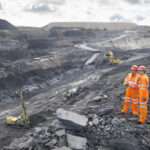
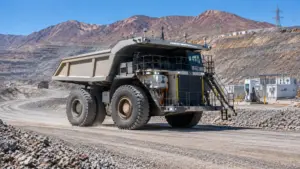
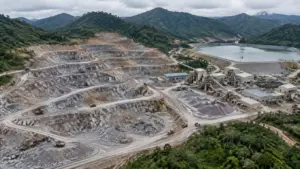
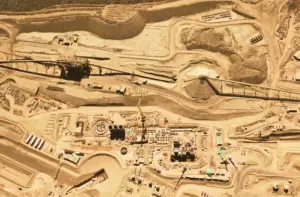
Nickel processing infrastructure links Indonesian ore supply to global stainless steel and battery markets.

By Charles Pitts
Nickel prices are entering the final stretch of 2026 with a stronger floor but no clear path to a sustained rally. Indonesia’s decision to restrict 2026 nickel ore production has reduced the risk of another uncontrolled supply surge, yet elevated exchange inventories and uneven stainless steel demand continue to weigh on the market.
The result is a market defined by competing forces. Supply discipline is tightening the raw-material system, while Indonesia’s large installed processing base, battery-chemistry shifts and accumulated stocks are limiting the upside. For operators and investors, the central question is no longer simply whether nickel is in surplus or deficit. It is which products are available, at what cost and under which regulatory conditions.
Nickel market outlook in one view
The latest accessible LME market data from Westmetall showed nickel cash settlement at $16,675 per tonne on Sept. 8, with the three-month contract at $16,820. LME warehouse stocks stood at 271,008 tonnes.

That price was well below the market’s 2026 high near $19,000 per tonne, recorded in early June. Inventories have also remained historically elevated, although they have eased from levels above 287,000 tonnes recorded in February.

| Indicator | Latest or 2026 reference | Why it matters |
|---|---|---|
| LME nickel cash settlement | $16,675/t on Sept. 8 | Indicates a market still constrained by inventories and demand uncertainty |
| LME three-month nickel | $16,820/t on Sept. 8 | The premium to cash signals modest near-term tightness |
| LME warehouse stocks | 271,008 t on Sept. 8 | High stocks continue to cap price gains |
| Indonesia’s 2026 nickel quota | About 250–260 million wet metric tonnes | Down from 379 million tonnes under the 2025 framework |
| Reported INSG 2026 balance | About 32,000-t deficit | Reflects the most optimistic supply-discipline case |
| Sumitomo Metal Mining 2026 balance | About 256,000-t surplus | Shows how sensitive the outlook is to Indonesian output |
| Battery nickel demand | About 560,000 t in one CRU forecast | Growing quickly, but still smaller than stainless steel demand |
The range of market-balance estimates is unusually wide. The International Nickel Study Group forecast cited by Petromindo points to primary production of about 3.715 million tonnes against usage of 3.747 million tonnes, implying a deficit of roughly 32,000 tonnes.
By contrast, Sumitomo Metal Mining’s forecast points to a surplus of approximately 256,000 tonnes. Other estimates, including those from ING and S&P Global, also retain a surplus view. These differences largely reflect assumptions about Indonesia’s actual ore output, smelter utilization, stainless steel demand and the pace of battery-sector growth.

Indonesia’s policy is tightening the floor
Indonesia remains the decisive variable in the nickel market. The country has built a dominant position in mining, smelting and downstream processing, making government policy a direct influence on global pricing.
The Indonesian Energy and Mineral Resources Ministry said the 2026 national nickel production quota would be capped at approximately 250 million to 260 million tonnes, compared with 379 million tonnes under the 2025 RKAB framework.
The ministry also said it would not approve a broad national quota increase. Exceptions could be made for domestic smelters facing immediate feedstock shortages, but officials emphasized that any additions would be limited and subject to review.
That distinction matters because Indonesia’s smelter capacity is believed to require substantially more ore than the initial quota provides. Industry estimates cited in market coverage place potential domestic ore demand at roughly 310 million to 350 million tonnes. The gap creates competition between nickel pig iron producers, high-pressure acid leach facilities and other processing operations.
Lower ore availability can affect the market in three ways:
- Smelter utilization may fall if plants cannot secure sufficient feedstock.
- Ore prices and premiums may rise as processors compete for compliant material.
- Marginal production may be deferred if higher feedstock, energy or reagent costs erode margins.

Sulphide exploration projects are being reassessed against a more selective nickel supply outlook.
However, a quota is not the same as realized production. Indonesia’s RKAB system allows revisions and supplementary allocations, and market participants will continue to monitor whether the government maintains its restrictive stance through the rest of the year.
Stainless steel remains the market’s anchor
Nickel demand is often discussed through the lens of electric vehicles, but stainless steel remains the largest end-use sector. The International Nickel Study Group says stainless steel accounts for more than two-thirds of first-use nickel.
That makes construction, industrial equipment, appliances and manufacturing activity central to the market outlook. A strong battery market cannot fully offset weak stainless demand if the latter represents the majority of nickel consumption.
The stainless steel picture is mixed. Production remains substantial in Asia, but downstream demand has been uneven. China’s use of stainless scrap also reduces the amount of primary nickel required for each tonne of finished steel. This means stainless output can rise without generating an equivalent increase in primary nickel demand.
For nickel producers, the implication is that volume growth in stainless steel is not enough by itself. The market must also assess the proportion of scrap in the melt mix, the use of ferronickel and NPI, and the level of inventory held by fabricators and distributors.
Batteries provide growth, but not a guaranteed deficit
Battery demand is the fastest-growing source of nickel consumption, particularly for nickel-rich NMC and NCA cathode chemistries. CRU has forecast battery nickel demand at approximately 560,000 tonnes in 2026, with year-on-year growth of around 12%.
This growth is important for Class 1 nickel and battery-grade intermediates. It supports demand for refined nickel, nickel sulphate and mixed hydroxide precipitate. It also improves the long-term strategic value of projects capable of producing traceable, high-purity material.
But battery demand is not uniform across electric vehicles. Lithium-iron-phosphate, or LFP, batteries contain no nickel and have gained market share, particularly in lower-cost vehicle segments and parts of the Chinese market. Recycling is another factor that could reduce the call on primary nickel over time.
The battery story therefore supports a tighter outlook for specific product categories rather than an immediate global shortage. A market can remain oversupplied in NPI and ferronickel while becoming more constrained in high-purity material suitable for battery conversion.
Project economics are becoming more selective
The current price environment is difficult for new projects. Nickel prices in the mid-$16,000s may support the lowest-cost Indonesian operations, but they provide less comfort for high-cost HPAL projects, marginal sulphide mines and developments with large capital requirements.
S&P Global’s 2026 mine-cost outlook has pointed to rising average nickel costs and thin margins across parts of the industry. Higher sulphur costs, ore pricing and processing complexity are particularly important for Indonesian HPAL facilities.
The distinction between supply types is increasingly important:
| Supply type | Main market | 2026 economic position | Key risk |
|---|---|---|---|
| Indonesian NPI | Stainless steel | Competitive at mid-teens nickel prices | Ore availability and quota changes |
| Indonesian HPAL/MHP | Battery intermediates | More exposed to reagent, ore and financing costs | Technical performance and sulphur costs |
| Non-Indonesian sulphide | Class 1, batteries and specialty alloys | Attractive when low-cost and supported by by-products | Capital intensity and permitting |
| Recycled nickel | Stainless steel and battery supply chains | Increasingly important where scrap is available | Collection rates and quality requirements |

Class 1 nickel inventories represent only part of the broader physical market.
Projects outside Indonesia may benefit from supply-chain diversification, lower geopolitical exposure and demand for traceable material. But these advantages do not remove the need for robust economics. Developers still need to demonstrate resilience at prices below $18,000 per tonne, particularly when construction costs, labor expenses and financing rates are elevated.
Base, bull and bear cases
The following framework captures the main variables shaping the nickel market outlook for 2026.
| Scenario | Supply assumptions | Demand assumptions | Indicative LME range |
|---|---|---|---|
| Base case | Indonesia maintains the 250–260 million-tonne quota, with selective smelter-related revisions | Stainless demand improves gradually; battery growth continues but LFP limits upside | $16,000–$18,500/t |
| Bull case | Quota enforcement is strict; ore shortages reduce smelter utilization; HPAL disruptions or higher reagent costs emerge | Stainless steel recovers and NMC battery demand exceeds expectations | $19,000–$22,000/t |
| Bear case | Indonesia expands quotas or realizes production above market expectations | Stainless demand weakens, LFP adoption accelerates and inventories remain high | $14,000–$16,000/t |
The base case is a tighter but still uneven market. Supply discipline supports prices, but high LME stocks and ample Class 2 capacity prevent a rapid return to the extremes seen during previous nickel squeezes.
The bull case requires a physical confirmation of tighter supply. A policy announcement alone may not be enough. Prices would need support from lower smelter output, falling inventories, stronger stainless demand or a clear increase in battery-grade premiums.
The bear case remains credible because Indonesia can influence the market through quota adjustments, while demand remains exposed to Chinese manufacturing and battery-chemistry trends.
What the market should watch next
For operators, investors and industrial buyers, the most important indicators are:
- Indonesia’s supplementary RKAB approvals
- NPI, matte and HPAL production rates
- LME and off-exchange inventory trends
- Class 1 premiums and nickel sulphate pricing
- Stainless steel production and scrap usage
- NMC versus LFP battery-market share
- Sulphur, acid and energy costs for HPAL facilities
- Financing and permitting milestones for non-Indonesian sulphide projects
The nickel market outlook for 2026 is best understood as a transition from uncontrolled supply growth toward managed supply discipline. Indonesia’s quota policy has raised the floor by increasing uncertainty around ore availability and marginal production costs. It has not yet removed the ceiling created by elevated inventories, competing product classes and uneven demand.
The most likely outcome is a market that remains volatile and differentiated. Low-cost NPI can continue to pressure the broader benchmark, while Class 1 and battery-grade nickel gain strategic value. For new projects, the winning characteristics are clear: low operating costs, reliable permitting, credible environmental performance, by-product support and the ability to withstand a prolonged period of mid-cycle prices.