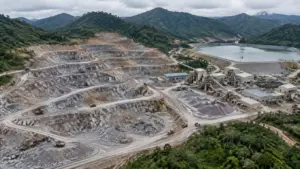
Governments are changing how they approach mining. Instead of funding only mines and mineral projects, they are also investing in the technology that can make those projects work better.

The answer to why governments fund mining technology starts with critical minerals. Countries need reliable supplies of lithium, copper, rare earths and other strategic materials. They also need to extract and process those resources faster, safer and at a competitive cost.
Recent moves in the US, Ghana and India show how this approach is spreading. Each country has a different mining system and policy goal. Yet all three point to the same shift: technology is becoming part of mineral strategy.
Why mining technology is now a policy issue
Mining technology can address problems that policy alone cannot solve.
A country may have large mineral resources. A project can still face difficult geology, high costs, labour shortages, energy demands and environmental pressure.
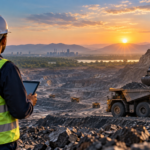
Technology can help tackle several of these challenges.

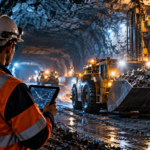
Artificial intelligence can help geologists analyse exploration data. Advanced sensors can improve ore identification. Autonomous equipment can reduce exposure to hazardous areas. Digital platforms can connect planning, production, maintenance and logistics.
The US is putting this approach into practice. The Department of Energy selected four projects for $73 million through its Mine of the Future initiative. The projects will create real-world testing grounds for emerging mining technologies. DOE says the programme will help commercialise technologies and strengthen domestic critical-material supply chains.
Mining 4.0 vs Mining 5.0
Mining 4.0 focused heavily on automation and digitalisation. Mines adopted sensors, connected equipment, remote operations and data platforms.
Mining 5.0 takes that model further.
The newer approach links technologies into wider systems. It also gives greater attention to people, sustainability and collaboration between humans and machines.
A Deloitte and Indian Chamber of Commerce report describes Mining 5.0 as a value-driven, technology-enabled and human-centric model. It highlights artificial intelligence, advanced sensing, robotics and integrated digital systems.
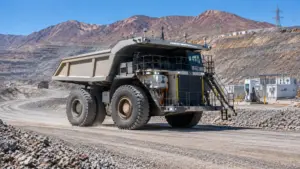
A mine does not become smart simply because it has autonomous trucks.
Those trucks need reliable connectivity, accurate sensing and strong production systems. They also need workers who can operate and maintain them.
That is the key difference between isolated automation and a connected Mining 5.0 operation.
Critical minerals change the calculation
The rise of critical minerals has made this shift more urgent.
Lithium, copper, cobalt, rare earths and other minerals support batteries, power networks, electronics, defence systems and advanced manufacturing.
Governments now pay closer attention to where these minerals come from. They also want greater control over vulnerable supply chains.
That changes the value of mining technology.
A government may support a technology testbed because the benefits can reach several domestic mining projects. A successful technology can improve productivity, reduce costs and help companies develop resources that might otherwise remain uneconomic.
The US programme shows this broader approach. Its four proving grounds will support digital connectivity, automation, electrification, energy management, drilling, sensing and mineral processing.
Ghana shows another side of the trend
Ghana’s recent pitch to Australian investors offers a different example.
At the 2026 Africa Down Under Summit in Perth, Ghana promoted opportunities in lithium, bauxite, iron ore and base metals. Officials also stressed the need to move beyond the traditional “dig-and-ship” model.
The government wants more local processing, jobs and industrial development.
Technology fits directly into that strategy.
Processing minerals inside Ghana requires modern plants and skilled workers. It also requires better data, equipment and technical expertise.
Investment in mining technology can therefore support both mineral extraction and the industries that develop around it.
India connects technology with long-term growth
India provides another important example.
A Deloitte-ICC report says the country’s mining sector could add up to $500 billion to the economy and create 25 million incremental jobs by 2047. The report links that potential to technology, digitalisation and more sustainable mining operations.
The numbers highlight a wider point.
Governments increasingly see mining technology as an economic multiplier. Better technology can improve the performance of existing mines. It can also help unlock new resources and create demand for engineering, equipment, processing and digital services.
For India, the goal extends beyond individual mines. The ambition is to build a larger and more productive mining ecosystem.
Why governments fund the technology gap
There is a basic funding problem in mining innovation.
Technology developers need real operating conditions to prove their systems. Mining companies, however, may hesitate to test unproven technology during production.
That creates a gap between laboratory research and commercial deployment.
Government-funded proving grounds can help close that gap.
They give developers a place to test equipment and software under realistic conditions. They also give mining companies evidence before they commit large amounts of capital.
Public funding can therefore act as a bridge. It can reduce technology risk without replacing private investment.
Technology can influence mining capital flows
This also creates a finance angle.
Mining projects already carry geological, construction and market risks. Unproven technology can add another layer of uncertainty.
Investors want evidence that new systems can deliver reliable results at commercial scale.
A successful testbed can provide that evidence.
Technology companies can demonstrate their products to potential customers. Mining companies can assess performance before making major purchases. Investors can gain a clearer view of the risks attached to technology-led projects.
As a result, mining automation government investment can influence capital flows beyond the original public funding.
The human side of Mining 5.0
More automation does not mean less need for people.
It changes the skills that mines require.
Workers will need to operate, monitor and maintain advanced equipment. Engineers will need to combine traditional mining knowledge with digital skills.
The US proving-ground projects include workforce development. Ghana is also building mining-sector skills through education and training programmes.
That makes people a central part of Mining 5.0.
The future mine will not rely on machines alone. It will depend on how effectively people, technology, capital and mineral resources work together.
The bigger shift in mining policy
The US, Ghana and India are approaching mining from different directions. However, their recent initiatives point to a common change.
Governments are no longer looking only at what lies underground. They are also asking whether their industries have the technology, skills and capital needed to extract those resources competitively.
That is why governments are funding mining technology.
They are not simply buying machines or supporting research. They are investing in the ability to explore, extract and process strategic minerals more effectively.
The next stage will depend on results.
If government-backed technology programmes can move useful systems from laboratories into producing mines, they could reshape the economics of mining. More importantly, they could help countries turn mineral resources into secure supply chains, industrial growth and long-term economic value.
Related Articles: http://www.skillings.net/mining-corporations-develop-other/