The US Department of Energy (DOE) has selected four projects for $73 million in funding. The money will establish real-world testing grounds for next-generation mining technologies.

The move comes as Washington seeks to strengthen domestic mining. It also aims to secure critical-mineral supply chains.
DOE announced the funding on September 9 through its Mine of the Future initiative. The programme will help move emerging mining technologies from laboratories to field-scale environments. Developers can then test the systems under real mining conditions.
For the US mining industry, the initiative targets a familiar problem. A technology may work in a laboratory but still face major challenges at an operating mine.
Four proving grounds for US mining innovation
DOE’s Advanced Mining and Mineral Processing Technologies Office selected four projects for award negotiations. Together, they will create a network of mining technology test sites across the US.

Innovative Wireless Technologies Inc. will develop a national testbed for underground and surface mining. The company is based in Lynchburg, Virginia.

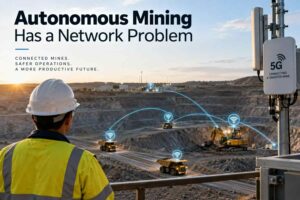
The testbed will focus on digital systems, connectivity and automation. Developers can test these technologies under real mining conditions. The project will target safety, productivity and supply-chain resilience.
The project will cover sites in Julian, West Virginia; Idaho Springs, Colorado; and Blacksburg, Virginia.

The University of Arizona will establish an underground testbed in Sahuarita, Arizona. The facility will focus on advanced mining, electrification and energy management.
The project aims to reduce technical and operational risks. It will also target higher productivity and better energy efficiency.
The University of Missouri in Rolla will create a multifunctional mining technology proving ground. The project will combine underground technology testing with advanced comminution research.
The facility will also support workforce development. It will give researchers and industry teams a place to test new mining systems in practical conditions.
Southern Methodist University will develop a synthetic mine at an advanced drilling and sensing facility in Navasota, Texas.
DOE describes the project as the world’s first synthetic mine. The site will give developers a controlled setting for testing mining tools, workflows and automation systems.
DOE mining technology grant targets the lab-to-mine gap
The DOE mining technology grant tackles one of the biggest challenges in mining innovation.
Mining companies cannot test every emerging technology at an operating mine. Production schedules, safety requirements and geological conditions can make field trials difficult.
Underground mines add further complications. Dust, vibration, water and limited connectivity can affect new equipment and digital systems.
A laboratory cannot always reproduce those conditions.
That makes mining proving grounds in the US strategically important. These facilities can bridge the gap between research and commercial deployment.
DOE expects the projects to support research, testing and field-scale demonstrations. The facilities will also help companies assess technology risks before wider deployment.
Mine of the Future pushes technology toward deployment
The Mine of the Future initiative takes a practical approach to mining innovation.
The programme gives technology developers access to environments where they can test new systems. They can identify technical problems before commercial deployment.
The four projects cover several areas. These include automation, digital connectivity, electrification, energy management, drilling, sensing and mineral processing.
That combination matters because mining technologies often depend on one another.
An autonomous mining system, for example, needs reliable connectivity and sensing. Electrified equipment also requires suitable energy-management systems.
Testing these technologies within realistic mining workflows can reveal problems that isolated laboratory tests may miss.
US domestic mining innovation gets a strategic role
The technology push also serves a wider policy goal.
The US wants to strengthen domestic critical-mineral supply chains. Critical minerals support energy, manufacturing, electronics and national-security applications.
That makes US domestic mining innovation more than a productivity issue.
Better drilling and sensing could improve resource characterisation. Automation could raise productivity and improve safety. Digital systems could help operators manage mines more efficiently.
Electrification could also help modernise mine sites. New processing technologies could improve the recovery and value of domestic mineral resources.
The immediate challenge remains clear. Developers must prove that these technologies can work reliably and economically at mining scale.
Critical minerals give the programme added urgency
The US depends on international supply chains for several critical minerals and materials. That exposure has increased the focus on domestic production and processing.
Technology can help address some of the barriers facing US mining projects.
Advanced sensing can help companies understand deposits more efficiently. New drilling technologies can improve exploration. Automation can reduce exposure to hazardous working conditions.
Processing technology may also help companies recover more value from domestic resources.
But successful deployment will depend on economics as well as engineering.
A technology may perform well in a test environment. Mining companies still need to know whether it can deliver a commercial return.
Capital will follow proven technology
That commercial question also gives the programme a finance dimension.
Mining projects require substantial capital. Exploration carries geological risk. Mine development can take years before a project generates revenue.
Technology introduces another layer of risk. Mining companies may hesitate to invest heavily in systems without a proven operating record.
Field-scale testing can help reduce that uncertainty.
A successful proving ground could give miners greater confidence before they commit capital to new equipment or digital systems. It could also help technology companies demonstrate commercial value to potential customers and investors.
That creates a potential pathway from technology development to private investment and mine deployment.
Workforce development moves alongside automation
The four projects will also support hands-on training for the next generation of US mining workers and engineers.
Mining operations are becoming more technology-intensive. Workers will need to operate and maintain advanced systems.
Engineers will also need to combine traditional mining knowledge with digital skills.
That makes workforce development an important part of the Mine of the Future strategy.
From prototype to producing mine
The success of the $73 million programme will ultimately depend on what happens after testing.
The goal is not simply to build four technology facilities. The bigger objective is to move useful technologies into operating mines.
If the projects succeed, they could shorten the path from prototype to producing mine.
That could help US miners adopt new technologies with greater confidence. It could also improve productivity, safety and energy efficiency.
For Washington, the larger prize is a stronger domestic mining sector.
For mining companies, it is access to technologies that have already faced real-world conditions.
And for the US critical-minerals supply chain, the programme offers a practical way to connect innovation with domestic mineral production.
Related Articles: http://www.skillings.net/papua-new-guinea-takeover-barrick-golds-porgera-mine/