Key Takeaways
- Gold prices fell over 1.6% after a surprise Israel-Iran ceasefire.
- Safe-haven demand eroded amid rising investor optimism and stronger equities.
- Fed signals suggest possible July rate cut, anchoring longer-term gold support.
- Analysts project a rebound toward $3,600 by year-end, peaking in 2025.
Impact of Israel Iran Ceasefire on Gold Market: Prices Slide Amid Risk-On Shift
Gold dropped sharply Tuesday after U.S. President Donald Trump announced a ceasefire between Israel and Iran, triggering a sudden shift in investor sentiment and weakening the safe-haven appeal that had fueled bullion’s rally in recent months.

The impact of the Israel-Iran ceasefire on the gold market was immediate. Prices fell as much as 1.6% to $3,316 an ounce in early trading before recovering to $3,322. The drop marked gold’s lowest level in two weeks, as markets recalibrated following weeks of geopolitical escalation.
Safe-Haven Gold Appeal Fades on Geopolitical Optimism
The ceasefire, first disclosed on Trump’s Truth Social platform and later confirmed by Israeli Prime Minister Benjamin Netanyahu, was intended as a “lasting end to the fighting.” That narrative was enough to trigger a sharp reversal in safe-haven flows.
“Gold prices are trending lower today, driven by a shift towards greater risk appetite,” said Ricardo Evangelista, senior analyst at ActivTrades. “I don’t believe that gold will fall below $3,000 in the short term, but $3,300 looks like a solid floor.”
Global equity markets rallied on the ceasefire news. Oil tumbled. The U.S. dollar weakened. And non-yielding bullion—historically a port in stormy markets—lost its immediate appeal. Though the ceasefire’s credibility remains in question—Israel resumed air strikes later Tuesday citing violations—the mere prospect of a pause in conflict was enough to diminish the safe haven gold appeal.

Fed Rate Cuts Could Anchor Gold in Second Half of 2025
Yet markets barely had time to recalibrate. By midday Tuesday, Israel’s defense minister ordered retaliatory strikes on Tehran, alleging a breach of the ceasefire terms. That duality—hope of de-escalation undermined by fresh violence—underscored gold’s precarious position as a geopolitical hedge.

| Date | Gold Price (USD/oz) | Key Event |
|---|---|---|
| June 10, 2025 | $3,482 | Gold peaks amid Middle East crisis |
| June 24, 2025 | $3,316 | Israel-Iran ceasefire announced |
| July 2025* | TBD | Fed July meeting anticipated |
Still, analysts don’t foresee a full unwinding of bullion positions.

“The pullback may be temporary,” said ANZ analysts in a note. “We expect gold to reach $3,600 by year-end and peak in 2025 before softening in 2026.”
What happens to gold when risk appetite returns?
The market’s attention is also fixed on the Federal Reserve. Chair Jerome Powell is set to testify before the House Financial Services Committee this week. His tone could set the trajectory for bullion prices in the second half of 2025.
Fed Vice Chair Michelle Bowman said Monday that labor market risks justify a rate cut as early as July. “Should inflation pressures remain contained, I would support lowering the policy rate,” she said at an event in Prague.
Lower interest rates generally benefit gold, which yields nothing but holds value during periods of monetary easing. As of Tuesday, investors were pricing in 57 basis points of Fed rate cuts by year-end.
Gold Price Prediction 2025: Analysts See Recovery After Pullback
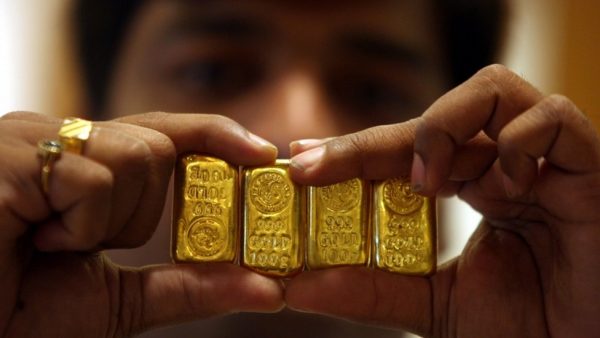
Despite the volatility, the technical outlook for gold remains broadly constructive. ANZ sees a bullish bias anchored above $3,300, with resistance at $3,500 and a breakout target of $3,600 before year-end.
Compared globally, bullion remains one of the best-performing major assets of 2025. Central bank demand—particularly from emerging economies diversifying away from the U.S. dollar—continues to support prices. The current pullback is seen by many as a reset. With technical support intact and fundamentals aligned, strategists argue the impact of Israel Iran ceasefire on gold market may be temporary—particularly if the Fed loosens policy or conflict resumes.
But for now, gold’s geopolitical narrative has lost its anchor. Markets are watching Jerusalem and Tehran. And all eyes are on Powell.