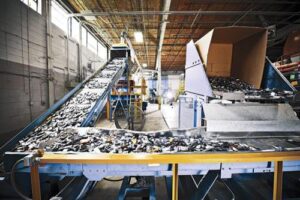
Silver-bearing ore moves through a modern mining and processing complex.

By Charles Pitts
Silver enters 2026 with a market balance that remains tight even as one of its largest industrial demand segments begins to retreat.
The Silver Institute and Metals Focus expect the global market to record a sixth consecutive annual deficit, with demand exceeding supply by about 46.3 million ounces. Earlier estimates placed the shortfall closer to 67 million ounces, illustrating how sensitive the outlook is to assumptions about investment demand, recycling and industrial consumption.
The central issue for operators and investors is not simply whether silver demand grows. It is whether modest supply gains can keep pace with a market that is drawing on above-ground inventories while serving solar, electronics, automotive, grid and investment demand.
More Read

Market snapshot
| Indicator | 2025 estimate | 2026 outlook | Why it matters |
|---|---|---|---|
| Total silver supply | About 1.03 billion oz | About 1.05 billion oz | Supply reaches a decade high but remains below demand |
| Total demand | About 1.13 billion oz | About 1.11 billion oz | High prices reduce jewelry and some industrial consumption |
| Industrial demand | About 657 million oz | About 640 million oz | Still the largest demand segment |
| Photovoltaic demand | About 187 million oz | About 151 million oz in the Metals Focus base case | Thrifting and substitution are accelerating |
| Mine production | Broadly stable | About 820 million oz | New supply is limited by grades, permitting and project timelines |
| Market balance | 40.3 million oz deficit | 46.3 million oz deficit | The structural shortfall persists |
| J.P. Morgan price view | : | About $81/oz average | Indicates elevated but volatile pricing rather than a straight-line rally |
The figures above are forecasts and estimates compiled from the World Silver Survey 2026, the Silver Institute and published market research. They should be read as a framework rather than a guaranteed price path.

Why the deficit can widen as industrial demand falls
At first glance, a decline in industrial demand should ease pressure on the silver market. The problem is that supply is not responding quickly enough, while physical investment demand is expected to rise.
The Silver Institute expects total silver demand to decline by roughly 2% in 2026. Industrial demand is forecast to fall by approximately 3%, while jewelry and silverware consumption face more severe pressure from elevated prices. In contrast, global coin and bar demand is expected to increase by roughly 18% to 20%, reaching a three-year high of about 227 million ounces.
More Read

That shift changes the composition of the market. Fabrication demand may soften, but investment demand can absorb available material, particularly when inventories are already under pressure. A relatively small change in investor buying can therefore have an outsized effect on price because silver is a smaller and less liquid market than gold.
The result is a market that can remain undersupplied even without broad-based industrial growth.
Solar demand is contracting, but remains strategically important
Photovoltaics are the largest swing factor in the 2026 silver outlook.
Silver is used in conductive pastes that help carry electricity from solar cells. As prices rise, manufacturers have responded by reducing the amount of silver used per cell, improving production efficiency and testing copper-based alternatives.
The Silver Institute-based outlook reported by PV Magazine puts 2026 photovoltaic demand at approximately 151 million ounces, down about 19% from 2025. Other estimates are less severe, with some forecasts pointing to a decline of roughly 7%. The difference reflects uncertainty over the speed of substitution and the pace of global solar deployment.

Silver conductive contacts are applied during automated photovoltaic cell production.
Even under the more bearish demand scenario, solar remains a major source of silver consumption. The sector’s use of less silver per watt does not eliminate its influence; it means that demand growth depends increasingly on the balance between rising panel volumes and falling silver intensity.
This creates what some analysts describe as a “solar paradox”: the industry is using less silver in each unit, but total renewable-energy deployment remains large enough to sustain substantial demand.
AI, electronics, EVs and the grid provide a partial offset
The decline in photovoltaic demand is being partly offset by other industrial applications.
Silver’s electrical conductivity makes it valuable in high-performance contacts, power-management systems, automotive electronics and selected components used in electric vehicles. Data-center expansion linked to artificial intelligence is also supporting demand for electrical and high-speed networking infrastructure.
The World Silver Survey expects these applications to limit the overall industrial decline. They are unlikely to replace the full volume lost in solar in the short term, but they create a broader industrial base for the metal.
For mining companies, this distinction matters. Solar demand is exposed to manufacturing efficiency and substitution. Data centers, grid investment and automotive electronics are more closely tied to capital spending, electrification and infrastructure cycles. A more diversified industrial demand base could make silver consumption less dependent on one technology, even if annual volumes remain volatile.
Mine supply remains the main constraint
Global silver mine production is expected to rise by roughly 1% in 2026, to about 820 million ounces. That increase is modest compared with the scale of the market and is not enough to eliminate the deficit.
Silver supply is constrained by the structure of the mining industry. Much of the metal is produced as a by-product of lead, zinc, copper and gold mines rather than from primary silver operations. Higher silver prices therefore do not automatically generate a rapid supply response. A copper or zinc mine will generally be developed according to the economics of its primary metal, with silver providing additional revenue.
Primary silver mines face the same challenges affecting the broader mining sector: declining grades, inflation in labor and equipment costs, permitting delays, water constraints and rising capital requirements.
Recycling provides an additional source of metal, but it is also price-sensitive. Higher prices can bring more scrap into the market, particularly from industrial materials and jewelry. However, recycling is unlikely to close the deficit unless prices remain high enough to change collection and processing economics.
Silver price prediction 2026: three scenarios
The J.P. Morgan research outlook points to an average price near $81 an ounce in 2026. The Silver Institute does not publish a formal annual price target, but its analysis describes a market in price discovery, with physical support emerging around the $70–$80 range after periods of sharp volatility.
A practical scenario framework is therefore more useful than a single number:
| Scenario | Indicative 2026 range | Main conditions |
|---|---|---|
| Bear case | $55–$70/oz | Faster solar substitution, weaker physical investment, stronger dollar and higher real yields |
| Base case | $70–$90/oz | Persistent deficit, firm investment demand and gradual supply growth |
| Bull case | $90–$110+/oz | Accelerating inventory drawdowns, renewed ETF or physical buying, weaker monetary conditions and supply disruptions |
These ranges are not direct investment recommendations or guaranteed forecasts. The bear case would require a meaningful demand or liquidity shock, while the bull case would likely need both continued physical tightness and a strong macroeconomic catalyst.
The key price risk is volatility. A deficit does not ensure a smooth rally. Silver can fall sharply when investors reduce positions, even if the physical market remains tight. Conversely, thin inventories can amplify upward moves when buying accelerates.
Mining stock valuations: margin, risk and business model
Silver equities provide exposure to the metal, but companies do not respond identically to higher prices.
Pan American Silver is a diversified producer with 2026 attributable silver guidance of roughly 25–27 million ounces and silver-segment all-in sustaining costs (AISC) in the mid-teens per ounce. Its gold production and multi-jurisdictional portfolio provide additional revenue diversification.
That cost position is important. S&P Global expects the global weighted-average silver AISC to be about $23.44 an ounce in 2026. A producer operating below that level has greater margin protection if prices weaken, although its valuation may already reflect that quality.
First Majestic Silver offers more direct exposure to silver but with higher operating costs. Its 2026 guidance calls for approximately 13.0–14.4 million ounces of silver, with consolidated AISC in the mid- to high-$20s per silver-equivalent ounce. That creates greater sensitivity to a sustained silver rally, but also more downside exposure if prices move toward the lower end of the forecast range.
Wheaton Precious Metals has a different profile. As a streaming company, it does not operate mines or report AISC in the same way as a producer. It provides upfront capital to mining partners in exchange for the right to purchase a portion of future production at predetermined prices. Its margins are typically higher and its operating risks lower, which helps explain why streaming companies often trade at valuation premiums to miners.
Investors comparing silver equities should therefore examine:
- AISC relative to the expected silver price range;
- production growth and reserve replacement;
- mine-life and expansion requirements;
- exposure to by-product metals;
- jurisdictional and permitting risk;
- balance-sheet strength and sustaining capital needs; and
- whether the company is a miner, developer, royalty company or streamer.
A high silver price can improve cash flow, but it can also inflate acquisition prices, labor costs and construction budgets. Valuation depends on how much of the expected commodity upside is already reflected in the share price.
What could change the outlook
The 2026 silver market will be shaped by four variables.
First, photovoltaic thrifting could move faster than expected, reducing industrial demand more sharply. Second, physical investment could weaken if interest rates remain high or precious-metals positioning becomes crowded. Third, recycling could rise if prices stay elevated. Finally, mine disruptions or delays could make the deficit larger than current forecasts suggest.
For operators, the focus will remain on cost control, grade management and sustaining capital. For investors, the more durable signal may be whether companies can expand production without sacrificing balance-sheet quality.
The broad outlook is constructive but not risk-free. Silver is expected to remain in deficit, industrial demand will still account for more than half of total consumption, and mine supply is unlikely to respond quickly. Those conditions support historically high prices, but the path will depend heavily on investment flows and the pace of substitution in solar manufacturing.
For additional market context, see Skillings’ mining market intelligence coverage, metals price news and analysis of the gold market.