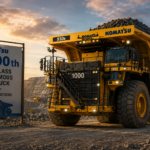
The Maharashtra government has requested central approval to allocate six iron ore blocks in Gadchiroli to the Maharashtra State Mining Corporation (MSMC), a move that could significantly influence India’s emerging green steel ecosystem.

Chief Minister Devendra Fadnavis has positioned the proposal as more than a mining initiative. The objective is to secure raw material supply for a large-scale industrial corridor that includes steel manufacturing, logistics infrastructure, and downstream processing industries.
Why This Matters
India’s steel industry faces a challenge that is increasingly common across global mining jurisdictions: possessing mineral resources is not the same as having reliable mineral supply.
While hundreds of mineral blocks have been auctioned nationwide in recent years, only a fraction have reached commercial production. According to Maharashtra officials, many projects remain stalled because aggressive auction premiums have reduced project viability and delayed mine development.
The state’s proposal effectively argues that direct development through a government-owned mining corporation could accelerate production timelines compared with the traditional auction model.
If approved, MSMC would become both producer and supplier of iron ore, providing greater control over feedstock availability for future steel projects.

The Green Steel Connection
The request is closely linked to Maharashtra’s ambition of becoming a major green steel manufacturing hub.
Gadchiroli possesses several advantages rarely found together in a single region:
- Large iron ore deposits
- Coal resources
- Limestone reserves
- Significant water availability
- Planned rail connectivity
- Access to western export ports
The state has already signed agreements with major steelmakers, including Tata and JSW, indicating that policymakers are attempting to build an integrated mining-to-steel value chain rather than isolated extraction projects.
If the proposed railway links and freight corridors connecting Gadchiroli to JNPT and Vadhavan ports are completed, the region could emerge as one of India’s most important steel manufacturing clusters.
Potential Challenges
Despite the optimism, several hurdles remain.
Central Government Approval
The Ministry of Mines must approve the allocation request. Mining leases involving strategic mineral assets often require extensive regulatory review.
Infrastructure Execution
Railways, logistics corridors, processing facilities and industrial parks require significant capital investment and long development timelines. Delays in supporting infrastructure could slow the overall vision.
Environmental and Social Considerations
Gadchiroli contains ecologically sensitive areas and tribal communities. Future mine development will likely face scrutiny regarding land acquisition, environmental approvals and community engagement.
Market Competitiveness
While Maharashtra aims to lower steel production costs, long-term competitiveness will depend on operational efficiency, logistics costs, energy pricing and global steel market conditions.
Industry Perspective
The most important takeaway is not the six mines themselves.
The bigger story is that Indian states are increasingly seeking greater control over strategic mineral resources to support domestic manufacturing ambitions.
Similar resource-to-industry strategies are being pursued globally as governments attempt to secure supply chains for steel, energy transition materials and critical minerals.
If Maharashtra succeeds, the project could become a model for integrating mining, infrastructure and manufacturing development under a single state-led industrial strategy.
Skillings Take
The proposal highlights a growing debate within India’s mining sector: whether strategic mineral resources are developed more efficiently through competitive auctions or through state-backed operators focused on long-term industrial objectives.
If approved and executed successfully, the Gadchiroli initiative could transform Maharashtra from a mineral-producing state into a fully integrated steel manufacturing hub. However, success will ultimately depend on how quickly the mines, logistics networks and steel plants move from policy announcements to operational reality.
For investors and industry participants, the key indicators to watch are central government approvals, mine development timelines, railway construction progress and future steel capacity announcements linked to the project.