First-Ever Commercial-Scale Processing of Deep-Sea Nodules Achieved
Canada’s The Metals Company (TMC) has reached a significant milestone in the world of deep-sea mining by successfully producing high-temperature material (calcine) from deep-sea polymetallic nodules. This breakthrough occurred at PAMCO’s rotary kiln electric-arc furnace facility in Hachinohe, Japan, marking the first commercial-scale processing of such nodules.
TMC’s head of onshore development, Jeffrey Donald, expressed enthusiasm over this achievement, stating, “After years of carefully planned development, bench-scale tests, engineering studies, and pilot demonstrations, it’s very exciting to see the world’s first commercial-scale processing of our nodules.”
Related News
-
MINExpo INTERNATIONAL® 2024: A Critical Convergence for the Mining Industry
-
Global Mining Automation Market to Double by 2032, Driven by Safety, Efficiency, and Technological Advancements
-
New Tech to Battle Corrosion: Game-Changer for Mining Equipment Maintenance
-
China Tightens Export Controls on Antimony Amid Rising Geopolitical Tensions
Innovative Processing of Polymetallic Nodules
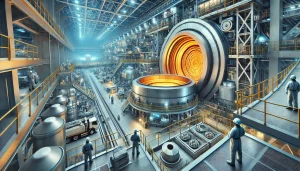
The initial trial involved heating a 2,000-tonne sample of deep-seafloor polymetallic nodules to remove moisture and begin transforming the minerals into their metallic forms. Approximately 1,200 tonnes of nodules were processed into 500 tonnes of calcine using PAMCO’s 131-meter commercial kiln. The calcine will now cool before being transferred to PAMCO’s demonstration smelting facility, where the next phase will see the calcine smelted into high-grade alloys.
This trial is not just a technological achievement but also a foundational step towards anticipated processing agreements between TMC and PAMCO. The information and practical knowledge gained will guide future large-scale operations, potentially revolutionizing the supply of key metals for industries such as electric vehicles and renewable energy.
Memorandum of Understanding for Large-Scale Operations
In November 2023, TMC signed a Memorandum of Understanding (MoU) with PAMCO to conduct a feasibility study to convert 1.3 million tonnes of wet polymetallic nodules annually into high-quality nickel-copper-cobalt alloy and manganese silicate. These materials are critical for the manufacture of lithium-ion batteries, electrical infrastructure, and steel.
PAMCO’s senior executive officer overseeing the project, Chitaru Okamura, highlighted the significance of this development, stating, “The trial production of calcined nodules for the first smelting trial using PAMCO’s commercial-scale kiln marks an important milestone in commercial nodule processing into battery metals, representing the world’s first trial.”
Advances in Cobalt Production from Deep-Sea Nodules
In June 2024, TMC achieved another first in the deep-sea mining sector during a pilot-scale processing operation. Alongside Swiss testing provider SGS, TMC successfully generated cobalt sulphate from deep-sea polymetallic nodules, using a proprietary flowsheet design that converts high-grade nickel-copper-cobalt matte into high-purity cobalt sulphate. This process is environmentally forward-thinking, generating fertiliser products rather than solid waste or tailings.
The Future of Deep-Sea Mining
Deep-sea mining, while controversial, holds the potential to unlock vast resources of critical metals required for the global transition to a green economy. Polymetallic nodules, found on the ocean floor, contain rich deposits of nickel, copper, cobalt, and manganese, essential for battery production and other high-tech applications.
TMC’s success at PAMCO’s facility demonstrates the viability of commercial-scale nodule processing, setting the stage for further developments in deep-sea mining. However, this nascent industry still faces significant environmental and regulatory challenges, including concerns about the impact on deep-sea ecosystems.
As TMC and PAMCO move forward, their work could redefine the supply chain of key metals, reducing dependence on traditional mining methods and regions. This advancement not only marks a technological triumph but also brings into focus the broader implications for the future of resource extraction and sustainability.