A mineral discovery can attract investors, government attention and headlines about future supply. But finding a deposit is only the first step towards building a mine.

Before a company can produce saleable material, it must establish the deposit’s size and quality, demonstrate that it can recover the target mineral, secure the necessary rights and approvals, raise capital and build an operation that works in practice.
Each stage answers a different question. Geological evidence establishes what lies underground. Metallurgical testing determines how the material might be processed. Feasibility studies assess whether a proposed mine can work technically and economically. Permitting establishes whether development can proceed under the applicable rules.
These stages also depend on one another. A change in the processing route can alter plant design, water requirements, waste management and project costs. Those changes may affect environmental studies, permit applications and financing.
The path from discovery to production is not simply a sequence of milestones. It is a process of reducing uncertainty—and managing the consequences when new evidence changes the plan.
More Read
1. Exploration: Establishing Whether a Deposit Exists
Mineral exploration begins with a geological hypothesis. Geologists examine rock formations, geological maps, geochemical samples and geophysical data to identify areas that may contain a mineral deposit.

Modern exploration combines field mapping with airborne surveys, remote sensing, satellite data and digital geological models. These tools help companies identify targets, but they cannot establish on their own that a deposit can support a mine.
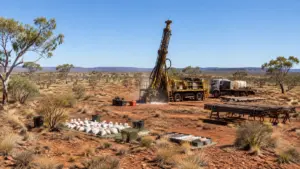
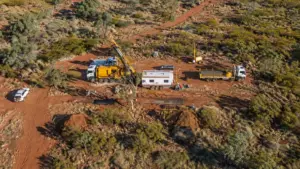
Drilling provides direct evidence of the geology beneath the surface. Core samples reveal rock types and mineralisation, while laboratory assays measure the concentration of target elements or minerals.
More Read

Geologists use these results to interpret the deposit’s grade, geometry, continuity and geological controls. Additional drilling helps establish how mineralisation changes across the deposit and at different depths.
A discovery hole may confirm that mineralisation exists. It does not establish the deposit’s full size, economic value or potential mine life.
Further exploration may also investigate structural complexity, groundwater, geotechnical conditions and other characteristics that could influence mine design.
The outcome: evidence of mineralisation and a basis for deciding whether further exploration is justified.
What remains unknown: the deposit’s full extent, recoverable quantity, economic viability and development requirements.
2. Resource Definition: How Much Mineral Is There?
As exploration advances, companies develop geological models and estimate the quantity and quality of the mineral deposit.
The distinction between a mineral occurrence, a resource and a reserve is fundamental. These terms describe different levels of evidence and economic assessment.
- Mineral occurrence: evidence that a mineral is present in a particular location.
- Mineral resource: a concentration of material supported by geological evidence and assessed under a recognised reporting framework.
- Mineral reserve: the economically mineable part of a resource, established after considering relevant technical, economic and other modifying factors.
The terminology and reporting requirements depend on the classification framework being used. The USGS distinguishes identified resources from reserves that can be economically extracted under the conditions considered.
Resource estimates may be classified as inferred, indicated or measured, reflecting different levels of geological confidence. These categories are not interchangeable, and a resource estimate does not automatically become a reserve.
A large resource figure can attract attention, but it does not tell the whole commercial story. The company must establish how much material can be mined, what can be recovered, what it will cost and whether the resulting product can be sold.
Reserve estimates are also not guarantees of eventual production. They depend on the technical information, economic assumptions and conditions considered at the time of reporting.
The question is no longer just whether the mineral is present. It is how much can be defined with confidence—and what portion may be economically mineable.
3. Metallurgy and Feasibility: Can the Deposit Become a Saleable Product?
Geology establishes what is in the ground. Metallurgy determines how the target material can be separated and recovered.
Test work examines how ore responds to processes such as crushing, grinding, flotation, leaching and other separation methods. The appropriate route depends on the deposit’s mineralogy and the product the company intends to sell.
Recovery is a critical variable. A deposit may contain a substantial quantity of a target element, but only a portion may be recovered into a saleable product. Impurities, mineral associations and the characteristics of the host rock can complicate processing.
The process also has costs and environmental implications. Energy, water, reagents, waste rock, tailings and the management of impurities all influence the project’s design and economics.
Companies use metallurgical results and engineering studies to develop a mine plan and processing concept. Studies typically progress through increasingly detailed assessments, although their names and requirements vary by jurisdiction and reporting framework.
As the work advances, the company estimates capital costs, operating costs, production rates, mine life, infrastructure needs and potential revenues. These estimates remain subject to assumptions and uncertainty.
The interaction between metallurgy and project design is especially important. If test work reveals that the proposed recovery route is unsuitable, the company may need to change the process plant, revise cost estimates or reconsider the project’s economics.
A technically impressive deposit can therefore fail to become a viable mine—not because the mineral is absent, but because recovering it at an acceptable cost proves difficult.
4. Mineral Rights and Land Access: Does the Company Have the Right to Develop It?
Discovering a deposit does not automatically give a company the right to mine it.
The developer must establish who owns or controls the mineral rights, what surface access is available and which legal framework governs exploration and extraction. Surface ownership and mineral ownership may be separate. Rights can also differ between private land, state-owned land and federal public lands.
In the United States, federal public lands have different frameworks for locatable, leasable and saleable minerals. The Bureau of Land Management identifies these as three broad categories, each with its own legal requirements.
For locatable minerals, a mining claim establishes certain rights to the mineral deposit, but it does not by itself provide exclusive surface rights or complete authorisation for every aspect of mine development.
A project may also need access to roads, power, water, processing sites, waste storage areas and transport corridors. Those requirements can extend beyond the land containing the deposit.
A company may therefore control mineral rights and still face unresolved questions about surface access, infrastructure or the approvals required to develop the site.
Mineral rights establish part of the legal pathway to development. They do not, on their own, establish that a mine can be built.
5. Permitting: Can the Project Proceed Under the Applicable Rules?
Permitting is often discussed as a single hurdle. In practice, a mine may require multiple approvals from different authorities, depending on its location, design, land status and potential impacts.
Approvals may relate to land use, mine plans, water use, discharges, air emissions, waste and tailings facilities, protected habitats, cultural resources, roads and other infrastructure. The precise requirements vary by jurisdiction and project.
Environmental review may require baseline studies before construction. These can examine water quality, hydrology, wildlife, vegetation, air quality and other site conditions. The results help identify potential impacts and the measures needed to avoid, minimise or manage them.
The process may also involve agency review, public consultation, requests for additional information and revisions to project plans. If the design changes, some assessments or applications may need to be updated.
There is no universal permitting sequence. Some activities can proceed in parallel, while others depend on earlier decisions, completed studies or a sufficiently developed design.
How the permitting pathway works
Define the project
Mine plan, site footprint, processing and infrastructure
Establish baseline conditions
Environmental, water, land and other site studies
Submit applications
Required plans, assessments and supporting evidence
Review and consultation
Agency review, public input and responses to issues
Required approvals secured
Subject to conditions and any remaining authorisations
Illustrative pathway only. Actual steps, sequence and decision-making authority vary.
The distinction between an application and an approval is important. Submitting a permit application does not mean the project has been authorised. Receiving one approval does not necessarily mean every authorisation needed for construction or operation is in place.
The schedule also depends on which approvals control the project’s critical path. If a required decision depends on an unfinished study or unresolved design issue, progress elsewhere may not remove that dependency.
Permitting delays can have consequences beyond the approval date. They can affect project costs, financing assumptions, construction schedules and the commercial conditions under which a mine was originally planned.
For developers, the objective is not simply to submit applications quickly. It is to identify the required approvals early, provide complete evidence and understand which decisions must precede others.
6. Financing: Can the Project Secure the Capital It Needs?
A mine can have a defined resource, a credible processing route and a viable feasibility study—and still remain undeveloped if it cannot secure financing.
Development requires capital before the project generates revenue. Funding may be needed for detailed engineering, equipment, processing facilities, roads, power and water infrastructure, environmental controls and construction.
Lenders and investors assess more than the deposit’s size. They examine the quality of technical studies, cost estimates, permitting status, infrastructure, ownership, market assumptions and the developer’s ability to deliver the project.
The financing structure varies. Projects may use equity, debt, strategic investment, offtake agreements or public-sector support. The availability and terms depend on the project and its circumstances.
It is also important to distinguish between different financing milestones. An announcement of investment interest is not the same as a binding commitment. A financing commitment may carry conditions, and committed capital is not necessarily available for immediate drawdown.
Financing can progress alongside permitting and engineering. However, unresolved approvals, incomplete design or uncertainty about costs may affect the conditions under which capital becomes available.
The key questions are whether the project has secured the capital it needs, whether material conditions remain outstanding and whether the financing covers the expected development requirements.
7. Construction and Commissioning: Turning the Plan Into an Operating Mine
Once the project has the required approvals, financing and authorisations to proceed, construction can begin.
The work may include mine development, processing facilities, power and water systems, roads, waste and tailings infrastructure, workshops and other site facilities. The scope varies significantly between a greenfield mine and an expansion of an existing operation.
Construction brings the project’s assumptions into contact with site conditions. Equipment deliveries, contractor performance, ground conditions, labour availability, weather and cost changes can affect the schedule and budget.
Completion of construction does not automatically mean the mine is operating at its planned capacity.
Commissioning tests whether equipment and systems function as intended. The plant may need to be started, adjusted and stabilised before it consistently produces material that meets specifications.
A first-production milestone can be significant, but it does not necessarily demonstrate that the operation has reached steady-state performance. Throughput, recovery, product quality and operating reliability may continue to develop during ramp-up.
First production, commercial production and sustained operation are distinct milestones. The company’s disclosures should make clear which stage it has reached.
8. Production, Closure and Rehabilitation: The Obligations Continue
Commercial production begins the operating phase. It does not end the project’s technical, financial or environmental responsibilities.
The operator must manage extraction, processing, maintenance, workforce safety, product quality, waste, water, logistics and environmental monitoring. Actual operating results may differ from feasibility assumptions.
Closure planning also matters from the beginning. Depending on the jurisdiction and project, the operator may need to plan for land rehabilitation, waste-facility stability, water management and the restoration of disturbed areas.
Closure obligations can influence mine design, operating practices and financial requirements long before production begins. They are not simply costs to consider when the ore is exhausted.
The full lifecycle therefore extends from exploration through development and operation to eventual closure and rehabilitation.
How Long Does It Take to Move From Discovery to Production?
There is no standard timeline for every mine. Deposit type, project scale, location, infrastructure, technical complexity, permitting requirements, market conditions and financing all influence how long development takes.
A July 2026 analysis by S&P Global Market Intelligence examined 232 mining assets discovered between 1990 and 2025. It reported an average lead time of 16 years across the study’s combined sample of operating and non-operating assets.
The groups need to be distinguished. The study reported an average lead time of 14 years for 203 operating mines. It also examined 29 non-operating assets that had undergone feasibility studies. For some of those assets, startup dates were estimated where owners had not provided guidance. The non-operating group’s timeline approached 30 years.
These figures describe the study’s sample. They are not a universal forecast, and the combined 16-year average should not be read as the observed time taken by producing mines alone. Nor does the nearly 30-year figure represent a typical timeline for every project awaiting permits.
S&P Global identifies permitting issues or revocations as the primary cause of startup delays for mines scheduled to begin production in 2026 and beyond in its analysis. It also describes cases where delays have led to revised startup expectations or cancellation.
The analysis illustrates the scale of the challenge: a discovery can precede production by many years, and permitting is one of several factors that can shape the development schedule.
For an individual project, the useful question is not simply how many years remain. It is which milestones are complete, which decisions are outstanding and what dependencies control the next stage.
Which Steps Can Be Accelerated—and Which Cannot Simply Be Skipped?
The push to develop critical-mineral supply chains has increased attention on project timelines. But speeding up development does not mean every stage can be removed or compressed without consequence.
The distinction is between reducing avoidable delays and bypassing evidence needed to make sound decisions.
| Stage | Where efficiency may be gained | What still needs to be established |
|---|---|---|
| Exploration | Better targeting, integrated data and efficient drilling programmes | Reliable geological evidence |
| Resource definition | Improved modelling and targeted infill drilling | Sufficient confidence in quantity, grade and continuity |
| Metallurgy | Early test work and representative samples | A credible recovery route and product quality |
| Feasibility | Parallel engineering and early risk identification | Defensible design, cost and economic assumptions |
| Permitting | Early engagement, complete applications and coordinated reviews | Applicable legal requirements and required assessments |
| Financing | Clear studies, transparent risks and a credible capital plan | Committed capital on workable terms |
| Construction | Detailed planning, procurement and project controls | Completed facilities, commissioning and operational readiness |
Shortcuts can create downstream problems.
If metallurgical testing is incomplete, the processing design may need to change after engineering has advanced. If environmental baseline data are inadequate, additional studies may be required. If infrastructure or land access is unresolved, construction plans may need to be revised. If cost estimates are immature, the financing requirement may change as the project develops.
These are potential risk pathways, not inevitable outcomes. Their likelihood depends on the project.
The practical lesson is that speed comes from resolving dependencies early—not from treating unresolved questions as if they have already been answered.
The Critical Path: Why One Change Can Affect the Whole Project
Mine development is often presented as a straight line from discovery to production. In reality, the stages interact.
Consider a project that discovers its proposed processing route will not recover the target mineral at the expected rate. The company may need additional test work and a revised plant design. That redesign could change capital costs, energy and water demand, waste characteristics or the project footprint.
Those changes may affect feasibility assumptions and, depending on the circumstances, environmental assessments or permit applications. Revised costs may alter the financing requirement. If financing or approvals depend on the updated design, construction could be delayed.
The sequence is not identical for every mine. Some work can proceed in parallel, and some changes may have limited consequences. But the example shows why a milestone achieved in one area does not necessarily mean the overall project is ready to advance.
A useful project assessment therefore asks three questions:
- What has been demonstrated? Separate completed technical work and issued approvals from plans and announcements.
- What remains unresolved? Identify the outstanding studies, decisions, financing conditions and infrastructure requirements.
- What depends on those unresolved items? Establish which decisions or activities cannot proceed until the outstanding issues are addressed.
This is where a project’s critical path becomes more informative than a simple list of milestones.
Two Projects, Two Different Development Risks
The consequences of unresolved issues are not identical across projects. S&P Global’s July 2026 analysis describes two cases that illustrate different ways a project can be held back.
At the Resolution copper project in Arizona, the development timeline has been affected by land-transfer litigation, permitting steps and the complexity of building a mine around a deposit approximately one kilometre deep. S&P Global reported in July 2026 that some federal milestones had advanced, while state permits and detailed mine-plan approvals remained outstanding. The company’s expected startup had also shifted from an earlier 2030 target towards the mid-2030s.arga gold project in Ecuador faced a different problem. According to the same analysis, its environmental licence was revoked in October 2025, following protests and opposition from Indigenous groups, farmers and local authorities concerned about the project’s proximity to an important regional water resource. S&P Global reported that the project had no pathway to mine construction at the time of its July 2026 analysis.
These cases should not be treated as interchangeable. Resolution illustrates how land, permitting, legal and engineering dependencies can extend a project schedule. Loma Larga illustrates how a revoked authorisation and unresolved opposition can prevent a project from advancing.
Neither case demonstrates that every mine faces the same barriers. Together, they show why project status must be assessed through the specific approvals, technical requirements and outstanding decisions that apply to it.
Texas Rare Earth Leases: A Rights Milestone, Not a Producing Mine
On September 22, 2026, the Texas General Land Office announced two new hard-mineral leases for rare earth minerals with El Paso Minerals Corp. The leases cover more than 1,000 acres in Hudspeth County. The agency described the agreements as a step towards establishing Texas’ first dedicated rare earth mining district.
The announcement illustrates one part of the development process: securing mineral rights can create a pathway for further project work. But a lease is not equivalent to a completed feasibility study, a defined economic reserve, all required operating approvals, secured construction financing or a producing mine.
The public announcement establishes the lease agreements and the state’s stated development objective. It does not, by itself, establish the full technical or regulatory status of the leased properties.
That distinction matters when assessing claims about future critical-mineral supply. A rights agreement can be a meaningful milestone without demonstrating that production is imminent.
What Executives and Investors Should Watch
Project announcements often highlight a single milestone: a discovery, a resource estimate, a lease, a permit, a financing agreement or the start of construction. Each may represent genuine progress, but none should be treated as a substitute for the full development picture.
A more useful assessment asks:
- Geology: Is mineralisation supported by drilling and a disclosed resource estimate?
- Confidence: What classification applies, and what uncertainty remains?
- Metallurgy: Has the company demonstrated a credible recovery route and product specification?
- Economics: Are the capital and operating cost estimates supported by sufficiently advanced studies?
- Rights and access: Does the project have the mineral rights, surface access and infrastructure arrangements it needs?
- Permitting: Which approvals have been issued, which remain pending and what conditions apply?
- Financing: Is capital committed? Are conditions outstanding? Does the funding cover the expected development requirement?
- Execution: Has construction started? Has commissioning begun? Is the operation producing consistently at its intended capacity?
- Closure: Are rehabilitation and closure obligations reflected in the project plan and financial assumptions?
The answers help distinguish a project’s strategic potential from its actual development status.
A mineral may be important to a government or manufacturer, but strategic importance alone does not establish commercial viability. Equally, a project can make substantial progress without being close to production.
The Bottom Line
The journey from mineral discovery to production is a chain of evidence, decisions and dependencies.
Exploration establishes whether mineralisation exists. Resource work defines its scale and geological confidence. Metallurgical testing and feasibility studies assess whether it can become a viable product. Mineral rights and permitting establish whether development can proceed. Financing and construction turn the plan into an operating asset.
The stages are connected. New evidence can change mine design, costs, approvals and financing assumptions. A project’s progress depends not only on completing individual milestones, but also on resolving the issues that connect them.
That is why a discovery headline should be treated as the beginning of the story, not the end.
A deposit in the ground represents potential supply. A producing mine is supply that has passed through the technical, legal, financial and operational tests required to deliver material to market.