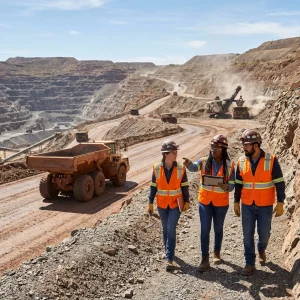
The U.S. Supreme Court has refused to take up a challenge brought by Native American groups seeking to stop a major copper mining project in Arizona, effectively paving the way for the development to move forward. The decision, issued without comment, leaves intact a lower court ruling that found the government’s land transfer to a mining company did not violate religious freedoms or federal land statutes.

At the heart of the dispute is Oak Flat, a site considered sacred by the San Carlos Apache Tribe and other Indigenous groups. The land is set to be transferred to Resolution Copper—a joint venture between Rio Tinto and BHP—for development of one of the largest undeveloped copper deposits in North America. The project is expected to generate thousands of jobs and critical materials for the clean energy economy, but it has drawn fierce resistance from tribal advocates and environmentalists.
Related News
- Stillwater Critical Minerals Showcases Montana Project at Quebec Mining Investment Event
- Harmony Gold Makes $1B Copper Bet with Mac Copper Acquisition
- New Zealand Mining Expansion Targets $3B Export Boom Amid Environmental Pushback
- Egypt Targets Mining Boom with 5-Year Strategy to Become Regional Power
- Solaris Secures $200M from Royal Gold to Advance Warintza Copper-Gold Project in Ecuador
Legal Challenge Ends, But Cultural Battle Persists
The lawsuit, originally filed by Apache Stronghold, argued that the U.S. Forest Service’s land exchange with Resolution Copper violated the Religious Freedom Restoration Act. The Ninth Circuit Court of Appeals disagreed, stating that the federal government’s decision, while affecting religious practices, did not coerce anyone into violating their beliefs.
By denying certiorari, the Supreme Court has affirmed that ruling, signaling its reluctance to wade into the complex intersection of mining rights, tribal sovereignty, and environmental regulation.
“The court’s silence speaks volumes,” said Luke Goodrich, senior counsel at Becket Law, which represented the tribe. “This is a blow to Indigenous religious freedom and a dangerous precedent for land protection.”

Arizona Copper Mine Gains Traction Amid Resource Race
The Arizona copper mine project is a centerpiece of U.S. efforts to secure domestic supply chains for critical minerals. Copper is essential for electric vehicles, solar panels, and power grids—cornerstones of the Biden administration’s decarbonization strategy. With global demand for copper expected to double by 2035, the decision clears a significant obstacle in developing a strategically vital resource.

Resolution Copper estimates that the site could meet up to 25% of future U.S. copper demand. However, mining would eventually create a 1.8-mile-wide crater and render the sacred Oak Flat site permanently unusable for ceremonial practices.
“This decision doesn’t mean this fight is over,” said Wendsler Nosie Sr., former chairman of the San Carlos Apache Tribe. “We’ll continue resisting in the courts of public opinion, in Congress, and on the ground.”
Political and Environmental Scrutiny to Intensify
Although the legal case has closed at the judicial level, the mine remains politically fraught. Several congressional Democrats, including Rep. Raúl Grijalva (D-Ariz.), have introduced legislation to repeal the land swap deal. Meanwhile, the Biden administration temporarily halted the land transfer in 2021, citing the need for further tribal consultation and environmental analysis.
Opponents argue the environmental impact statement approved during the Trump administration failed to fully account for ecological degradation and cultural loss. The U.S. Forest Service reopened its review process in 2021, and a final decision on the land exchange remains pending.
Outlook: Economic Momentum vs. Tribal Resistance
For now, the Supreme Court’s move gives momentum to the mining effort, but further roadblocks remain. Resolution Copper still needs numerous permits before it can begin extraction. With tribal activists vowing continued resistance and environmental regulators under pressure to re-evaluate their findings, the project remains far from shovel-ready.
Still, with copper prices surging and federal incentives favoring domestic extraction, the Supreme Court’s decision may mark a pivotal moment for U.S. mining policy—reasserting mineral development over cultural claims in a contest now playing out across the American West.