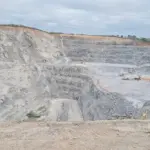
The Nevada Gold Mines settlement brings Fourmile, Fiberline and Mike into a single joint-venture structure.

By Charles Pitts
The latest mining M&A deals 2026 provide a clear view of where value is being created in the sector: not only through full-company takeovers, but also through joint-venture restructurings that consolidate districts, settle disputes and improve access to processing and infrastructure.
Barrick Mining and Newmont have agreed to restructure their Nevada Gold Mines joint venture, with Barrick contributing the Fourmile gold project and Newmont contributing the Fiberline and Mike projects. Newmont will pay Barrick US$1.95 billion in cash. In the same transaction, Barrick is deemed to make a US$3.11 billion capital contribution, while Newmont is deemed to contribute US$1.95 billion to the joint venture.
Separately, Lumina Copper, an affiliate of First Quantum Minerals, agreed to acquire Cascadero Minerals Corp. for up to US$19 million. The transaction gives First Quantum greater control over mining rights in Salta Province, Argentina, while the contingent portion of the payment is tied directly to construction progress at the Taca Taca copper project.
More Read

Together, the transactions show why major producers are consolidating district-scale positions in Nevada and Argentina. They also demonstrate how asset-level deals can unlock value without requiring a full corporate acquisition.

The Nevada settlement is more than a cash payment
The Barrick-Newmont agreement is structured as a joint-venture settlement rather than a conventional takeover.
Under the amended Nevada Gold Mines agreement:
More Read

- Barrick contributes the Fourmile project.
- Newmont contributes the Fiberline and Mike projects.
- Newmont pays Barrick US$1.95 billion in cash.
- Barrick is deemed to contribute approximately US$3.11 billion.
- Newmont is deemed to contribute US$1.95 billion.
- Nevada Gold Mines assumes liabilities associated with the contributed projects.
- Existing NGM ownership remains 61.5% Barrick and 38.5% Newmont.
The parties also agreed to modernize governance provisions and resolve outstanding disputes connected to the joint venture. The transaction was documented through a second amended and restated limited liability company agreement.
The Newmont Form 8-K filed with the U.S. Securities and Exchange Commission and Barrick’s related company disclosure set out the contribution and payment mechanics.
The important strategic change is that previously excluded projects will now be managed within one of the world’s largest gold complexes. Fourmile, Fiberline and Mike can be assessed alongside existing Nevada Gold Mines operations, rather than as separate assets with different ownership, development schedules and approval processes.
That can matter operationally. A district-scale operator may be able to coordinate exploration, mine planning, roads, power, water, processing and technical services more effectively than separate owners. The economic value is therefore not limited to the headline consideration. It also includes the potential to reduce duplication and improve the sequencing of future development.

Consolidated ownership can improve coordination between exploration, processing and mine planning.
Why Fourmile changes the negotiation
Fourmile is particularly important because it is adjacent to the Goldrush development area and offers Newmont permanent exposure to a high-grade Nevada discovery that had previously sat outside the main joint venture structure.
For Barrick, the settlement provides a large cash payment while placing Fourmile into a broader operating system. It also removes a dispute that could have complicated future development and corporate restructuring.
Barrick has said the agreement clears a path for a planned listing or initial public offering of its North American gold assets. That possibility gives the settlement a second layer of importance: the company receives cash today while creating a cleaner corporate structure for a potential future transaction.
Newmont, meanwhile, gains exposure to Fourmile while contributing Fiberline and Mike. The company is not simply buying a standalone project. It is exchanging assets and cash for a more integrated position in the Nevada district.
Nevada transaction framework
| Transaction element | Barrick | Newmont | Strategic implication |
|---|---|---|---|
| Project contribution | Fourmile | Fiberline and Mike | Consolidates previously excluded Nevada assets |
| Cash consideration | Receives US$1.95 billion | Pays US$1.95 billion | Transfers value while settling JV disputes |
| Deemed capital contribution | Approximately US$3.11 billion | US$1.95 billion | Reflects agreed relative asset values |
| NGM ownership | 61.5% | 38.5% | Ownership split remains unchanged |
| Governance | Updated JV framework | Updated JV framework | Improves decision-making and approval mechanics |
The distinction between a cash payment and a deemed capital contribution is important. The US$3.11 billion attributed to Barrick does not represent an additional cash cheque. It is an agreed capital-account treatment for the assets Barrick contributes to the joint venture.
Taca Taca deal extends First Quantum’s district strategy
The Cascadero transaction is smaller, but its structure shows how strategic control can be built through targeted project-level acquisitions.
On Sept. 1, Cascadero Copper agreed to sell 100% of Cascadero Minerals Corporation to Lumina Copper and Cascadero director Nelson Borch. Cascadero previously owned 70% of Cascadero Minerals, while Borch owned the remaining 30%.
The consideration consists of:
- US$15 million in cash at closing, subject to adjustments.
- Up to US$4 million in deferred cash consideration.
- A maximum transaction value of US$19 million.
- A US$2 million payment if Lumina or an affiliate makes a final investment decision to construct Taca Taca.
- A further US$2 million payment after US$100 million has been spent on Taca Taca construction.
The Cascadero announcement and related transaction disclosure indicate that Lumina will also settle about US$925,000 of Cascadero’s third-party payables at closing.
This is not a takeover of First Quantum or a purchase of the Taca Taca project itself. It is a land and mineral-rights consolidation transaction around a much larger copper development.
Taca Taca is a copper-gold-molybdenum project in Salta Province. By acquiring Cascadero Minerals, First Quantum’s affiliate can consolidate additional rights and reduce the risk that fragmented ownership creates delays, negotiations or future claims around project development.
The contingent payments are also revealing. Cascadero’s potential to receive the additional US$4 million depends on Taca Taca moving from feasibility and permitting toward construction. In effect, the deal assigns part of the asset’s future value to the project’s development milestones.

The Cascadero transaction strengthens First Quantum’s control over a strategic copper district in Argentina.
Infrastructure access is becoming a central deal driver
Mining companies are increasingly paying for access to infrastructure as much as for resources in the ground.
A standalone exploration property may have attractive geology but still require:
- New roads and power connections.
- Water supply and storage.
- Processing capacity.
- Tailings and waste-management systems.
- Port, rail or concentrate logistics.
- Community and government agreements.
- Permitting and environmental approvals.
When a major producer controls the surrounding infrastructure, an adjacent asset can become more valuable than its standalone technical study suggests.
That logic applies to both transactions. Nevada Gold Mines already has a substantial operating platform. Taca Taca is a large-scale copper project where surrounding land and mineral rights may support more efficient development and reduce ownership complexity.

Infrastructure and permitting control can determine whether a mineral resource becomes a producing mine.
This is consistent with the framework outlined in Skillings’ earlier analysis of mining M&A consolidation drivers and deal risk. The strongest transactions are increasingly those that solve a practical operating problem: reserve replacement, processing access, development control or supply-chain security.
What the deals indicate about 2026 M&A
The two transactions point to three broader trends.
1. Joint ventures are being used to unlock value
Full takeovers can be expensive and may trigger regulatory scrutiny, integration risk and significant shareholder dilution. A joint-venture restructuring can achieve some of the same objectives while preserving existing ownership and operating relationships.
The Nevada transaction shows how disputed or excluded assets can be brought into a common structure without changing the overall 61.5%/38.5% ownership split.
2. Copper and gold remain the core targets
Gold producers are seeking reserve replacement and longer mine lives, while copper producers are pursuing future supply in a market where large new projects are difficult to permit and finance.
This supports the broader outlook described in Skillings’ copper consolidation analysis, as well as its coverage of gold reserve growth and project timelines.
3. Contingent consideration is becoming more common
The Cascadero deal does not place the full US$19 million value on the table at closing. Up to US$4 million depends on construction decisions and spending at Taca Taca.
That structure can protect the buyer from paying the entire development premium before the project reaches key milestones. For the seller, it preserves some exposure to future value creation.
Positioning Barrick, Newmont and First Quantum
Barrick emerges from the Nevada settlement with US$1.95 billion in cash, continued majority ownership of Nevada Gold Mines and a potentially cleaner path for its North American asset strategy. The main question for investors is how effectively management allocates the cash and whether the revised structure improves the valuation of its remaining portfolio.
Newmont gives up cash and contributes Fiberline and Mike, but gains exposure to Fourmile and a more formalized Nevada governance structure. Its positioning depends on whether the expanded portfolio can generate meaningful operating and reserve benefits without diverting capital from existing mines.
For First Quantum, the Cascadero transaction offers relatively low-cost optionality around Taca Taca. The maximum US$19 million consideration is modest compared with the potential scale of a major copper project, but the investment case remains dependent on permitting, financing, construction costs, infrastructure and Argentina’s policy environment.
These are not direct buy or sell signals. They are examples of how investors can assess mining M&A: by examining what control is gained, what infrastructure is unlocked, how much capital remains required and which payments depend on future execution.
Investor checklist: deliverable value over headline price
| Question | Barrick-Newmont | First Quantum-Cascadero |
|---|---|---|
| What is being consolidated? | Nevada gold projects and JV governance | Mineral rights around Taca Taca |
| Headline value | US$1.95 billion cash payment | Up to US$19 million |
| Main value driver | District-scale gold operations | Copper project control and land consolidation |
| Key milestone | Simultaneous asset contributions | Taca Taca construction decision and spending |
| Primary risk | Integration, valuation and governance execution | Permitting, financing, Argentina and construction |
| Investor focus | Cash allocation and Nevada growth | Taca Taca development optionality |
The central lesson from these mining M&A deals 2026 is that scale alone is not enough. Value depends on whether ownership consolidation improves mine planning, lowers infrastructure duplication, accelerates permitting or creates a credible path to production.
The Nevada settlement and Taca Taca transaction both fit that model. They are strategically significant because they consolidate positions around major mineral districts, while limiting the need for full corporate takeovers.
Sources
- Barrick and Newmont reach agreement regarding Nevada Gold Mines
- Newmont Form 8-K, Nevada Gold Mines agreement
- Cascadero Copper announces sale of Cascadero Minerals Corporation
- Cascadero transaction disclosure
- Skillings: Mining M&A deals, consolidation drivers and deal risk
- Skillings: Copper consolidation, deals, supply and valuation risks
- Skillings: Gold mining news, reserve growth, costs and project timelines