Potential partnership follows Appian’s US$1 billion IFC-backed fund as specialist mining investors and development institutions explore new ways to finance projects and diversify mineral supply chains
Appian Capital Advisory is in discussions with the European Bank for Reconstruction and Development (EBRD) and other institutions over potential funding arrangements for critical-minerals projects. The talks highlight a growing role for partnerships between specialist mining investors and development finance institutions as governments seek to diversify mineral supply chains.
The details in this section on the EBRD discussions, and the quotes from Appian’s leadership throughout this article, are drawn from Reuters reporting published 30 October 2025; they are not based on Skillings’s own reporting.
An EBRD spokesperson confirmed to Reuters on October 30 that discussions with Appian are ongoing. Neither the potential investment amount nor the structure of a possible arrangement has been disclosed. No agreement or project-level financing commitment has been announced.
The discussions follow Appian’s US$1 billion partnership with the International Finance Corporation (IFC), a member of the World Bank Group. Appian’s chief executive for critical minerals, Paulo Castellari, told Reuters that he views the IFC relationship as a model for further partnerships.
The timing reflects a wider shift in critical-minerals investment. Western governments and development institutions are seeking alternative sources of supply after a series of Chinese export controls exposed vulnerabilities in concentrated supply chains. China introduced export licensing controls on gallium and germanium from August 2023, followed by controls on certain graphite products from December 2023 and antimony export controls from September 2024. On December 3, 2024, China also prohibited exports of gallium, germanium and antimony to the United States in principle, while imposing stricter checks on certain graphite exports to the US. The US-specific prohibition was subsequently suspended until November 27, 2026, although broader export licensing controls remained in place. But building alternative sources requires more than identifying mineral deposits. Projects need capital, technical expertise, infrastructure and access to processing and end markets.
For mining companies, the question is increasingly how to secure financing for projects that require substantial investment and have long development periods. Partnerships between development institutions and specialist investors could offer another route.
The IFC partnership provides a financing model
Appian and IFC announced their critical-minerals and metals partnership in October 2025. The vehicle has a target capital commitment of up to US$1 billion, with IFC providing an initial US$100 million contribution. Additional capital is intended to be mobilised through IFC’s Asset Management Company.
Managed by Appian, the fund invests alongside the company’s existing and future funds. Its mandate covers metals, mining and adjacent industries in emerging markets, with a focus on Africa and Latin America.
The financing approach is not limited to conventional equity. The fund can invest through equity, credit and royalty arrangements, giving it different ways to participate in projects depending on their development stage and capital requirements.
These instruments carry different financial implications. Equity provides ownership capital and exposes investors to the project’s performance. Credit provides financing that must be repaid under agreed terms. Royalty arrangements give investors revenue-linked returns in exchange for an upfront investment.
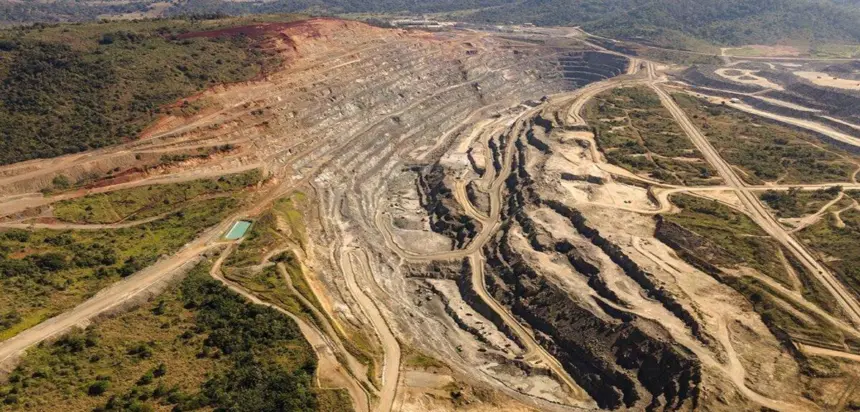
The fund’s first investment is in the Santa Rita nickel-copper-cobalt mine in Bahia, Brazil, which is owned by Atlantic Nickel, a wholly owned Appian affiliate. The investment is a co-investment alongside Appian to advance the mine’s transition from open-pit to underground production. The underground operation is expected to ramp up to approximately 30,000 tonnes per year of nickel equivalent and has a projected mine life exceeding 30 years. Because Atlantic Nickel is an Appian-owned entity, IFC sought to address the related-party dimension: IFC invested on the same terms as other investors, with the investment terms agreed following independent valuations of the asset by Citi and Standard Chartered.
Santa Rita is not a new discovery being financed from exploration. It is an established producing operation with an underground expansion programme. The project illustrates how the partnership can support development at an existing producing asset rather than focusing exclusively on early-stage projects.
The arrangement also combines different institutional capabilities. Appian contributes mining investment and technical expertise, while IFC applies its environmental and social performance standards and development mandate.
The US$1 billion figure should not be interpreted as US$1 billion already invested in mining projects or as an outright IFC contribution. It is the fund’s target capital commitment, anchored by IFC’s initial US$100 million contribution, with further capital mobilisation intended.
Why development institutions are turning to specialist mining investors
Mining projects can be difficult for generalist investors and conventional lenders to assess. Their economics depend on geological quality, metallurgy, recovery rates, mine design, infrastructure, operating costs and commodity prices.
Development finance institutions have a broader mandate than commercial lenders. Alongside financial returns, they assess economic development, employment, responsible investment and potential benefits for host countries.
Specialist mining investors bring sector-specific capabilities. They assess deposits, project economics, technical risks and management teams. Their experience can also help identify the capital required to move projects from development into production.
Combining these capabilities can help mobilise private capital while applying environmental and social standards.
However, this approach does not eliminate project risk. A development institution’s participation does not automatically make a mine commercially viable or guarantee that other investors will follow.
Projects still need credible feasibility studies, workable permitting arrangements, reliable infrastructure, suitable financing terms and a realistic route to market.
The IFC–Appian partnership is significant for two reasons identified in Appian’s announcement. It is the first dedicated mining fund focused exclusively on emerging markets, and it represents IFC’s first fund established in partnership with a private equity investor specialising in metals and mining. These distinctions make the partnership a notable financing model for emerging-market mining projects. Whether the proposed EBRD arrangement follows the same structure remains unknown.
Appian’s investment ambitions put Africa in focus
Appian’s broader investment plans underline the scale of capital it is seeking to deploy.
Chief executive Michael Scherb told Reuters that the firm plans to deploy between US$5 billion and US$7 billion globally over the next 12 to 24 months, with approximately US$2 billion intended for Africa.
These figures represent company deployment plans, not confirmed investments in named projects or capital committed through the potential EBRD arrangement.
Appian has three active investments in Africa and four in Latin America, according to the Reuters report. Scherb identified Morocco, Namibia and Botswana among the firm’s preferred African mining jurisdictions. It is also assessing opportunities in Ghana, Côte d’Ivoire, Mauritania and Senegal.
However, Scherb warned that policy uncertainty and unpredictable permitting conditions can influence investment decisions, with some capital moving towards Latin America.
This highlights a persistent challenge for African mining markets. Mineral potential can attract investor interest, but converting that interest into mine development requires predictable regulation, clear fiscal terms, workable permitting processes and infrastructure.
For governments seeking long-term mining investment, the challenge is to balance greater local participation and value addition with conditions that allow projects to remain commercially competitive.
The proposed EBRD discussions could become relevant to this investment landscape, but the geographic scope of any potential arrangement has not been disclosed.
Processing is becoming part of the investment equation
Appian is also considering investments further downstream in mineral processing, Castellari told Reuters.
This is important because extracting minerals does not automatically create a diversified supply chain. Many critical minerals must pass through specialised separation, refining and processing stages before they can be used in industrial applications.
Rare-earth materials illustrate the challenge. Mining rare-earth ore is only one part of the supply chain. Separation and refining produce the materials required for applications such as permanent magnets, which are used in electric vehicles, wind turbines and other technologies.
Processing facilities, however, have their own financing and operating challenges. They require suitable feedstock, specialised technology, reliable electricity and water, skilled workers and customers for their output.
They must also compete with established processing centres that may benefit from existing infrastructure, technical expertise and economies of scale.
Development finance could help mobilise investment in processing capacity where capital requirements and infrastructure constraints discourage private investors. But institutional backing cannot substitute for competitive operating economics or reliable market demand.
Appian’s stated interest in downstream assets is therefore a strategic direction to watch, not evidence of a confirmed processing investment under the proposed EBRD arrangement.
What the EBRD discussions could mean
The potential EBRD partnership remains at the discussion stage. The bank has confirmed that talks are ongoing but has not disclosed the size, terms or intended investment structure.
Several details will determine whether the discussions develop into a significant financing arrangement: the amount of capital involved, the instruments available, the countries and minerals covered, and whether funding will target mine development, operating assets or processing facilities.
The IFC partnership offers a reference point, but it would be premature to assume that the EBRD arrangement will replicate its structure.
The outcome will also depend on project-level conditions. Permitting certainty, infrastructure access, environmental obligations and fiscal stability can affect development timelines and financing costs.
For mining companies, partnerships of this kind could widen access to specialist capital and provide additional financing options for projects at different stages of development. For resource-producing countries, they may create opportunities to support both extraction and downstream value addition.
The more important measure will be whether these arrangements translate into financial closes, construction, increased production and commercially sustainable processing capacity.
The critical-minerals investment challenge is not simply about making more money available. It is about directing capital towards projects that can manage technical, regulatory and market risks while delivering viable returns and measurable development benefits.