
Europe Considers a Bigger Role in Financing Critical Minerals
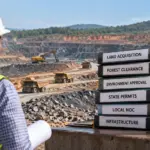
BRUSSELS, 27 October 2026 — For a mining company, discovering a mineral deposit is only the beginning. Securing finance, building a processing plant and finding customers willing to buy the output can be just as difficult. The European Union wants to use public investment to help overcome some of these barriers.
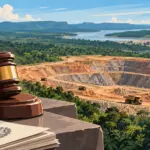
On 20 October, the European Parliament backed a proposal for a €2 billion critical minerals fund and an independent agency to strengthen Europe’s access to strategic raw materials. The vote was 470 in favour, 83 against and 108 abstentions. The proposal would expand the EU’s Critical Raw Materials Act by bringing investment support, supply monitoring, strategic stockpiling and joint purchasing into a more coordinated framework. The changes must still be negotiated with member states before becoming law. [1]
The proposed fund would receive an initial €2 billion contribution from the EU’s planned 2028–2034 budget. It is not yet an operational financing programme, and companies cannot currently apply for funding under it.
The move reflects a growing concern in Brussels: Europe cannot secure reliable supplies simply by identifying deposits or designating projects as strategically important. It must also help viable projects attract capital and compete in markets dominated by established producers.
The US Model Shows How Government Support Can Work
The United States has already demonstrated a more direct approach to mineral security.
More Read
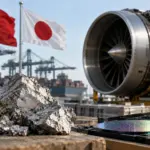
In July 2025, the US Department of Defense agreed to invest US$400 million in MP Materials through convertible preferred stock. The agreement also included a US$150 million loan, a 10-year minimum-price commitment of US$110 per kilogram for specified neodymium-praseodymium products, and purchase commitments for magnets produced at the company’s planned Texas facility. [2]

The significance lies in the combination of financial support and market access. Equity provides capital for development. A price floor helps protect against severe market downturns, while purchase commitments give producers greater confidence that customers will buy their output.
These mechanisms address a difficult problem for mining investors. A project may have a promising resource and a clear industrial purpose, yet remain difficult to finance if future prices are uncertain or buyers are unwilling to commit to long-term purchases.
More Read
The proposed European framework could use equity investments, loans, guarantees and price-stabilisation mechanisms to address similar risks. The precise instruments and eligibility conditions will depend on the final legislation.
Europe Needs Processing Capacity, Not Just More Mines
Europe’s supply-chain challenge extends beyond extracting minerals. The bloc also needs capacity to separate, refine and recycle materials before manufacturers can use them in batteries, wind turbines, electronics and defence equipment.
Under the EU’s Critical Raw Materials Act, the 2030 benchmarks call for domestic extraction to meet at least 10% of annual consumption of strategic raw materials, processing to account for 40%, and recycling to supply 25%.
These targets highlight why opening a mine does not automatically guarantee industrial supply. Ore may still need to be processed elsewhere, leaving manufacturers exposed to overseas bottlenecks even when the original mineral comes from a European deposit.
The European Commission’s RESourceEU Action Plan, announced in December 2025, already sought to accelerate strategic projects and mobilise investment. The proposed agency would build on those efforts by coordinating investment, purchasing and stockpiling more closely.
The funding distinction is important. The proposed €2 billion contribution belongs to the next long-term EU budget. It is separate from earlier investment-mobilisation targets under existing programmes. These figures should not be added together as if they represented a single fund that companies can access today.
Existing Projects Show the Scale of the Challenge
Europe has already begun identifying projects that could strengthen its mineral supply chain. On 9 October 2026, the European Commission approved a second list of 46 strategic projects under the Critical Raw Materials Act.
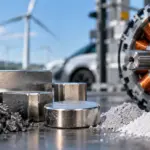
Among them is a magnesium-processing project promoted by Verde Magnesium Industries in Romania. Magnesium is used in lightweight alloys and industrial applications, making processing capacity relevant to manufacturers seeking reliable supplies of strategic materials. [3]
The project’s strategic designation is not evidence that it has received funding from the proposed €2 billion fund. Rather, it illustrates the type of industrial capacity Europe is seeking to develop.
For companies working on similar projects, the commercial questions are straightforward: Can they secure sufficient capital? Will customers commit to buying the output? Can production compete with established international suppliers? Public investment may help address these questions, but it cannot guarantee commercial success.
Reducing Dependence on China Will Take More Than Funding
China’s strong position in the processing and refining of several critical minerals remains a concern for European manufacturers. Supply restrictions or disruptions can affect production even when the mineral represents only a small share of a finished product’s total cost.
The proposed agency could help Europe identify supply risks earlier, coordinate strategic reserves and support alternative sources. Parliament has also backed measures intended to retain recoverable permanent-magnet scrap and waste for recycling within Europe, subject to specified conditions.
However, reducing dependence on concentrated suppliers will take time. Mining projects face geological uncertainty, lengthy permitting procedures, construction costs and volatile commodity prices. Processing facilities must also secure technology, energy, feedstock and reliable customers.
Public investment will therefore need to support projects that can deliver dependable supplies at commercially sustainable costs. Otherwise, Europe risks spending money on capacity that struggles to compete once government support ends.
For the global mining industry, the proposal signals a potential shift in government policy. Major economies are increasingly considering direct financial participation in strategic mineral supply chains rather than relying mainly on private investment and international trade.
The real test for Europe is whether public capital can turn promising mineral projects into productive mines, competitive processing facilities and reliable sources of industrial materials. Parliament’s vote is an important step, but the outcome will depend on the final legislation, funding arrangements and execution.
Key Takeaways
- The European Parliament has backed a proposed €2 billion fund to support strategic mineral projects across Europe.
- A proposed agency could coordinate investment, mineral purchasing, supply monitoring and strategic stockpiles.
- The plan draws on the US approach of combining public investment with price support and purchase commitments.
- The fund is not yet operational; its implementation depends on negotiations and future EU budget decisions.