By Charles Pitts

Thailand’s gold prices have surged nearly 25% this past year, fueling a revived gold panning trade in its remote southern region. Sunisa, a 37-year-old mother of two, earned 100 baht—about $3.30—in just 15 minutes of work with her partner Boonsom Aeamprasert. With tourism hammered by pandemic travel bans, gold mining around Sukhirin District has become a vital income source for locals.
The area, known as Gold Mountain near the Malaysian border, has a mining tradition spanning generations. Rising Thailand gold prices have created a rare economic bright spot as the country’s economy faces a 6.6% contraction. this year, gold provides a rare economic bright spot. “We sell gold today, we are able to buy food to feed the family,” Sunisa explains.
Why Thailand’s Gold Price Boom Is Revitalizing Southern Mining Communities
Thailand’s deep south, long troubled by a Muslim separatist insurgency, lacks the tourist attractions found elsewhere in the country. However, parks remain busy with hikers and kayakers. With visitors scarce during COVID-19, locals like Wari Bantakit have pivoted to gold panning to sustain livelihoods.
“The community shut down its attractions,” says Wari, a member of a community tourism group. “We had to switch from welcoming tourists to digging and sifting for gold.” This shift underscores gold’s growing importance as global prices near record highs.
How Women Are Leading the Gold Panning Revival in Sukhirin District
Gold panning here relies on simple tools: a shovel, wooden pan, and a plastic squeezy bottle to collect gold flakes and nuggets from river sediments. Some miners even use snorkel masks to search underwater for richer deposits.

While both men and women pan for gold, the work especially attracts women who previously earned from selling food to tourists. “Housewives who used to sell vegetables and food to tourists had to stop,” Wari explains. “They turned to gold panning. It has become the main job.”
Gold Mining Fills the Gap Left by Tourism in Thailand’s Deep South
The area locals call Gold Mountain, near the Malaysian border, has a mining heritage that stretches back generations. But its revival now comes against a difficult backdrop: Thailand’s broader economy is projected to contract by 6.6% this year, and the country’s deep south has long dealt with a separatist insurgency that keeps large-scale investment away. Gold, in that context, has become a rare bright spot.

“We sell gold today, we are able to buy food to feed the family,” Sunisa says.
Southern Thailand’s national parks aren’t short on natural draws — hikers and kayakers still make the trip. But with international visitors scarce throughout the pandemic, community tourism operators have had to adapt. Wari Bantakit, a member of one such group, describes the shift plainly: “The community shut down its attractions. We had to switch from welcoming tourists to digging and sifting for gold.”
That pivot says something bigger about where gold sits in the current market. As prices push toward record highs globally, even small-scale, informal mining operations are becoming meaningful economic activity — not just in Thailand, but wherever gold can be pulled from the ground with basic tools.
Women Panners Lead a Quiet Economic Shift in Sukhirin
The technique itself hasn’t changed much: a shovel, a wooden pan, and a plastic squeeze bottle to collect flakes and nuggets sifted from river sediment. Some panners go further, using snorkel masks to search the riverbed for richer deposits underwater.
Both men and women work the rivers here, but the trade has become an especially important shift for women who once relied on tourism-driven food and goods sales. “Housewives who used to sell vegetables and food to tourists had to stop,” Wari explains. “They turned to gold panning. It has become the main job.”
A Global Gold Boom, Felt at Every Scale
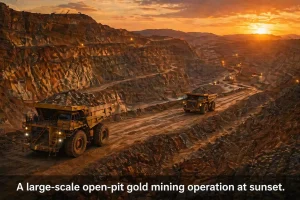
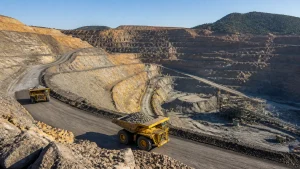
Thailand’s river panners and China’s CMOC operate on wildly different scales, but they’re responding to the same underlying force. While CMOC commits $1.7 billion to Ecuador’s largest gold-copper deposit — a project expected to produce 371,000 ounces of gold annually over a 26-year mine life once production begins in 2028 — that same price surge is putting extra baht in the pockets of families along the Sai Buri river.
It’s a reminder that gold’s current momentum isn’t just a story for institutional investors and mining conglomerates. From Andean megaprojects to a wooden pan in southern Thailand, the same market forces are reshaping livelihoods at every level of the industry.