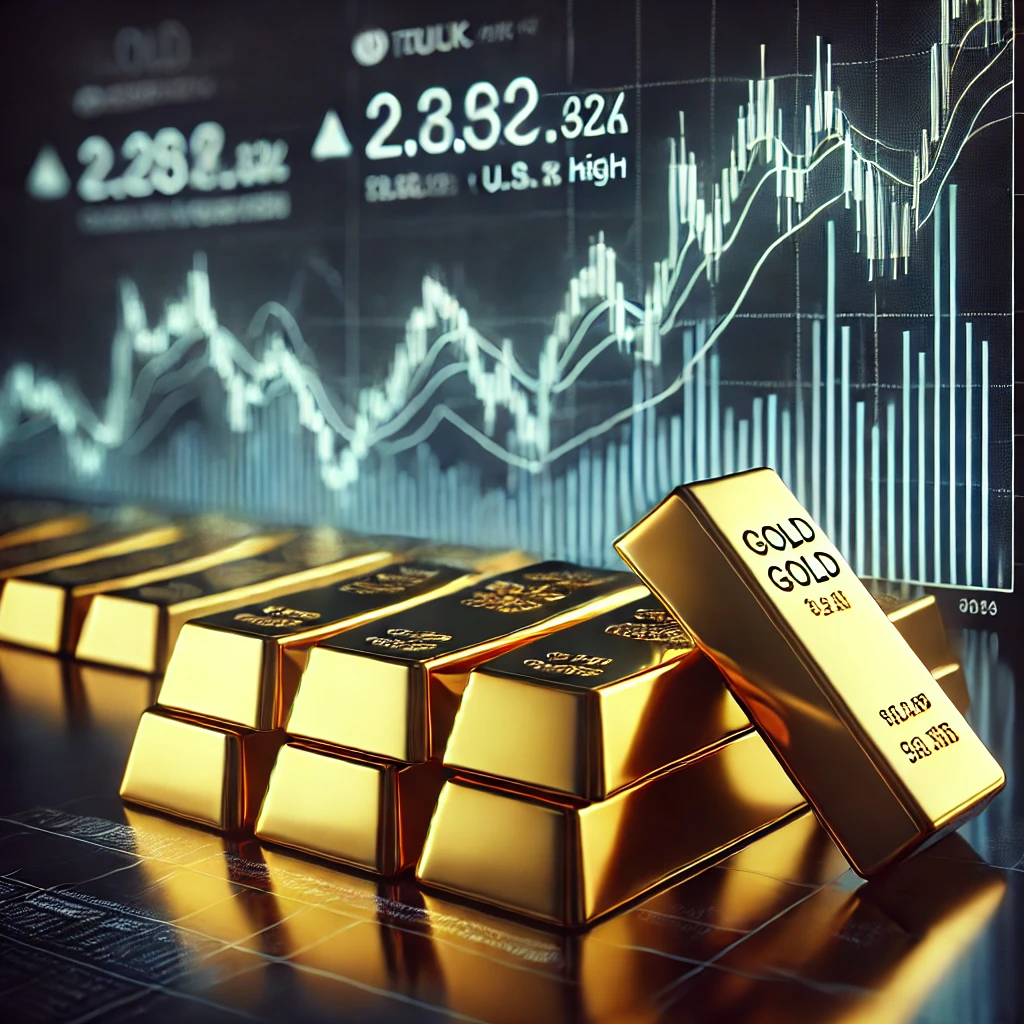
Gold’s meteoric rise slowed on Monday after hitting a fresh record high, as investors booked profits following a four-day winning streak. The precious metal briefly rose 0.7%, surpassing the $2,700-an-ounce mark last week. Analysts attributed the rally to a surge in haven demand driven by geopolitical tensions in the Middle East and uncertainty surrounding the upcoming U.S. presidential election.

Haven Demand Fuels Gold’s Surge
Investors have flocked to gold amid escalating tensions between Israel and Iran. Over the weekend, a Hezbollah drone detonated near Israeli Prime Minister Benjamin Netanyahu’s home, prompting discussions of retaliatory actions against Iran. The specter of broader regional conflict has unnerved markets, pushing investors toward safe-haven assets like gold.
The approaching U.S. election has further fueled volatility. With polls showing a close race and potential disputes over election results, traders are bracing for market turbulence. “The simple bottom line is that gold thrives on uncertainty,” said Rhona O’Connell, head of market analysis for EMEA and Asia at StoneX. “The lack of clarity over the medium-term direction of U.S. foreign policy is adding to nervousness.”
Profit-Taking Puts the Brakes on Gains
Despite surpassing the $2,700 threshold, gold pulled back as profit-taking set in. After months of strong performance—up more than 30% this year—some investors opted to lock in their gains, causing a slight dip in prices. Spot gold remained relatively stable at $2,721.31 an ounce by late afternoon trading in London, holding close to record levels but signaling that the rally may pause as traders assess risks ahead.
Broader Economic Factors Support Gold’s Bullish Run
Gold’s recent surge is not solely driven by short-term geopolitical events. Robust central bank buying and expectations of U.S. interest rate cuts have provided significant support. Lower interest rates make gold, which does not offer a yield, more attractive to investors seeking safe stores of value. Vivek Dhar, an analyst at the Commonwealth Bank of Australia, predicted that gold futures could average $3,000 an ounce by the fourth quarter of 2025, highlighting the long-term bullish outlook.

Additionally, investors have increased their exposure to gold through exchange-traded funds (ETFs). The world’s largest bullion-backed ETF, SPDR Gold Shares, saw its largest weekly inflows since March, as money managers continued to add net-long positions in anticipation of further gains.

Silver Also Rallies, Then Retreats
Silver, another key precious metal, mirrored gold’s movements. It climbed as much as 1.7% on Monday, reaching its highest level since 2012 before surrendering those gains. Silver has benefited from similar drivers as gold, particularly the demand for haven assets and expectations of broader market volatility.
Outlook: Gold to Remain Volatile
With tensions in the Middle East unresolved and U.S. political uncertainty looming, gold is likely to remain volatile in the coming weeks. While profit-taking may slow its ascent, the underlying fundamentals—central bank purchases, low interest rates, and geopolitical risks—continue to support a strong market for the precious metal.