By Charles Pitts | January 27, 2026

The United States is pouring billions into its domestic mining sector at a pace not seen in decades. Between executive orders, direct equity stakes in rare earth producers, and hundreds of millions in DOE grants, Washington has made one thing abundantly clear in early 2026: critical minerals independence isn’t just a talking point anymore, it’s federal policy with serious capital behind it.
The cumulative investment push now approaches the $1.6 billion mark when you stack up the various federal programs, loan commitments, and strategic equity positions announced over the past several months. And the money keeps flowing.
The Executive Order That Started the Year
On January 15, 2026, President Trump signed an executive order titled “Adjusting Imports of Processed Critical Minerals and Their Derivative Products into the United States.” The document doesn’t mince words. It establishes a framework for strengthening U.S. critical minerals security through a combination of diplomatic negotiation and, if necessary, trade remedies including tariffs.
The order directs the Secretary of Commerce to negotiate agreements with foreign partners to secure processed minerals supplies. The subtext? China currently dominates the processing of rare earths and other critical minerals, and Washington wants alternatives, fast.
More Read

“This isn’t about protectionism for its own sake,” one Commerce Department official noted in background briefings. “It’s about supply chain resilience. We learned during COVID what happens when you’re dependent on a single source for essential materials.”


USA Rare Earth Gets a Federal Partner
The biggest headline came just yesterday. On January 26, 2026, the Trump administration announced it would take a stake in USA Rare Earth that could exceed 15 percent. Commerce Secretary Howard Lutnick didn’t sugarcoat the reasoning.
More Read

“USA Rare Earth’s heavy critical minerals project is essential to restoring U.S. critical mineral independence,” Lutnick stated.
The company’s stock jumped 6 percent on the news, a clear signal that investors see government backing as a stamp of legitimacy and, frankly, a guarantee of future contracts.
This marks a notable shift in how Washington approaches the mining sector. Direct equity investment by the federal government in private mining operations is unusual, to put it mildly. The last time we saw this kind of involvement was during wartime mobilization. The fact that it’s happening now tells you everything about how seriously the administration views critical minerals security.
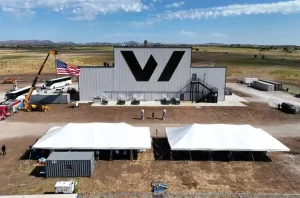
USA Rare Earth operates what it calls a “mine-to-magnet” facility in Oklahoma, one of the few operations in the Western Hemisphere capable of processing heavy rare earth elements domestically. Heavy rare earths, dysprosium, terbium, and their cousins, are essential for high-performance permanent magnets used in everything from electric vehicle motors to guided missiles.
The DOE’s $275 Million Bet
The Department of Energy hasn’t been sitting idle either. Back on November 14, 2025, DOE announced up to $275 million in federal funding specifically earmarked for American industrial facilities looking to expand mines and metals processing capacity.
That money targets the entire value chain, from extraction to refining to recycling. And yes, recycling. One of the less-discussed aspects of the critical minerals push involves recovering rare earths and other materials from electronic waste, spent batteries, and industrial byproducts. It’s not as sexy as opening a new mine, but the economics work.

The DOE funding supports a range of projects:
- Expansion of existing lithium extraction operations in Nevada
- New processing facilities for cobalt and nickel in the Midwest
- Rare earth recycling pilot programs in multiple states
- Battery materials recovery from end-of-life EV packs
North American Supply Chain Integration
Washington isn’t limiting its investments to projects on U.S. soil. The administration has also backed Canadian-based lithium and metals operations with significant U.S. ties, including Lithium Americas and Trilogy Metals.
Lithium Americas operates the Thacker Pass project in Nevada: currently the largest known lithium deposit in North America: while maintaining substantial operations in Argentina. Trilogy Metals focuses on copper, zinc, and cobalt projects in Alaska’s Ambler Mining District.
The cross-border approach makes sense. Canada possesses substantial mineral resources and established mining expertise. Building out a North American supply chain reduces dependence on overseas processing while keeping production within friendly, treaty-allied nations.
Domestic manufacturers are getting attention too. Vulcan Elements and ReElement Technologies both received federal backing for their processing and recycling operations. These smaller players may not have the name recognition of major mining houses, but they represent the kind of innovative, specialized capacity that a resilient supply chain requires.
Why This Matters Now
The timing of this investment surge isn’t accidental. Several factors converge to make critical minerals security an urgent priority in 2026.
First, electric vehicle adoption continues accelerating globally. Every EV battery requires lithium, cobalt, nickel, and manganese. Every EV motor requires rare earth permanent magnets. Demand curves point straight up.
Second, renewable energy infrastructure: wind turbines, solar installations, grid storage: consumes enormous quantities of the same materials. The energy transition runs on minerals.
Third, defense applications remain critical. Modern weapons systems depend on rare earths for guidance, propulsion, and communications. A supply disruption during a conflict would be catastrophic.

Fourth, and perhaps most pressing: China controls approximately 60 percent of global rare earth mining and roughly 90 percent of processing capacity. That concentration represents a strategic vulnerability that both parties in Washington agree needs addressing.
Industry Response
Mining executives have responded enthusiastically to the federal push, though some note that regulatory hurdles remain substantial. Permitting timelines for new mines still stretch into years, even decades in some cases. Money helps, but it doesn’t automatically accelerate environmental reviews.
“The capital is welcome, obviously,” said one industry analyst who requested anonymity to speak candidly. “But the real test is whether this administration can streamline permitting without gutting environmental protections entirely. That’s a political minefield.”
Others point to workforce challenges. The U.S. mining sector has aged considerably over the past generation. Attracting young workers to mining careers requires more than government investment: it requires changing perceptions about what modern mining looks like.
What Comes Next
The $1.6 billion in combined federal investment represents a down payment, not a final settlement. Industry estimates suggest the U.S. needs tens of billions in total capital expenditure to build truly independent critical minerals supply chains.
But momentum matters. The executive orders, equity stakes, and grant programs announced in recent months signal that Washington will continue prioritizing domestic mining investment throughout 2026 and beyond.
For Skillings Mining Review readers tracking these developments, the key questions going forward center on execution. Can permitted projects actually break ground? Will processing capacity scale fast enough to meet demand? And crucially, can the U.S. develop the specialized workforce these operations require?
The money is flowing. Now comes the hard part.
For continued coverage of U.S. mining investment and critical minerals policy, follow Skillings Mining Review’s daily news updates.