The project advances US magnet manufacturing while a separate government-backed offtake structure supports Serra Verde’s Brazilian rare earth production, strengthening USA Rare Earth’s position across the supply chain.

USA Rare Earth has broken ground on a $1.2 billion rare earth metal and permanent magnet manufacturing facility in Blacksburg, South Carolina, following completion of its acquisition of Brazil’s Serra Verde Group on 3 September 2026. The developments advance the company’s strategy to combine upstream rare earth production with metal, alloy and magnet manufacturing across its international operations.
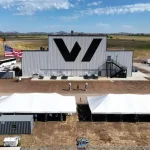
Announced on 9 September, the Blacksburg facility is planned to produce sintered neodymium-iron-boron (NdFeB) permanent magnets, as well as rare earth metals and alloys. USA Rare Earth is targeting the start of commissioning in 2028. The project covers a 124-acre site in Cherokee County and is expected to create approximately 490 manufacturing jobs.
The investment expands planned US manufacturing capacity, but the facility is not yet producing commercial output. Construction, commissioning, material qualification and customer acceptance remain important steps before the planned capacity becomes available to the market.
Blacksburg Anchors Planned US Magnet Expansion
USA Rare Earth is targeting annual production capacity of 6,400 tonnes of sintered NdFeB magnets and 5,000 tonnes of strip-cast metal and alloy at Blacksburg. These figures represent different product categories and should not be added together as a single measure of production.
More Read

Combined with a planned expansion at its existing Stillwater, Oklahoma, operation, the company expects US magnet manufacturing capacity to reach 10,000 tonnes per year. It also targets 10,000 tonnes per year of heavy rare earth strip-cast metal and alloy capacity across its US manufacturing footprint.

Stillwater commissioned its first commercial magnet production line in March 2026. However, the larger combined capacity targets depend on future expansion and the successful commissioning of Blacksburg.
The distinction between metals, alloys and finished magnets is commercially important. Magnet manufacturers require suitable rare earth inputs, specialised metallisation and alloy production, and manufacturing processes that meet customers’ technical specifications. Capacity at one stage does not automatically translate into equivalent output at another.
More Read

USA Rare Earth must therefore demonstrate that its facilities can secure suitable feedstock, deliver consistent product quality and achieve commercially sustainable production rates. The company’s planned capacity is significant, but its eventual market contribution will depend on execution across these stages.
Serra Verde Adds a Producing Brazilian Asset
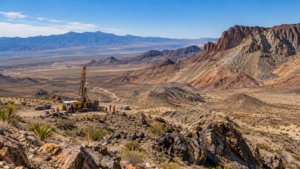
USA Rare Earth completed its acquisition of Serra Verde Group on 3 September 2026. The transaction adds the Pela Ema mine and processing operation in Goiás, Brazil, to its portfolio.
Pela Ema began production in January 2024. Serra Verde produces a mixed rare earth product containing light and heavy rare earth elements, including neodymium, praseodymium, dysprosium and terbium. These four elements are important to permanent magnet production and other advanced applications.
The acquisition strengthens USA Rare Earth’s upstream position, but Pela Ema’s mixed product is not equivalent to separated individual rare earth oxides, refined metals or finished magnets. Further processing and conversion are required before these materials can become inputs for finished magnet manufacturing.
At the time of the acquisition announcement, the company targeted a production run rate of approximately 4,000 tonnes per year of total rare earth oxides by the end of 2026. Its second-stage expansion targets average production of 6,400 tonnes per year, with commissioning expected to begin within 12 months of the September announcement.
These figures are company targets, not independently verified current output. Achieving them will depend on plant optimisation, recovery rates and execution of the expansion programme.
The acquisition also brings an established commercial arrangement into the combined business: a 15-year offtake agreement with a US government-backed special-purpose vehicle covering 100% of Serra Verde’s Phase 1 production of neodymium, praseodymium, dysprosium and terbium. The agreement includes contractual price floors for the four elements.
This arrangement provides a degree of revenue protection against price declines for the covered products, subject to the contract’s terms. It does not eliminate production risk, guarantee every aspect of operating profitability or establish that all material will be supplied directly to the Blacksburg facility.
Two Government-Backed Financing Structures Serve Different Roles
USA Rare Earth’s expansion is supported by two distinct US government-backed financing arrangements. Their purposes and financial structures should be assessed separately.
In June 2026, USA Rare Earth entered into agreements with the US Department of Commerce providing for up to $277 million in direct federal funding and a guarantee covering up to $1.3 billion in borrowing through the Federal Financing Bank. The support is intended to advance domestic critical mineral and manufacturing projects, including the company’s US supply-chain development.
The direct funding and loan guarantee are not equivalent to a single cash grant. Availability and disbursement remain subject to the applicable agreements and milestone requirements. The package should also not be treated as financing that automatically covers every part of the Serra Verde acquisition.
A separate arrangement supports the Brazilian operation’s offtake. In August 2026, USA Rare Earth announced that a special-purpose vehicle associated with Serra Verde’s production had completed a $1.55 billion capitalisation. The US Department of War provided a $750 million investment, while a banking institution supplied a commitment letter for a $500 million senior debt facility. The department also entered into a forward purchase contract with the vehicle for at least $300 million of rare earth products over five years.
The special-purpose vehicle’s 15-year offtake agreement and price-floor structure are particularly relevant to the commercial outlook for Serra Verde. Together, these arrangements help establish a market framework for specified Phase 1 output and provide support for the upstream operation.
However, capitalisation, debt commitments, forward purchase contracts, direct funding and loan guarantees are different financial instruments. They should not be combined into a single measure of cash received by USA Rare Earth or treated as proof that every project is fully funded and operating.
For investors and the mining industry, the central question is whether these arrangements translate into reliable production, competitive costs and sustained deliveries.
Brazil’s Critical Minerals Policy Adds a Regulatory Dimension
Brazil enacted Law No. 15,506 on 16 September 2026, establishing a national policy on critical and strategic minerals and a council focused on industrialisation. Decree No. 13,118 subsequently established the council’s structure and an advisory group.
The framework seeks to strengthen Brazil’s critical mineral value chains, including research, processing and industrialisation. It is relevant to USA Rare Earth because the company now owns a Brazilian mining and processing operation while developing downstream manufacturing capacity in the United States.
The legislation should not be interpreted as an automatic restriction on Serra Verde’s exports. Its practical effect will depend on the law’s provisions, implementing measures and their application to particular projects and activities.
Brazil’s policy direction highlights a broader challenge for international critical minerals investment. Resource-producing countries want to retain more value through domestic industrial development, while downstream manufacturers seek dependable access to competitively priced raw materials and intermediate products.
For USA Rare Earth, the commercial task is to coordinate operations across jurisdictions while managing regulatory requirements, processing logistics and the economics of moving materials between different stages of production.
Execution Will Determine the Mine-to-Magnet Strategy
USA Rare Earth’s acquisition and South Carolina groundbreaking strengthen its position across the rare earth supply chain. The company now owns an upstream producing operation in Brazil and is developing additional US metal and magnet manufacturing capacity.
The assets do not yet constitute a fully operational, end-to-end supply chain at the scale described in the company’s targets. Serra Verde must meet its production and expansion objectives, while Blacksburg must progress from groundbreaking to construction, commissioning and commercial output. The planned Stillwater expansion must also deliver its expected capacity.
The commercial relationships between these assets matter as much as their individual production targets. Serra Verde’s offtake agreement provides a defined commercial framework for specified Phase 1 output, but the company must still manage processing routes, material specifications and downstream demand across the broader platform.
The planned US magnet capacity of 10,000 tonnes per year is therefore a measure of future manufacturing scale, not current production. Its contribution to supply security will depend on commissioning, customer qualification, reliable material flows and competitive manufacturing costs.
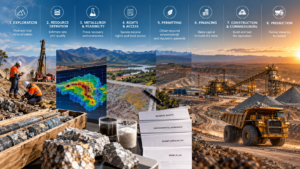
USA Rare Earth’s September milestones represent a significant development in efforts to expand rare earth production and magnet manufacturing outside Asia. Whether the company can turn its acquisition, financing arrangements and planned capacity into a durable and competitive supply chain will depend on execution across the entire mine-to-magnet process.