Standfirst: A US$5 million-plus expansion aims to scale secondary rare earth supply, with feedstock access, processing economics and downstream demand determining its commercial impact.

Paladin EnviroTech is investing more than US$5 million to expand its rare earth recovery operations in Ohio, targeting annual capacity of 150 metric tonnes as the United States seeks additional domestic sources of magnet-critical materials. The expanded facility is expected to become operational by the beginning of the third quarter of 2027.
The company currently produces approximately 40 metric tonnes of recovered material annually. The planned capacity is 3.75 times that level, although the comparison is between current output and targeted capacity, not two established production rates. The expansion highlights the potential for recovering materials from retired equipment while conventional mining and processing projects move through development.
Hard Drives Become a Source of Rare Earths
Paladin works with Critical Materials Recycling (CMR) through REcapture, a joint venture focused on recovering rare earth-bearing materials from end-of-life equipment. Hard drives are an important feedstock, alongside other electronic and industrial components containing permanent magnets.
These magnets can contain neodymium and praseodymium, while selected industrial equipment and medical imaging systems can provide access to heavier rare earths such as dysprosium. Paladin executive Luke Wray has reported that magnets recovered from MRI machines can contain approximately 13–16% dysprosium. This figure relates to particular magnets, not the composition of all discarded MRI equipment.
More Read

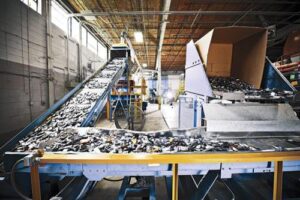
Recovering these materials requires collection, dismantling and separation before specialised processing can extract the rare earth content. Paladin’s electronics recycling network can support this process by sourcing equipment and preparing material for recovery.

Western Digital has also documented a separate recycling programme involving Microsoft, CMR and PedalPoint Recycling to recover rare earth oxides and other valuable materials from end-of-life storage devices. Such programmes demonstrate how equipment manufacturers and recyclers can cooperate to return materials to supply chains, although individual partnerships should not be assumed to cover all of Paladin’s expanded capacity.
Recovery Performance and Product Quality
Paladin reports rare earth recovery efficiency of approximately 97–98% for its process. The company has also reported recovering around 90% of a hard drive’s total intrinsic value through the recovery of rare earths, metals and other components.
More Read

These figures measure different outcomes. Rare earth recovery efficiency concerns the proportion of targeted rare earth material recovered during processing, whereas total intrinsic value recovery concerns the economic value captured across the wider equipment stream. Both remain company-reported claims rather than independently verified performance guarantees for every feedstock or operating condition.
The REcapture joint venture combines Paladin’s sourcing and collection capabilities with CMR’s specialised processing technology. The reported process uses selective leaching without conventional acid-based processing. However, a lower environmental footprint cannot be assumed without comparative data on energy use, water consumption, emissions and waste generation.
The operation produces mixed rare earth oxide, an intermediate product that can require further separation before individual rare earth elements are available for downstream manufacturing. Recovery is therefore one stage in the supply chain, not proof that the facility produces finished rare earth metals, alloys or permanent magnets.
Commercial Viability Depends on Feedstock and Margins
Paladin’s commercial model seeks to capture value from multiple materials recovered from end-of-life equipment. Steel, copper, aluminium, circuit boards and reusable components can contribute revenue alongside rare earth-bearing magnets. This broader recovery model may improve economics by reducing dependence on rare earth prices alone.
Wray has also described potential pricing spreads of approximately 10–20% between certain material acquisition costs and sales into Western markets. This is a reported market spread, not a verified net profit margin. Labour, transport, processing, capital expenditure and realised selling prices will all affect profitability.
The available figures do not establish the expanded facility’s operating cost per tonne, capital payback period or expected profitability at 150 tonnes of annual capacity. These remain important gaps for investors and industrial customers evaluating the project.
Feedstock availability is another constraint. The supply of retired equipment depends on collection networks, replacement cycles and the proportion of material containing economically recoverable magnets. Greater installed capacity will create value only if the operation can secure suitable inputs and consistently deliver material that downstream customers accept.
Recycling Complements Primary Mining
Recycling offers a route to recover materials already circulating in the economy, potentially adding supply without waiting for new mines to complete permitting, construction and commissioning. It does not eliminate the need for primary mining, particularly as demand for permanent magnets grows and the availability of end-of-life materials remains constrained by product lifecycles.
Paladin’s expansion is best understood as an investment in secondary material recovery rather than a standalone solution to US rare earth supply dependence. Its commercial significance will depend on the quantity of material actually processed, the quality of recovered products and the reliability of downstream sales.
The next milestones are commissioning by the stated target date, sustained throughput, verified recovery performance and repeat commercial sales. Evidence of dependable feedstock supply and customer acceptance will be essential to determining whether the expanded operation can deliver commercially meaningful volumes.
For the US critical minerals sector, the investment represents another potential source of domestic supply. Its ultimate contribution will be measured not by the capacity target alone, but by the quantity of usable material delivered consistently to manufacturers.