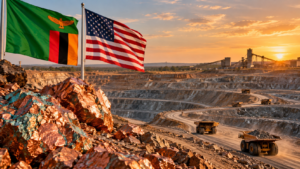
China controls more than 80% of global tungsten supply. The United States just banned tungsten imports from China for defense procurement starting January 2027. Tungsten prices jumped 160% in 2025.

Those three facts alone explain why junior miners are suddenly racing to lock down every non-Chinese tungsten deposit they can find.
This isn’t speculative positioning. This is supply chain panic translated into drill programs, offtake agreements, and emergency permitting requests. And it’s creating a rare window where junior operators with the right assets can command premium valuations and strategic partnerships that didn’t exist 18 months ago.
The Supply Shock Nobody Saw Coming
Beijing didn’t announce a formal tungsten embargo. They didn’t need to. Export restrictions tightened. Dual-use export approvals stopped flowing. Meanwhile, Washington’s Defense Department: which relies on tungsten for everything from armor-piercing ammunition to aerospace components: realized it had a problem.
A big one.
More Read

The U.S. import ban for defense procurement takes effect in less than a year. There’s no domestic production at scale to replace it. The Pentagon can’t simply switch suppliers when 80% of global tungsten comes from one country that’s now restricting exports.

That’s not a rounding error. That’s a strategic vulnerability.

More Read

The Department of State responded by hosting delegations from over 50 countries at the inaugural Critical Minerals Ministerial, signing eleven new bilateral frameworks and committing more than $30 billion in strategic mineral financing. The message was clear: Washington will pay to build non-China supply chains. Fast.
Junior miners heard that message loud and clear.
Price Momentum That Changes Project Economics
Tungsten APT (ammonium paratungstate) prices don’t usually move like this. The market is relatively small, relatively stable, and historically dominated by long-term industrial contracts. But 2025 broke that pattern.
Prices surged more than 160% as buyers scrambled to secure inventory outside Chinese supply chains. That momentum carried into early 2026. The tungsten market exceeded $7.3 billion in 2025 and analysts are projecting compound annual growth of 4.8% through 2035, driven primarily by electric vehicle battery components and renewable energy applications.
What does that mean for junior miners sitting on tungsten deposits that were marginal at $250 per MTU?
It means they’re now economic at current pricing. Suddenly.
Projects that couldn’t pencil out 18 months ago are now attracting serious capital. Offtake agreements that would’ve taken years to negotiate are closing in months. Defense contractors and government agencies that never looked at junior mining stocks are now making site visits and signing binding letters of intent.
Why Poly-Metallic Projects Have the Edge
Single-commodity tungsten deposits face a fundamental problem: tungsten prices are volatile, and pure-play projects live or die on that single price assumption. One downturn, one Chinese export surge, one demand shock: and your entire economic model collapses.
Poly-metallic projects don’t have that problem.
Take deposits that pair tungsten with copper, gold, or molybdenum. The economics work across multiple price scenarios. If tungsten prices soften, copper or gold revenues can carry the project through. If tungsten prices stay elevated, you’re generating premium returns on what was essentially a byproduct credit.
That’s not just theoretical diversification. That’s operational resilience that makes projects bankable.
Lucky Mike-style poly-metallic systems: where tungsten occurs alongside other critical or precious metals: are suddenly the most sought-after assets in the junior mining space. They offer revenue diversification, reduced commodity risk, and the strategic positioning that defense and government buyers are specifically targeting.

The Junior Miners Making Moves
Almonty Industries isn’t a junior anymore, but their trajectory illustrates what’s possible. They commenced production at the Sangdong Tungsten Mine in South Korea with binding defense-linked offtake agreements already in place. Their stated target: supply at least 40% of non-China tungsten to Western markets.
That’s not aspirational. That’s a production mandate backed by government contracts.
American Tungsten is conducting drilling campaigns at the IMA Mine in the United States, positioning for domestic supply priority. GoldHaven and other explorers are discovering tungsten-rich deposits across North America, each racing to advance projects before the 2027 Pentagon deadline creates a supply crunch that could throttle defense production.
The competitive positioning is straightforward: there aren’t enough established Western tungsten producers to meet demand. Early movers with production-stage or near-production assets can command premium pricing, strategic partnerships, and government financing that simply wasn’t available in the pre-crisis era.
What Government Support Actually Means
The $30 billion commitment for critical minerals financing isn’t just a headline. It’s translating into tangible project support: feasibility study grants, permitting acceleration, offtake guarantees, and in some cases direct equity investments from strategic buyers.
The U.S. Department of Defense has specific procurement mandates. They need tungsten. They can’t get it from China. That means they’re willing to pay premium prices and provide long-term contract certainty to domestic and allied producers who can deliver.
For junior miners, this creates something rare: demand certainty backed by government budgets. You’re not selling into a spot market hoping for favorable pricing. You’re negotiating multi-year agreements with defense contractors who have guaranteed funding and regulatory mandates to buy from non-China sources.
That fundamentally changes project finance. Banks will lend against government offtake agreements in ways they won’t against speculative spot market exposure. Strategic investors will take equity positions in projects with Pentagon contracts attached.
The Risks Nobody’s Talking About
The scramble creates opportunity. It also creates risks that junior operators need to price correctly.
First: permitting timelines. Government support doesn’t magically accelerate environmental reviews or community consultations. Projects still face multi-year approval processes even with strategic priority designation. Operators promising 2027 production from greenfield deposits are either extremely well-positioned or significantly optimistic.
Second: technical execution. Tungsten metallurgy isn’t trivial. Processing flowsheets that work in the lab don’t always scale to commercial operations. Junior operators without experienced technical teams or proven processing partnerships are facing steeper risks than their promotional materials suggest.
Third: price volatility. The 160% surge in 2025 was driven by supply panic and strategic stockpiling. Those dynamics won’t necessarily persist. If Chinese export restrictions ease or if Western governments complete their strategic stockpile builds, spot prices could correct sharply. Projects that only pencil out at elevated pricing are vulnerable.

The 2026 Inflection Point
We’re watching a market transformation happen in real time. Tungsten went from a niche industrial metal to a critical strategic commodity in less than 24 months. That shift is creating investment opportunities and operational risks that didn’t exist in the previous cycle.
Junior miners with the right assets: particularly poly-metallic deposits in favorable jurisdictions: are positioned to capture outsized returns if they execute. The combination of price momentum, government support, and supply chain restructuring creates conditions where small operators can build significant market positions quickly.
But the window won’t stay open indefinitely. Once Western production comes online at scale, once strategic stockpiles are filled, once alternative materials or manufacturing processes reduce tungsten intensity: the premium pricing and preferential treatment will fade.
The operators who move fastest, who secure financing and offtake agreements now, who advance projects to production while government support is flowing and prices are elevated: those are the ones that will define the next decade of non-China tungsten supply.
The scramble is real. The fundamentals support it. And 2026 is the year that separates the operators who understand supply chain geopolitics from those still trying to play by the old commodity cycle playbook.
The tungsten market exceeded $7.3 billion in 2025. Western governments committed more than $30 billion to critical minerals development. Defense procurement mandates take effect in 2027. The math isn’t subtle. Neither is the opportunity for junior miners who can deliver what the market desperately needs: tungsten supply that doesn’t flow through Beijing.