Navigating the Ebb and Flow: Mining’s Defining Moment in 2026
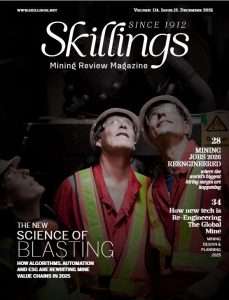
Skillings Mining Review March 2026 – Volume III, Issue 3 | March 2026

The mining industry is no stranger to cycles. But in 2026, the ebb and flow feel more pronounced than ever. Structural supply deficits, shifting trade corridors, electrification-driven demand, and accelerating automation are converging to redefine how the sector operates. In this issue of Skillings Mining Review, we examine the forces reshaping global mining — and the strategic decisions that will determine its future.
Our cover story, The 2026 Great Lakes Shipping State, explores the renewed importance of North America’s inland maritime network. As bulk freight volumes fluctuate and infrastructure modernization struggles to keep pace, the Great Lakes region has become a strategic pressure point. Shipping efficiency is no longer a back-end logistics function — it is a front-line competitive advantage influencing project viability, cost structures, and delivery commitments.
While mergers and acquisitions have intensified across the sector, consolidation alone cannot resolve the widening mineral supply deficit. In Bridging the Supply Gap, we investigate why capital discipline, permitting complexity, and declining ore grades are slowing the pipeline of new production. The imbalance between demand — particularly for critical minerals — and feasible new supply is becoming one of mining’s most urgent strategic challenges.
Electrification, renewable energy expansion, and grid modernization are fueling unprecedented copper demand. Yet major new discoveries remain scarce. In The Copper Crunch, we examine why innovation without resource expansion is not a sustainable strategy. Exploration investment, geopolitical risk, and long project timelines are placing pressure on future supply security.
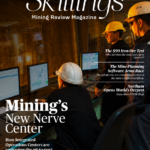
Operational innovation continues beneath the surface. Redefining the Underground Environment in Real Time highlights how advanced ventilation strategies and digital monitoring systems are transforming underground mining. Real-time airflow modeling and automated environmental controls are improving safety standards while enhancing operational efficiency.

Automation is evolving from isolated equipment upgrades to fully integrated production ecosystems. In Orchestrating the Autonomous Fleet for Maximum Production, we analyze how synchronized fleet management systems are helping mining companies reach aggressive output targets in 2026. Data coordination — not just driverless trucks — is emerging as the real productivity multiplier.
This issue also tracks rare earth market acceleration, Europe’s evolving energy strategy, infrastructure expansion across Canada, and renewed investment signals from Africa. At the same time, ESG frameworks continue to shape capital allocation decisions, regulatory oversight, and community engagement models worldwide.

If one theme defines mining in 2026, it is resilience. From logistics bottlenecks to commodity volatility, success now depends on operational discipline, long-term capital strategy, and technological integration. The companies that adapt to structural change — rather than react to temporary cycles — will shape the industry’s next chapter.
As the global economy accelerates its energy transition and resource demand intensifies, mining stands at a decisive crossroads. Navigating the ebb and flow is no longer optional. It is imperative.