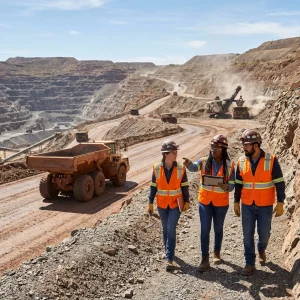
Copper is one of the most important metals in the global economy, supporting power grids, electric vehicles, renewable energy, construction, manufacturing and emerging technologies. The world’s largest copper mines therefore play a critical role in maintaining global supply.
In 2025, the 10 biggest copper mines produced a combined nearly 4.9 million tonnes of copper, accounting for more than one-fifth of global mined copper production.
But production volume is only part of the story. These giant operations also show how modern copper mining is being shaped by declining ore grades, water requirements, infrastructure challenges, geological risks and the need to maintain production from mature deposits.
Which are the world’s 10 biggest copper mines?
The world’s 10 biggest copper mines by 2025 production are Escondida, Tenke Fungurume, Grasberg, Las Bambas, Buenavista, Collahuasi, KGHM, Cerro Verde, Kamoa-Kakula and Antamina. Together, these operations produced approximately 4.9 million tonnes of copper in 2025.
| Rank | Copper Mine | Country | 2025 Production |
|---|---|---|---|
| 1 | Escondida | Chile | 1,347.6 kt |
| 2 | Tenke Fungurume | DRC | 519.0 kt |
| 3 | Grasberg | Indonesia | 460.4 kt |
| 4 | Las Bambas | Peru | 411.3 kt |
| 5 | Buenavista | Mexico | 409.4 kt |
| 6 | Collahuasi | Chile | 404.1 kt |
| 7 | KGHM | Poland | 401.1 kt |
| 8 | Cerro Verde | Peru | 391.5 kt |
| 9 | Kamoa-Kakula | DRC | 385.8 kt |
| 10 | Antamina | Peru | 368.0 kt |
Production figures are based on 2025 copper output reported in the source material.
What is the world’s biggest copper mine?
Escondida in Chile is the world’s biggest copper mine by 2025 production, producing 1,347.6 thousand tonnes of copper. It is significantly ahead of the other mines in the ranking and is operated by a joint venture involving BHP, Rio Tinto, Mitsubishi and JX Advanced Metals.
Why is Escondida the biggest copper mine?
Escondida is located in Chile’s Atacama Desert and has remained the world’s largest copper mine for decades. In 2025, it produced approximately 1.35 million tonnes of copper, more than twice the output of the second-ranked Tenke Fungurume. Its enormous scale makes it one of the most important individual sources of copper in the global market.
- 2025 production: 1,347.6 kt
- Country: Chile
- Operators/owners: BHP, Rio Tinto, Mitsubishi and JX Advanced Metals
Which copper mine ranks second in the world?
Tenke Fungurume in the Democratic Republic of Congo ranks second among the world’s biggest copper mines, producing 519.0 thousand tonnes of copper in 2025. The operation is also important for cobalt production, making it strategically relevant to industrial and energy-related mineral supply chains.
What makes Tenke Fungurume important?
Tenke Fungurume is operated by CMOC Group and is one of the world’s major copper-cobalt operations. Its processing infrastructure supports large-scale production, while its copper and cobalt output gives the operation importance beyond copper alone.
- 2025 production: 519.0 kt
- Country: Democratic Republic of Congo
- Operator: CMOC Group
How much copper does Grasberg produce?
Grasberg produced approximately 460.4 thousand tonnes of copper in 2025, making it the third-largest copper mine in this ranking. Located in Central Papua, Indonesia, the operation produces both copper and gold and is operated by Freeport-McMoRan.
Why is Grasberg important to global copper supply?
Grasberg is one of the world’s best-known mining operations, but its scale also comes with significant operational and geological challenges. A major landslide disrupted production in 2025, demonstrating how events at a single giant mine can affect global copper supply. The operation is also continuing its underground mining development.
- 2025 production: 460.4 kt
- Country: Indonesia
- Operator: Freeport-McMoRan
Which is Peru’s biggest copper mine in this ranking?
Las Bambas is the fourth-largest mine in the ranking, producing 411.3 thousand tonnes of copper in 2025. Located in Peru, the operation is owned by MMG, CITIC and Pagoda Tree Investment Company and is one of the country’s major copper producers.
Why are logistics important at Las Bambas?
Las Bambas illustrates that producing copper is not only about extracting ore. Transportation infrastructure and relationships with surrounding communities can also influence mine operations. Previous protests and disruptions around transportation routes have demonstrated the importance of reliable logistics for getting copper from the mine to the market.
- 2025 production: 411.3 kt
- Country: Peru
- Owners: MMG, CITIC and Pagoda Tree Investment Company
How much copper does Buenavista produce?
Buenavista in Mexico produced 409.4 thousand tonnes of copper in 2025, placing it fifth among the world’s biggest copper mines. Operated by Southern Copper, Buenavista is also one of the oldest major copper operations, with copper mining at the site dating back to 1899.
Why is Buenavista significant?
Buenavista demonstrates how a historic mining district can remain economically important for more than a century. Modern mining technology and infrastructure continue to support production at an operation with roots dating back to the late nineteenth century.
- 2025 production: 409.4 kt
- Country: Mexico
- Operator: Southern Copper
Where does Collahuasi rank among the biggest copper mines?
Collahuasi ranks sixth, producing 404.1 thousand tonnes of copper in 2025. Located high in Chile’s Andes, the mine is operated through a joint venture involving Glencore, Anglo American and Mitsui and faces significant infrastructure and water-management challenges.
Why is water important at Collahuasi?
Collahuasi operates at extremely high altitude, making infrastructure particularly important. A major water project has been developed to transport seawater from the coast to operations more than 4,400 metres above sea level. This highlights how water, energy and logistics can become critical factors in large-scale copper mining.
- 2025 production: 404.1 kt
- Country: Chile
- Owners: Glencore, Anglo American and Mitsui
How much copper does KGHM produce?
KGHM’s Polish operations produced 401.1 thousand tonnes of copper in 2025, placing the company seventh in the ranking. KGHM Polska Miedź is also a major silver producer and is seeking additional copper opportunities to strengthen its future ore supply.
Why is KGHM important to European copper supply?
KGHM is one of Europe’s major copper producers. Its strategy of looking for additional mining opportunities in Europe and Morocco reflects the wider importance of securing reliable and geographically diversified sources of copper for processing and manufacturing supply chains.
- 2025 production: 401.1 kt
- Country: Poland
- Producer: KGHM Polska Miedź
What is Cerro Verde’s copper production?
Cerro Verde in Peru produced 391.5 thousand tonnes of copper in 2025, ranking eighth among the world’s largest copper mines. The operation is a joint venture involving Freeport-McMoRan, Sumitomo and Buenaventura and has a long history of copper production.
How has processing technology helped Cerro Verde?
Cerro Verde demonstrates the importance of mineral processing technology in copper mining. The operation has a history of processing oxide ores and developing SX/EW infrastructure, showing how processing methods can influence the economics and operating life of a copper mine.
- 2025 production: 391.5 kt
- Country: Peru
- Owners: Freeport-McMoRan, Sumitomo and Buenaventura
Why is Kamoa-Kakula one of the biggest copper mines?
Kamoa-Kakula in the Democratic Republic of Congo produced 385.8 thousand tonnes of copper in 2025, ranking ninth among the world’s largest copper mines. The relatively new operation has quickly become a major copper producer, although underground development and flooding have affected production.
What happened at Kamoa-Kakula?
The mine experienced significant disruption following seismic activity and flooding in its underground workings. Production was affected as the operation focused on rehabilitation, underground development and access work. The mine demonstrates both the rapid growth potential of major copper projects and the geological challenges associated with underground mining.
- 2025 production: 385.8 kt
- Country: Democratic Republic of Congo
- Owners: Ivanhoe Mines, Zijin Mining, Crystal River and DRC government
Which mine completes the top 10 copper mines?
Antamina in Peru completes the top 10, producing 368.0 thousand tonnes of copper in 2025. The operation is jointly owned by BHP, Glencore, Teck and Mitsubishi and remains one of Peru’s most important copper-producing operations.
Why is Antamina important to copper supply?
Antamina adds to Peru’s significant presence in the global copper industry. The country’s multiple large-scale operations mean that Peru remains an important source of mined copper, while individual mines such as Antamina contribute hundreds of thousands of tonnes to global supply each year.
- 2025 production: 368.0 kt
- Country: Peru
- Owners: BHP, Glencore, Teck and Mitsubishi
How much copper do the 10 biggest copper mines produce?
The 10 biggest copper mines produced approximately 4.9 million tonnes of copper in 2025. This represents more than one-fifth of global mined copper production, meaning that the performance of a relatively small group of giant operations can have a significant effect on the global copper supply chain.
The concentration of production is important because large mines can experience events that quickly affect supply. These can include:
- Flooding
- Landslides
- Seismic activity
- Infrastructure failures
- Transportation disruptions
- Labour or community-related disruptions
- Processing problems
- Changes in ore characteristics
The 2025 disruptions at Grasberg and Kamoa-Kakula demonstrate why the world’s largest mines matter beyond their individual production figures.
Why are the world’s biggest copper mines important?
The world’s biggest copper mines are important because they supply a large share of global copper while supporting industries such as electricity, construction, transportation, renewable energy and technology. Their size also means that operational disruptions can have significant consequences for global copper supply.
Copper demand is increasingly connected to electrification and infrastructure development. Power grids, electric vehicles, renewable energy projects and data centres all require copper-intensive infrastructure.
However, increasing supply is not straightforward. New copper mines require exploration, permitting, financing, construction and development before they can produce commercial quantities of metal. Existing mines therefore remain critical while the industry works to develop future supply.
At the same time, mining companies are dealing with:
- Declining ore grades
- Higher energy requirements
- Increasing water requirements
- More complex deposits
- Higher development costs
- Greater infrastructure needs
This makes maintaining production from existing large-scale copper mines increasingly important.
What does the future look like for the world’s biggest copper mines?
The future of the world’s biggest copper mines will depend on their ability to maintain production while managing deeper operations, changing ore grades, water and energy requirements, infrastructure needs and rising operating costs. These challenges will become increasingly important as global copper demand grows.
For many of these mines, the challenge is no longer simply finding copper. It is producing enough copper consistently and economically.
Some operations are expanding. Others are moving deeper underground. Many are investing in processing, water infrastructure, automation and other technologies to improve productivity and extend mine life.
That makes the next phase of copper mining less about simply increasing the number of mines and more about getting more reliable production from the world’s existing major assets.
What can we learn from the world’s 10 biggest copper mines?
The biggest lesson is that global copper supply is heavily dependent on a relatively small number of very large operations.
Escondida alone produced more than 1.3 million tonnes in 2025, while the 10 mines combined produced around 4.9 million tonnes.
As copper demand continues to grow, these mines will remain closely watched by mining companies, governments, investors, manufacturers and commodity markets.
The future of copper supply will depend not only on discovering new deposits, but also on how effectively the industry can operate, expand and extend the lives of the mines already producing today. For the copper market, every tonne matters.
Frequently Asked Questions
What is the biggest copper mine in the world?
Escondida in Chile is the biggest copper mine in the world by 2025 production. It produced approximately 1.35 million tonnes of copper in 2025, significantly more than the second-ranked Tenke Fungurume.
Which country has the most of the world’s biggest copper mines?
Peru and Chile have several mines among the world’s top 10. Peru has Las Bambas, Cerro Verde and Antamina, while Chile has Escondida and Collahuasi.
How much copper did the top 10 mines produce in 2025?
The world’s 10 biggest copper mines produced approximately 4.9 million tonnes of copper in 2025, representing more than one-fifth of global mined copper production.
Why are large copper mines important?
Large copper mines are important because they provide significant volumes of metal to global supply chains. Disruptions at these operations can remove substantial amounts of copper from the market and potentially affect prices and downstream industries.
Which copper mine produces the most copper?
Escondida in Chile produced the most copper among the mines in this ranking, with 1,347.6 thousand tonnes in 2025.