Here is the truth nobody wants to admit: while Western governments are busy drafting white papers on “critical mineral security,” China is actually out there buying the dirt. The recent finalization of the Malian government’s agreement with Ganfeng Lithium over the Goulamina project isn’t just another corporate acquisition. It is a seismic shift.

The deal, which officially cements Ganfeng’s control over one of the world’s most significant lithium deposits, signals a new era in West African mining. It’s an era defined by the retreat of Western junior miners and the aggressive, state-backed consolidation of the supply chain by Beijing.
For the Malian government, this is about “sovereignty.” For Ganfeng, it’s about a stranglehold on the global battery revolution. For the rest of the world? It’s a wake-up call that the 2026 lithium landscape is looking increasingly unipolar.
The Strategic Calculus: Mali’s 35% Gambit
The numbers coming out of Bamako aren’t a rounding error. They represent a fundamental restructuring of how resource wealth is partitioned in the Sahel. Under the newly signed agreement, the Malian state has boosted its stake in the Goulamina project to 35%.
Let’s break that down. Under the previous 2016 mining code, the state was entitled to a 20% interest. By leveraging the 2023 mining code: a piece of legislation designed specifically to claw back revenue from foreign operators: the military-led government has squeezed an additional 15% out of the deal.
More Read

Here is the kicker: 10% of that stake is granted to the state free of charge. The remaining 25% was “purchased” by the government for approximately $32-34 million (roughly CFA 20 billion). But Mali isn’t cutting a check from its treasury. Instead, they are paying Ganfeng back using 20% of their annual dividends from the mine’s profits.

It is a masterful bit of financial engineering by the Malian Economy Minister. The state projects an annual windfall of 110-115 billion CFA francs ($191 million). In a country grappling with intense security challenges and economic sanctions, that isn’t just revenue. It’s a lifeline.
Goulamina: Africa’s Lithium Giant Awakens
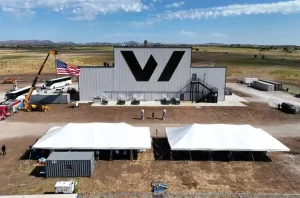
To understand why this deal matters, you have to look at the geology. Goulamina is massive. We are talking about 211 million tonnes of ore containing approximately 7.14 million tonnes of lithium content.
More Read


Phase I of the project, which officially commenced operations on December 15, 2024, is designed to produce 506,000 tonnes of lithium concentrate annually. But Ganfeng isn’t stopping there. The roadmap for Phase II targets an expansion to 1 million tonnes per year.
At that scale, Goulamina isn’t just a mine; it’s a global price-setter. When you have that much spodumene concentrate hitting the market from a single source controlled by a single Chinese entity, the “market price” becomes whatever Ganfeng decides it needs to be to maintain its dominance.
The project spans roughly 100 square kilometers. The operational footprint is enormous, and the logistical challenges are equally daunting, requiring a robust transport corridor to the coast. Yet, Ganfeng has the stomach for these risks: something Western juniors like Leo Lithium simply couldn’t maintain under the pressure of shifting local regulations.
The Death of the Western Junior in the Sahel
The exit of Leo Lithium is a cautionary tale for any Western developer operating in “high-risk” jurisdictions. Leo Lithium sold its 40% stake to Ganfeng for $342.7 million after the Malian government suspended its direct shipping ore (DSO) permits and introduced the new mining code.
The message to the market was loud and clear: if you can’t navigate the political volatility, the Chinese will. Ganfeng didn’t just buy a mine; they bought out a competitor that was hamstrung by its own risk profile and shareholder expectations.
This trend isn’t isolated to Mali. We’ve seen similar dynamics in the rare earth supply chain and across the copper-cobalt belt in the DRC. While Western firms are bogged down by ESG reporting requirements and fluctuating stock prices, Chinese state-aligned firms are playing a 20-year game. They don’t mind a “Midnight Burst” of regulatory changes if it means they end up with 100% of the product.
The term “Midnight Burst” has become shorthand in mining circles for these sudden, high-stakes regulatory shifts that happen under the cover of political transition. Mali’s 2023 code was exactly that: a burst of legislative energy that completely changed the valuation of the Goulamina asset overnight.
Geopolitics: The Tilt Toward the East
Mali’s pivot isn’t just financial; it’s deeply geopolitical. By aligning with Ganfeng, Bamako is signaling a definitive break from its traditional reliance on Western mining investment. This aligns with the broader regional trend where military governments in the Sahel are trading French and American influence for Chinese and Russian partnerships.

China’s dominance in the lithium space is now almost total. They control the refining, they control the battery manufacturing, and now they are aggressively securing the upstream supply.
Consider this: Ganfeng holds 65% of Goulamina and retains full operational control. This ensures that the concentrate produced in Mali will flow directly into Ganfeng’s refining ecosystem in China. It bypasses the global market entirely. This is “vertical integration” on a planetary scale.
For context, look at how other jurisdictions are reacting. While Mali moves toward China, Nevada reclaims its crown as a top mining jurisdiction by doubling down on domestic permits. But Nevada’s production timeline is years behind the operational reality at Goulamina. The West is trying to build a supply chain from scratch; China is just expanding the one it already owns.
The 2026 Outlook: Why This Matters Now
As we move through 2026, the Goulamina project will be the litmus test for lithium production in Africa. If Ganfeng can successfully scale to Phase II despite the regional instability, it will prove that their model of “high-risk, high-reward” mining is the only one that works in the current geopolitical climate.
The “Midnight Burst” of Malian nationalism hasn’t deterred Chinese investment; it has simply clarified the price of admission. Ganfeng was willing to give the government 35% because they know that owning 65% of a world-class operating mine is better than owning 100% of a project that is stuck in a legal stalemate.
For investors, the takeaway is grim but necessary. The “lithium rush” is entering a consolidation phase. The days of the small exploration company striking it rich and bringing a mine to production independently are largely over: especially in jurisdictions with high sovereign risk.
The strategy now? Watch the majors. Watch who the governments are talking to when the cameras are off. In the case of Goulamina, the winner was decided long before the final contracts were signed.
Data at a Glance: The Goulamina Agreement
| Feature | Old Agreement (Leo Lithium/Ganfeng) | New Agreement (Ganfeng/Mali State) |
|---|---|---|
| State Ownership | 20% | 35% |
| Ganfeng Ownership | 40% | 65% |
| Purchase Price for 25% | N/A | $32-$34 Million (CFA 20 Billion) |
| Annual State Revenue | Variable | Est. $191.5 Million (CFA 110B+) |
| Operational Control | Shared | Ganfeng (100%) |
| Phase I Capacity | 506k tpa Spodumene | 506k tpa Spodumene |
The Inevitable Conclusion
There is no “market” for lithium concentrate if one country controls the tap. Mali’s greenlight for Ganfeng is the final piece of a puzzle that the West is still trying to find the box for. While we talk about diversifying, the reality on the ground in Africa is one of narrowing options.
Bamako gets its cash flow. Ganfeng gets its lithium. The Western battery manufacturers? They get a higher bill and a longer wait. 2026 isn’t the year of the “green transition”: it’s the year we realize the transition has a Chinese gatekeeper.