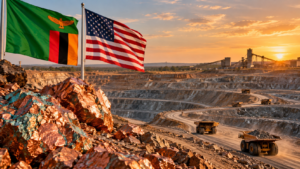
WASHINGTON : The Pentagon just sent a clear signal to the mining industry: the era of “just-in-time” critical mineral sourcing is officially dead.

In a massive overnight move, the Department of Defense issued a series of requests for proposals to a staggering 1,500 companies. The objective is singular: develop domestic supply chains for 13 critical minerals that the U.S. can no longer afford to outsource.
We aren’t talking about a few million dollars in grants for pilot programs. We’re talking about federal funding potential between $100 million and $500 million per project. This is the Pentagon’s checkbook opening in a way we haven’t seen since the Cold War.
The timing isn’t a coincidence. As US-Iran tensions hit a fever pitch this week, the vulnerability of global shipping lanes and foreign-dependent supply chains has moved from a “strategic risk” to a “clear and present danger.”
The Dirty 13: A Breakdown of the Mandate
The Pentagon’s list isn’t just a random assortment of elements. These are the 13 minerals the DoD identifies as the backbone of modern warfare and national infrastructure. The list includes graphite, tungsten, vanadium, antimony, cobalt, lithium, manganese, nickel, niobium, rare earth elements, scandium, tantalum, and titanium.
More Read

Without these, the F-35 doesn’t fly. The Virginia-class submarine doesn’t dive. And the “shiny AI revolution” that everyone is talking about? It grinds to a halt.

Take graphite, for instance. It is the primary material for battery anodes. Currently, the U.S. is almost entirely dependent on foreign processing. The Pentagon’s message is simple: fix it. Now.

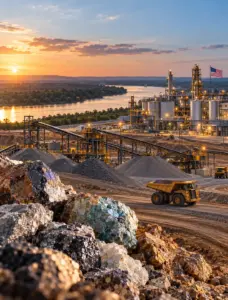
The intersection of defense policy and mining activity is creating a new era of de-risked junior mining.
More Read

The Request for Proposals (RFP) is designed to hit 1,500 different entities across the mining, processing, and recycling sectors. This isn’t just for the “Big Three” miners. The DoD is looking for mid-tier players and juniors who can prove they have the geology and the grit to get these projects online.
Why 2026 is the Inflection Point
We’ve seen these “calls to action” before. Usually, they result in a white paper and a few speeches on the Senate floor. This feels different.
First, there is the sheer scale of the funding. The $100 million to $500 million range represents a massive de-risking tool for investors. For a junior mining company, that kind of federal backing is the difference between a project sitting in a filing cabinet and breaking ground.
Second, the geopolitical context is brutal. With the Strait of Hormuz effectively a flashpoint and China’s critical minerals export controls tightening the noose on global supply, the U.S. has reached a “chickens-coming-home-to-roost” moment.
The strategic calculus here isn’t subtle: if you don’t own the mine, you don’t own your defense.
The Iranian Shadow and the Supply Chain Crisis
While the long-term threat remains China’s stranglehold on processing, the immediate catalyst for this massive RFP is the escalating tension with Iran.
Military planners are looking at the possibility of prolonged maritime disruptions. If the flow of goods through the Middle East is throttled, the U.S. military’s ability to replenish its stockpiles of high-tech munitions is severely compromised.
Tungsten and vanadium are essential for high-strength alloys and armor-piercing munitions. You can’t build a modern military without them. And you certainly can’t build one while your primary sources are sitting behind a potential blockade or in the hands of an adversary.
The Pentagon’s move follows a record-breaking 2025 where it moved $4.5 billion into critical mineral stockpiling. This RFP is the next logical step: moving from “buying it” to “building it.”

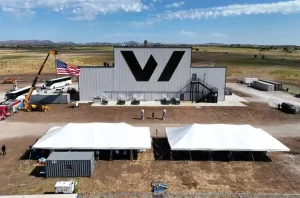
Collaborative efforts between the DoD and private operators are becoming the new standard for national security.
Following the Money: What It Means for Junior Miners
For the 1,500 companies that received the call, the work starts now. The Pentagon isn’t just looking for ore in the ground. They are looking for “integrated solutions.” That means mining, refining, and recycling all happening within friendly borders.
This is where the USA Rare Earth consolidation of the Round Top project serves as a blueprint. The government wants centralized, secure control over these assets.
The funding is designed to cover:
- Feasibility studies for domestic extraction.
- Modernization of existing processing facilities.
- New technology deployments that reduce the environmental footprint (making the projects easier to permit).
“This is the most aggressive we’ve seen the DoD since the 1950s,” says one industry insider who requested anonymity. “They aren’t just looking for minerals; they’re looking for a fortress-America supply chain.”
The Graphite and Vanadium Problem
Let’s look at the numbers. They’re grim.
The U.S. currently produces zero percent of its graphite needs domestically. That’s not a typo. Every single gram of graphite used in a U.S.-made EV or defense battery comes from somewhere else: usually somewhere that doesn’t like us very much.
Vanadium isn’t much better. While it’s essential for the steel alloys used in naval vessels and jet engines, the U.S. has been a net importer for decades.
By targeting 13 minerals simultaneously, the Pentagon is trying to plug a dozen holes in a sinking ship. The mandate is broad because the neglect was deep.

Advanced processing technology is the key to breaking foreign dependencies on refined materials.
Is the Timeline Realistic?
Here’s the thing: you can’t disrupt geology.
Even with $500 million in federal cash, a new mine can take a decade to permit and build. The Pentagon knows this. That’s why the RFP includes a heavy emphasis on “near-term production” and “modernization.”
The DoD is looking for companies that can pivot existing operations or restart “brownfield” sites that were abandoned when prices were low. They are also looking at allied nations, but the priority is clearly domestic soil.
They are essentially trying to condense a 10-year development cycle into three years. It’s an uncomfortable, nasty timeline. But in the eyes of the Pentagon, we no longer have the luxury of time.
A Global Chess Match
The U.S. isn’t acting in a vacuum. While the Pentagon issues these RFPs, Japan is ramping up its own strategic mineral partnerships and the EU is scrambling to pass its own version of a Critical Raw Materials Act.
Everyone is playing the same game of musical chairs. But there are only so many chairs: and only so many deposits that are economically and geopolitically viable.
The Pentagon’s aggressive move to secure 1,500 companies is an attempt to grab as many chairs as possible before the music stops.
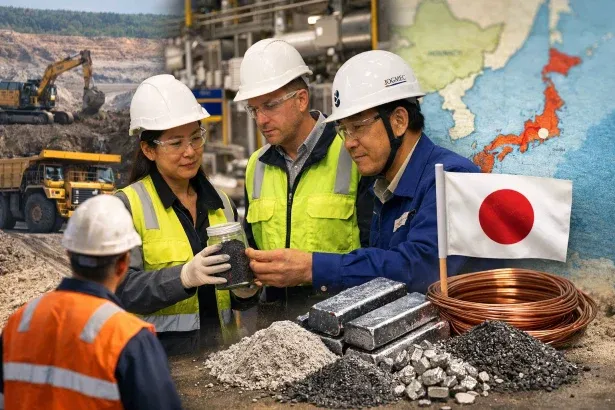
Strategic mineral security is no longer just a U.S. priority; it’s a global race.
The Bottom Line for the Industry
If you’re in the mining sector, this is your moment. The Pentagon just became your biggest potential venture capitalist.
But this money comes with strings. The DoD will expect total transparency, rigorous security protocols, and a commitment to domestic refining. They aren’t interested in shipping raw ore to China for processing.
The strategy is clear: Decouple. Secure. Build.
2026 marks the inflection point. The Pentagon has laid its cards on the table. For the 1,500 companies currently staring at those RFP documents, the clock is already ticking. 180 days to respond. A lifetime to build.
Welcome to the new reality of the American mining industry. It’s no longer just about the markets. It’s about the mandate.