Rio Tinto has officially entered the lithium production ring.

In a move that signals a tectonic shift for the world’s second-largest miner, Rio Tinto confirmed today that its first commercial shipment of lithium carbonate has departed the Port of Buenos Aires. Bound for Shanghai, the 200-tonne consignment: housed in ten sea containers: marks the maiden output from the Rincon project’s 3,000-tonne-per-annum (tpa) starter plant in Argentina’s Salta Province.
But the shipment is only half the story. Simultaneously, Rio Tinto has secured a landmark $1.175 billion financing package to accelerate the project’s massive expansion. This isn’t just a corporate loan; it is a strategic alignment of Western and Japanese capital aimed directly at breaking the mid-stream processing monopoly currently held by China.
The strategic calculus here isn’t subtle: Rio Tinto is betting the house on battery metals after the high-profile shelving of its Jadar project in Serbia. Argentina is now the frontline.
The $1.175 Billion War Chest
The financing package is a “Who’s Who” of development and export credit agencies. This is not the kind of capital you raise for a “maybe” project. This is a fortress-balance-sheet move designed to de-risk the massive $2.7 billion expansion currently underway.
More Read

The lender group includes:

- International Finance Corporation (IFC): The World Bank’s private sector arm.
- IDB Invest: The private sector arm of the Inter-American Development Bank.
- Export Finance Australia (EFA): Linking the project to Australian strategic interests.
- Japan Bank for International Cooperation (JBIC): Securing the off-take future for Japanese EV manufacturers.
Securing over a billion dollars in non-recourse or limited-recourse financing in the current high-interest-rate environment tells you everything you need to know about the quality of the Rincon asset. It also highlights the desperation of Western governments to secure “friendly” lithium. According to the 2026 critical minerals scoreboard, lithium remains the single most contested node in the global energy transition.
From 3,000 to 60,000 Tonnes: The Scaling Challenge
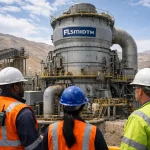
The 200 tonnes currently on the water came from a starter plant: a pilot facility designed to prove the technology and the chemistry. The real game is the 57,000-tpa expansion plant scheduled to come online in late 2027 and reach full capacity by 2028.
More Read

Rio Tinto is using Direct Lithium Extraction (DLE) technology at Rincon. Unlike traditional evaporation ponds: which can take 18 months to produce a batch and are subject to the whims of the weather: DLE offers a much faster, more efficient, and potentially more sustainable path to battery-grade lithium carbonate.
However, DLE at scale is still a “prove-it” technology. While the starter plant has validated the process for Rio, scaling it 20x presents massive engineering hurdles.
The company is currently applying for Argentina’s RIGI (Incentive Regime for Large Investments) scheme, a Milei-government initiative designed to attract capital to the mining sector through tax and customs benefits. This scheme is a direct response to resource nationalism in 2026, where Argentina is positioning itself as the “safe haven” alternative to Chile’s state-heavy mining model.
The Jadar Shadow and the Pivot to Argentina
To understand why Rincon matters so much to Rio Tinto, you have to look back at the Jadar project in Serbia. Jadar was supposed to be the jewel in Rio’s crown: the largest lithium mine in Europe. Then the politics happened.
Mass protests and the eventual revocation of licenses by the Serbian government left Rio with a billion-dollar hole in its strategy. The company didn’t just lose a mine; it lost its lead in the lithium race.
Argentina is the redemption arc. By moving aggressively into the “Lithium Triangle,” Rio Tinto is bypassing the environmental NIMBYism of Europe for a jurisdiction that, under President Javier Milei, is rolling out the red carpet for foreign direct investment.
But make no mistake: Argentina is not without risk. While the federal government is pro-mining, the provincial power dynamics in Salta and the ongoing volatility of the Argentine Peso require a level of political maneuvering that only a Tier-1 miner like Rio Tinto can stomach.
Market Implications: The 2026 Lithium Outlook
This first shipment arrives at a critical juncture for the market. While 2024 and 2025 saw a correction in lithium prices as supply caught up with initial EV demand spikes, 2026 is shaping up to be the year of the “supply gap” realization.
The lithium forecast 2026 suggests that while supply is growing, the quality of that supply: specifically battery-grade carbonate: remains tight. Rio’s entry into the market as a producer, rather than just an explorer, changes the pricing dynamic for the majors.

Furthermore, the demand side is being bolstered by more than just cars. The explosion of data center capacity to support artificial intelligence is creating a secondary market for large-scale lithium-ion storage. For a deeper dive into this trend, see our analysis of lithium AI demand and why it matters in 2026.
Financing as a Geopolitical Weapon
The involvement of JBIC and Export Finance Australia is a clear signal that the Rincon project is part of a broader Western “Mineral Security Partnership.”
China currently controls over 60% of global lithium processing. By funding Rio Tinto’s expansion in Argentina, Western and Japanese lenders are ensuring that a significant portion of South American output is diverted away from the Chinese supply chain and toward the battery plants being built in the U.S. and Japan.
This follows the recent legislative push in Washington, where the US Senate passed a new critical minerals law that provides tax incentives for materials sourced from Free Trade Agreement (FTA) partners: or “friendly” jurisdictions like Argentina.
Bottom Line: The “New” Rio Tinto
Rio Tinto is no longer just an iron ore company with a copper habit. With Rincon now producing and a billion-dollar war chest secured, Rio is the first of the “Big Three” (Rio, BHP, Vale) to successfully commercialize a lithium asset from the ground up in this cycle.
The 200-tonne shipment is a drop in the ocean compared to global demand, but as a proof of concept, it is a massive victory. For investors and operators, the message is clear: the era of “wait and see” for lithium majors is over. The execution phase has begun.
Data Tracker: Project Rincon at a Glance
| Metric | Detail |
|---|---|
| Location | Salta Province, Argentina |
| Current Capacity | 3,000 tpa (Starter Plant) |
| Target Capacity | 60,000 tpa (by 2028) |
| Technology | Direct Lithium Extraction (DLE) |
| Key Financing | $1.175 Billion (IFC, IDB Invest, EFA, JBIC) |
| Total Investment | ~$2.7 Billion |
| Estimated Mine Life | 40+ Years |
For more updates on the global critical minerals landscape and hard-news coverage of the mining industry, visit Skillings.net or follow our latest news tag.