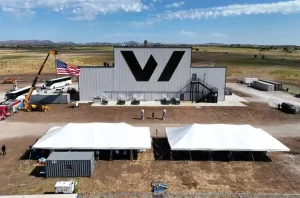
SASKATOON, Saskatchewan : Denison Mines Corp. has formally reached a Final Investment Decision (FID) to advance the Phoenix uranium deposit to construction, marking a historic shift in the Athabasca Basin’s mining landscape. The decision, announced Sunday, paves the way for the first-ever In-Situ Recovery (ISR) uranium operation in the region, a move that stakeholders suggest will fundamentally alter the economics of high-grade Canadian uranium extraction.

Site preparation at the Wheeler River project site is slated to begin immediately. This follows the receipt of final federal regulatory approvals from the Canadian Nuclear Safety Commission (CNSC) in February 2026, which joined the provincial green light secured in July 2025. With a projected capital expenditure of $419 million, the project is positioned to become the cornerstone of Denison’s portfolio and a critical node in the Western world’s nuclear fuel supply chain.
The ISR Inflection Point: Why It Matters Now
For decades, the Athabasca Basin has been defined by massive, high-cost underground operations. Denison is opting for a different path. ISR technology involves circulating a solution through the orebody to dissolve uranium in place before pumping it to the surface for processing.
The strategic calculus here isn’t subtle: traditional hard-rock mining is getting more expensive, more dangerous, and more difficult to permit. By pivoting to ISR, Denison is effectively de-risking the “unavoidable” complications of deep-shaft mining.
“The industry has been watching the Phoenix project as a test case for ISR in high-grade unconformity deposits,” said one analyst familiar with the project. “The FID isn’t just a green light for a mine; it’s a validation of a technology that could unlock dozens of previously ‘stranded’ deposits across northern Saskatchewan.”
More Read

The project targets first production by mid-2028. That is not a tentative date. It is a deadline calculated to meet a projected supply deficit that many analysts believe will peak in the late 2020s.


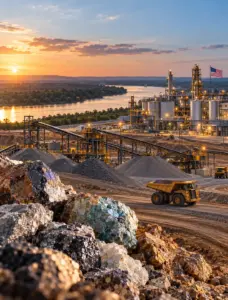
(Image suggestion: https://cdn.marblism.com/u6VkLX_7Yli.webp – Modern mineral processing plant at sunrise, showing the modular units typical of an ISR facility.)
A $419 Million Bet on Efficiency
The $419 million capital requirement for Phoenix is lean by industry standards. Typically, a greenfield uranium mine in this region would command a multi-billion dollar price tag. That’s the ISR advantage: no massive tailings facilities, no deep-shaft sinking, and a significantly smaller surface footprint.
More Read

Denison holds a 90% interest in the project, with JCU (Canada) Exploration holding the remaining 10%. By maintaining a dominant stake, Denison retains control over the construction timeline, which is expected to take approximately two years.
But let’s be clear: the “efficiency” of ISR doesn’t mean it’s easy. The Phoenix deposit is exceptionally high-grade, which presents unique challenges for solution mining. To manage this, Denison has pioneered the use of a “freeze wall” to isolate the mining area from the surrounding environment: a technical hurdle that has been the subject of intensive testing over the last three years.
For investors, this FID represents the transition from a “story stock” to a producer in waiting. The market is already pricing in the reality that while exploration juniors like Purepoint Uranium refine targets at Smart Lake, Denison is moving into the build phase.
Geopolitics and the Uranium Supply Gap
The timing of the Phoenix construction isn’t a coincidence. As Western utilities scramble to decouple from Russian supply chains, the “Saskatchewan brand” of uranium has never been more valuable.
The strategic significance of this project extends beyond the Athabasca. With global nuclear capacity set to expand significantly by 2030, the demand for uranium is hitting a wall of limited supply. Most of the world’s new production is coming from jurisdictions with high geopolitical risk. Saskatchewan, by contrast, is the “gold standard” for stability.
However, the industry faces a broader problem. Canada’s mining industry has already warned that even the most robust stockpiles are useless without the infrastructure to process and move the material. Denison’s plan to build a dedicated processing plant on-site addresses part of this bottleneck, but the broader logistics of the northern frontier remain a constant pressure point.

(Image suggestion: https://cdn.marblism.com/wtFzngOH58z.webp – Mining professionals at a strategic site, highlighting the collaborative effort required for high-stakes uranium projects.)
Regulatory Hurdles and Environmental “Less is More”
Securing CNSC approval in 2026 was the final, and perhaps steepest, mountain for Denison to climb. The Canadian regulatory environment for nuclear projects is notoriously rigorous. The fact that Denison cleared this bar for a “first-of-its-kind” ISR project in the Basin suggests a shifting mindset within the regulatory bodies.
Environmental groups and First Nations stakeholders have participated in a years-long consultation process. The ISR method’s lack of traditional tailings and its ability to return the site to near-original conditions post-closure were central to the successful permitting process.
There is no “ore” being moved in the traditional sense. No trucks hauling rock. No massive crushers. It’s a chemical process managed through a series of wells. This “less is more” approach is the only reason the project survived the scrutiny of modern environmental standards.
The 2028 Horizon: Key Risks and Outlook
While the FID is a milestone, the road to mid-2028 is fraught with the usual suspects of mining risk: inflationary pressure on specialized equipment, labor shortages in the skilled mining sector, and the technical execution of the freeze wall at scale.
- The Freeze Wall: If the ground doesn’t stay frozen, the ISR chemistry fails. This is a binary risk.
- Labor Dynamics: The push for international talent mobilization in mining is real, and Denison will be competing with every other major project in the Basin for technical expertise.
- Price Volatility: While uranium prices have trended upward, the long-term contract market remains opaque.
“First production by mid-2028. That’s a deadline the market will be watching closely,” noted Penny Laneford, industry analyst. “Denison is now in the ‘prove it’ phase. They’ve convinced the regulators; now they have to convince the geology.”
Strategic Summary for Investors
For those tracking the global battery revolution and the broader energy transition, the Phoenix mine is a bellwether. It represents the modernization of an aging industry. The reliance on legacy mining methods is being challenged by smaller, smarter, and more environmentally nimble operations.
Denison Mines is no longer just an explorer. It is now a developer of a project that could define the next twenty years of Canadian uranium. The construction of the Phoenix mine is the first major step in proving that Saskatchewan can evolve its mining methods to meet the urgent demands of a nuclear-hungry world.
The clock is ticking. Site prep starts today.

(Image suggestion: https://cdn.marblism.com/pNDT8XZa2ry.webp – Geologists examining core samples, representing the technical precision required for the Phoenix project.)