By Charles Pitts

The narrative that gold has peaked is officially dead.
If you’ve been watching the charts this week, you’ve seen the institutional liquidation. On the surface, it looks like a retreat. Under the hood, it’s a massive structural reset. We are no longer looking at gold as a speculative hedge; we are looking at the construction of a new permanent floor. The $4,500 level isn't a ceiling anymore. It's a buy signal.
Welcome to the March 20, 2026, edition of Skillings Mining Intelligence. Today, we’re dissecting the massive capital shifts in copper, the sudden acceleration of Western rare earth processing, and why Big Tech is finally realizing they can’t build an AI empire on software alone. They need the dirt.
The Gold Floor: Institutional Liquidation or a $4,500 Launchpad?
For months, the "smart money" has been waiting for a correction. They got it. But instead of a freefall, we’re seeing a tactical rotation. Institutional players are shedding paper positions to grab physical tonnage.
More Read

- The Signal: Gold price analysis 2026 indicates that central banks aren't just buying; they’re hoarding.
- The Number: $4,500 per ounce. That’s the consensus for the year-end "neutral" price.
- The Reality: Every time the price dips, the bid comes back harder. It’s a classic "buy the dip" environment fueled by currency debasement and geopolitical friction that isn't going away.
This isn't just about safe havens. It's about the total loss of faith in traditional fiat benchmarks. When the dust settles, those who waited for $2,000 gold will be staring at a $5,000 ticker. For a deeper look at high-margin gold shifts, check out Orla’s Underground Blueprint.


Copper Titans: Freeport-McMoRan’s $7.5B Chile Play
Freeport-McMoRan just ended the "wait and see" era in Chile. The announcement of a $7.5 billion expansion at El Abra isn't just a corporate update; it’s a geopolitical statement.
More Read

Chile has spent years flirting with tax hikes and regulatory uncertainty. Freeport’s move suggests the "Vicuña effect" is real: major miners are realizing they can’t afford to stay on the sidelines while the energy transition eats the global copper supply.
- The Scale: This expansion aims to double production at one of the world’s most iconic sites.
- The Timing: Construction starts as the structural pivot to $13,000 copper becomes the consensus view.
- The Risk: Water rights and labor unions. In Chile, these aren't just checkboxes; they’re potential project-killers.
Freeport is betting that the global deficit will be so severe by 2028 that even high-cost, high-regulation jurisdictions like Chile will offer massive returns. They aren't alone. Lundin Mining is already doubling down in the region, proving that the hunt for Tier-1 assets has reached a fever pitch.
The Rare Earth Shift: Virginia and California Take the Lead
For a decade, the West talked about breaking the Chinese stranglehold on rare earths. Today, the talking stopped.
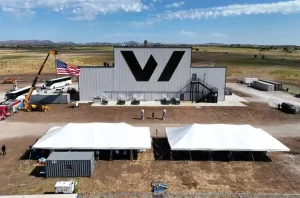
Aclara Resources officially inaugurated its Virginia pilot plant this morning. It’s a small step in terms of tonnage, but a giant leap for the supply chain. Simultaneously, California is emerging as a new frontier for heavy rare earths, moving beyond the "Mountain Pass" legacy into more sophisticated ionic clay exploration.
- Aclara’s Edge: Their "Circular Mineral Harvesting" process uses zero tailings and recycled water. It’s the "green" rare earth story that OEMs (Original Equipment Manufacturers) have been begging for.
- The Geopolitical Shield: US-based processing is no longer a luxury; it’s a national security mandate. We’re seeing a consolidation of control at projects like Round Top in Texas, signaling a "fortress America" approach to critical minerals.

Caption: A realistic, documentary-style view of a digital mining dashboard showing real-time commodity fluctuations and global supply chain routes.
The AI-Energy Nexus: Why Big Tech is Hunting Uranium and Copper
Here’s the thing that Silicon Valley finally figured out: You can’t train a Large Language Model (LLM) on vibes. You need power. Massive, unrelenting, 24/7 baseload power.
This has created a direct line between the data center and the mine site.
- Uranium: Big Tech is now actively lobbying for small modular reactors (SMRs). They need the carbon-free stability that only nuclear provides.
- Copper: Every data center expansion is a massive copper sink. We're talking miles of high-conductivity cabling per facility.
The AI infrastructure race is hammering the supply side of the mining industry. We are seeing tech giants bypass traditional traders and go straight to the miners for offtake agreements. It’s a desperate move to secure the raw materials required for the "Shiny AI Revolution." If you want to understand the 12-month outlook for these critical supplies, you need to look at the export controls being layered on top of this demand.
Financial War Chests: Orion’s $2.2B specialist fund
Traditional banks are still too scared to touch anything that isn't already producing cash. That has left a massive opening for specialist finance.
Orion Resource Partners just closed its latest fund at $2.2 billion. This isn't "dumb money." This is aggressive, technical capital that understands geology better than most CEOs. They are targeting the "missing middle": projects that have been de-risked technically but are stuck in the "valley of death" between exploration and construction.
- The Strategy: Streaming, royalty deals, and direct equity.
- The Focus: Copper, lithium, and gold.
- The Impact: When Orion moves, the market follows. Their entry into a project is often the definitive de-risking event.
The intersection of defense funding and junior mining is also playing a role here. Government grants are starting to act as the first-loss capital that allows firms like Orion to step in and finish the job.

Skillings Mining Intelligence: Quick-Fire Insights
- Silver’s Industrial Fever: Retail investors are chasing gold, but industrial users are panicking about silver. Solar and EV demand are creating a physical shortage that could lead to a $100 silver reality sooner than the bears think.
- Lithium’s Long Game: While the headlines scream about low prices, Trafigura and others are quietly advancing timelines on massive Arkansas-based projects. They know the cycle will turn.
- The Talent Gap: It’s getting grim. We have the money and the minerals, but we don’t have enough engineers. The migration of skilled talent is becoming the primary bottleneck for project timelines in 2026.
The Bottom Line
2026 is the year the "energy transition" stopped being a PowerPoint presentation and started being a brutal physical reality.
Freeport-McMoRan’s $7.5B bet is the opening salvo of a new era of massive capital expenditure. Gold’s $4,500 floor is the new baseline for a world in fiscal chaos. And the AI-Energy nexus is the new "X-factor" that will keep the copper market in a permanent state of tension.
There’s not enough to go around. Those who own the assets: and the means to process them: are the new kings of the global economy.
LinkedIn/X Shareable Snippet:
Breaking: Freeport-McMoRan greenlights $7.5B El Abra expansion in Chile as the copper deficit looms. Meanwhile, gold establishes a new structural floor at $4,500. The AI infrastructure race is no longer just about chips; it’s about the dirt. Read our full Friday breakdown on Skillings Mining Intelligence. #MiningNews #Copper #GoldPrice #CriticalMinerals #SkillingsMining
For more in-depth analysis and the latest updates on the global mining industry, visit Skillings.net. Explore our sitemap for a full archive of our expert market intelligence.