By Charles Pitts & Penny Laneford

2026 isn't just another year on the mining calendar. It’s an inflection point. The hype of the early 2020s has burned off, leaving behind a cold, hard reality: the world is desperately short of the materials required to power the digital and green transition. If you’ve been following the industry, you know the drill. We’ve talked about supply gaps for a decade. But 2026 is when those gaps stop being theoretical and start hitting balance sheets.
The numbers are brutal. Demand for critical minerals is on a trajectory to triple by 2030. By 2040? Quadruple. These minerals already represent more than 10% of global trade. That’s not a rounding error. That’s a fundamental shift in how the world’s economy functions.
The China Stranglehold: A Strategic Vulnerability
Let’s be blunt: China won the first round.
They control the majority of the global critical mineral supply chains. We’re talking over 80% of tungsten production. They have a dominant grip on rare earth elements, cobalt, and the refining capacity for lithium. While the U.S. and the EU are frantically trying to build alternative supply chains, the math doesn’t add up. There simply isn’t enough new capacity coming online in 2026 to replace China’s market position.
The strategic vulnerability here is massive. Governments are waking up to the fact that you can’t build missiles, semiconductors, or EV batteries without these inputs.


The U.S.-China trade deal, which has suspended certain mineral export restrictions, is set to expire in late 2026. If that deal falls through without a replacement? The market disruption will be immediate. And nasty.
The 2026 Priority List: Beyond the Usual Suspects
Everyone talks about Lithium. Sure, it's important. But the 2026 market is going to be defined by minerals that haven't always enjoyed the spotlight.
1. Copper: The Unstoppable Force
Copper is the backbone of… well, everything. Power transmission, electronics, and the massive AI infrastructure race. We’ve already seen the structural pivot and copper’s $13,000 reset, and the pressure isn't letting up. In 2026, the focus shifts to major expansions like the Vicuña District stake increase to keep up with the AI-driven demand.
2. Tungsten: The Forgotten Critical
China produces over 80% of the world's tungsten. The last U.S. mine closed over a decade ago. It’s foundational for carbide applications and defense. In 2026, tungsten moves from a "niche industrial" to a "strategic defense" priority.
3. Antimony and Cobalt
These are the emerging high-risk minerals. They are essential for semiconductors and industrial manufacturing. Federal investment is finally expanding beyond rare earths to include these vulnerable supply chains.
4. Lithium and Nickel
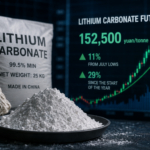
After the volatility of the last few years, we are looking at lithium's 2026 rebound. Tier-1 brine projects are the ones to watch for the Q3 pivot.

The Processing Trap: Midstream is the Real Battleground
Here is the kicker: extraction is only half the battle.
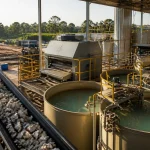
You can dig a hole in the ground anywhere, but if you can’t refine the ore, you’re just moving dirt. The "midstream", smelting, refining, and intermediate product production, is where the real supply chain vulnerability lies. This is where the capital intensity is highest and the permitting is most difficult.

True supply security requires conversion capacity. 2026 will see a shift in investment toward developing domestic processing hubs. We're seeing this play out with initiatives like the Trafigura and Nth Cycle battery supply pivot. If you aren't looking at the midstream, you aren't looking at the whole picture.
Recycling: The 20% Ceiling
There is a lot of talk about "circular economies" and recycling. It sounds great in a press release. But according to the International Energy Agency, recycling typically supplies only 5-20% of overall demand for most critical minerals.
Yes, commercial-scale facilities are coming online in 2026 and 2027. Projects like the "Big Hill" Tailings Project are vital. But let’s be realistic: demand growth is outpacing recycling gains by a wide margin. You cannot recycle your way out of a 300% demand increase. Primary extraction remains the only way to fill the gap.

Geopolitical Chess and Trade Risks
The U.S. is currently hammering out multilateral frameworks to hedge against the late-2026 trade deal expiry. The U.S.-Australia Critical Minerals Framework and partnerships with Saudi Arabia are big moves. We're also seeing $36 billion investment slates from U.S.-Japan announcements that link minerals to electricity and fuels.
But treaties take time. Geology takes longer.
In 2026, companies need to conduct brutal assessments of their supply chains. Which minerals are embedded in your products? What happens if Chinese sourcing is throttled overnight? If you don't have an answer, you don't have a strategy.
Metrics to Monitor in 2026
If you're an operator or an investor, these are the only numbers that matter in 2026:
- Production Timeline Adherence: Most projects are late. Watch the ones that actually meet their ramp-up schedules.
- Recycling Volumes: Is it hitting 20%, or is it stalling at 5%?
- The 180-Day Trade Window: The status of the U.S.-China agreement leading up to the late-2026 expiration.
- Midstream Permitting: Success in smelting and refining capacity expansion in the West.
The Bottom Line
Success in the 2026 critical minerals market depends on a single realization: the era of cheap, easy, and globalized mineral supply is over.
We are moving into a period of balkanized supply chains, where the "midstream" is the new high ground. 2026 marks the inflection point where the lack of investment in the 2010s finally catches up with the technology of the 2020s. The clock is already ticking.
There’s not enough to go around. Those who control the processing control the market.
Social Media Snippet:
2026 is the year the critical minerals bill comes due. With the U.S.-China trade deal set to expire and demand set to triple by 2030, the mining industry is facing a massive inflection point. It’s not just about extraction anymore; the real battle is in the "midstream" processing. Are you prepared for the $13,000 copper reset and the lithium rebound? Read our ultimate guide to the 2026 market on Skillings.net. #Mining #CriticalMinerals #Copper #EnergyTransition #SupplyChain