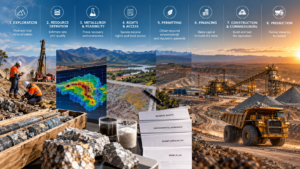
Peruvian mining and processing infrastructure viewed from above.

By Penny Langford
Boliden AB has agreed to acquire Votorantim S.A.’s controlling stake in Nexa Resources for approximately $1.3 billion, or about C$1.8 billion, in an all-share transaction that will create one of the world’s largest integrated zinc and silver producers.
Under the definitive agreement, Boliden will receive all of Votorantim’s Nexa shares, representing 64.68% of Nexa’s outstanding shares and voting rights. Votorantim will receive newly issued Boliden shares and is expected to hold approximately 7% of Boliden, with board representation.
The transaction is expected to close in the first quarter of 2027, subject to approval by Boliden shareholders, regulatory clearances and approval by Nexa shareholders of a new board of directors. After closing, Boliden plans to launch a voluntary tender offer for the remaining Nexa shares.
More Read

The deal moves Boliden, traditionally centered on mining and smelting operations in Europe, into a much larger Latin American production platform. It also gives Votorantim continued exposure to the metals sector through a strategic holding in Boliden rather than direct control of Nexa.

Deal at a glance
| Item | Transaction detail |
|---|---|
| Buyer | Boliden AB |
| Seller | Votorantim S.A. |
| Target | Nexa Resources S.A. |
| Stake acquired | 64.68% of shares and votes |
| Consideration | Approximately $1.3 billion, or C$1.8 billion |
| Structure | Share-for-share exchange |
| Votorantim’s resulting Boliden stake | Approximately 7% |
| Expected closing | Q1 2027, subject to approvals |
| Follow-on transaction | Voluntary cash tender offer for remaining Nexa shares |
Boliden said the agreed exchange ratio is 0.250 newly issued Boliden common shares for each Nexa share held by Votorantim. Based on the reference share prices used in the transaction, the consideration implies approximately $15.29 per Nexa share.
The implied value represents roughly a 14% premium to Nexa’s unaffected 20-day volume-weighted average price, according to transaction materials summarized by Boliden’s investor-relations site. Nexa’s total implied equity value is approximately $2 billion, while its enterprise value is estimated at roughly $3.7 billion.
More Read

Boliden gains scale in zinc and silver
Nexa’s portfolio gives Boliden immediate access to producing zinc, silver, copper, lead and gold assets in Peru and Brazil.
The company operates Cerro Lindo, Peru’s largest underground zinc mine; Atacocha and El Porvenir in Peru; and Aripuanã and Vazante in Brazil. Its processing network includes Cajamarquilla, described by the companies as the largest zinc smelter in the Americas.
Nexa’s assets are expected to add substantial mined and refined zinc capacity to Boliden’s existing portfolio. Nexa accounts for approximately 4% of global zinc production and is the only metallic zinc producer in Latin America outside Mexico, according to the transaction announcement.
Cerro Lindo produced approximately 248,000 tonnes of zinc equivalent in 2025, based on the figures provided for the transaction. The mine is polymetallic, meaning its economic contribution extends beyond zinc. Copper, lead, silver and gold are recovered as by-products, providing exposure to several commodity markets through a single operating complex.
Vazante, one of the world’s 30 largest zinc mines, is another important component of the portfolio. Aripuanã adds a newer Brazilian polymetallic operation, while Cajamarquilla provides strategically important smelting capacity close to Latin American concentrate supply.

Mechanized underground mining remains central to Nexa’s production profile.
Following completion, Boliden will operate 12 mining units and eight smelter units across Europe and Latin America. The geographic expansion is significant: Boliden will gain a larger presence in the Americas while Nexa will become part of a group with established experience in mining, metallurgy, automation and industrial environmental management.
Staffas points to base metals and precious metals
Boliden CEO Mikael Staffas said the acquisition would strengthen the company’s base-metals business and increase its silver production, positioning Boliden as a stronger global player in zinc and precious metals.
That rationale reflects the structure of Nexa’s production. Zinc is the anchor commodity, but silver and other by-products can materially affect revenue, margins and mine economics. For Boliden, the acquisition offers a way to expand zinc exposure without relying solely on new mine development in Europe.
The combination also links Boliden’s smelting and refining expertise with Nexa’s Latin American mining and processing network. Potential benefits could include improved technical support, procurement scale, operational benchmarking and greater coordination between mines and smelters.
Those benefits are not automatic. Nexa’s assets operate under different labor, permitting, infrastructure and community conditions from Boliden’s European facilities. The integration plan will therefore be closely watched by investors, particularly at sites where production reliability, cost control or expansion spending remain important variables.
The deal’s financing structure shifts risk and alignment
The transaction is notable because it is being completed through shares rather than cash.
For Boliden, an all-stock structure limits the immediate need to raise debt or use cash reserves. That can preserve balance-sheet flexibility for capital spending, mine development and operational improvements. It also means the financial risk of the transaction is shared with Votorantim, which will become a significant Boliden shareholder.
For existing Boliden shareholders, the newly issued shares create dilution. The strategic question is whether Nexa’s production, reserves and processing capacity can generate enough additional value to offset that dilution over time.
Votorantim’s approximately 7% ownership in Boliden creates a continuing relationship between the seller and the enlarged mining group. The planned board representation gives Votorantim a formal role in Boliden’s governance while leaving Boliden in control of Nexa.
The structure also gives Votorantim exposure to a broader international mining platform. Rather than retaining a concentrated position in one Latin American producer, it will hold part of a larger group with assets across two continents.
Minority shareholders face a second-stage decision
Boliden and Nexa have agreed that Boliden will pursue a voluntary cash tender offer for Nexa shares not acquired through the initial transaction.
The tender offer is expected to use the same 0.250 exchange ratio as a reference, with cash consideration based on Boliden’s 20-day VWAP. The offer will begin only after completion of the Votorantim transaction and remains subject to the terms and conditions set out in the formal offer documentation.
Until then, Nexa will remain a separately listed company, and Boliden will not yet control its operations. The tender offer will give minority shareholders a further decision point, although the final cash value will depend on Boliden’s share price and the formal offer terms.
The process also means that the transaction has several milestones beyond the signing announcement:
- Boliden must convene and obtain shareholder approval at an extraordinary general meeting.
- Regulatory approvals must be secured in the relevant jurisdictions.
- Nexa shareholders must approve the proposed new board.
- The controlling-stake transfer must close.
- Boliden must then launch and complete the voluntary tender offer for remaining shares.
What the market will be watching
The immediate market read is relatively clear: Boliden is paying a premium to secure control of a strategically important zinc platform, while Votorantim is accepting equity to retain an economic interest in the combined story.
For Boliden, this is a sizeable strategic bet rather than a simple bolt-on acquisition. The company is taking on Latin American operating exposure, integration complexity and the capital requirements associated with a broad portfolio of mines and smelters. The upside is greater scale in zinc and silver, more diversified production and a stronger position in a market where mine supply and smelting capacity remain important constraints.
For Nexa, the transaction could bring access to a larger technical and financial platform. It may also increase scrutiny of operating performance, capital allocation, asset-level costs and the pace of improvement at individual mines.
For Votorantim, the deal provides liquidity from a controlling investment while maintaining a meaningful position in Boliden. Board representation may help protect that strategic interest during the transition.
The key performance indicators after closing will likely include zinc production, treatment charges, smelter utilization, silver output, sustaining capital and free cash flow. Investors will also assess whether Boliden can improve Nexa’s operating consistency without weakening local relationships or delaying essential development work.

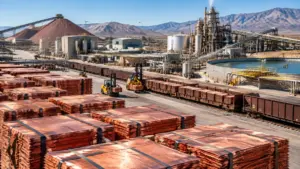
Zinc smelting capacity is a central part of Nexa’s strategic value.
A broader signal for mining M&A
The transaction adds to the industry’s ongoing consolidation around established mines, processing infrastructure and metals tied to industrial growth.
Zinc is used primarily to galvanize steel, while silver is increasingly important across electronics, solar equipment and other industrial applications. By combining these commodities with copper, lead and gold by-products, Nexa offers a diversified production profile that can appeal to a major producer seeking scale without concentrating entirely on one metal.
The deal also reflects a wider preference for integrated or semi-integrated platforms. Control of both mines and smelters can provide greater visibility over concentrate flows, treatment economics and regional supply chains, although it also adds complexity when commodity prices, energy costs or operating conditions change.
Boliden’s proposed acquisition should be viewed alongside the broader consolidation trends covered in Skillings’ mining M&A analysis and its reporting on copper market structure and transaction activity.
Bottom line
Boliden’s agreement to acquire Votorantim’s 64.68% stake in Nexa Resources is a transformational expansion into Latin America and a major repositioning in global zinc and silver.
The $1.3 billion share transaction gives Boliden control of five additional mining operations and three smelting assets, while preserving Votorantim’s exposure through a roughly 7% holding in Boliden. The proposed tender offer could eventually take Boliden’s ownership beyond the initial controlling stake.
The strategic logic rests on scale, zinc exposure, silver growth and access to established infrastructure. The execution challenge will be integrating a geographically diverse operating platform while maintaining production, managing capital and meeting regulatory and shareholder conditions before the targeted first-quarter 2027 closing.
Social snippet: Boliden’s $1.3B all-share deal for Votorantim’s 64.68% stake in Nexa Resources will create a larger global zinc-and-silver platform spanning Europe and Latin America. Closing is targeted for Q1 2027, with a voluntary tender offer for Nexa’s remaining shares planned afterward. Read the full analysis.