The Trump administration isn't tiptoeing around China's critical minerals dominance. It's sprinting.

Between compressed international deadlines, billion-dollar equity stakes in specific miners, and a $12 billion strategic stockpile launched on February 2, 2026, the new approach prioritizes velocity over nearly everything else. The question isn't whether this acceleration is happening: it's whether the guardrails can keep up.
For operators and investors tracking critical minerals, rare earths, and lithium development, the policy shift creates both opportunity and execution risk. Speed cuts both ways.
The Acceleration Agenda: Project Vault and Equity Bets
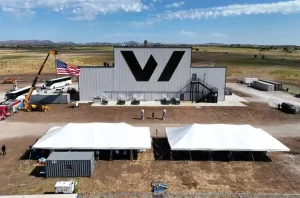
Project Vault represents the centerpiece: a $12 billion strategic stockpile combining $10 billion in US Export-Import Bank financing with $2 billion in private capital. Announced just two weeks ago, it signals a fundamental shift from market-driven supply chains to government-anchored demand.
But Project Vault isn't the only direct intervention. The administration has deployed over $1 billion in equity investments across select US mining companies, including Trilogy Metals, Lithium Americas, and MP Materials. The Pentagon added a $150 million stake in Atlantic Alumina.
More Read



These aren't loans or grants. They're ownership positions that tie federal capital directly to individual project success: and create political exposure if those projects stumble.
Meanwhile, international timelines are being compressed aggressively. The US announced a 60-day action plan with Mexico, committed to concluding a critical minerals memorandum of understanding with the EU within 30 days, and launched multilateral coordination through the Critical Minerals Ministerial on February 4, 2026, gathering 54 countries.
More Read

That's a lot of diplomatic machinery moving simultaneously.
Mining Permits: The Bottleneck Nobody's Solved
The administration's domestic push centers on permitting reform: the perennial promise of every White House that's tried to revive US mining. The goal: cut permitting delays and expedite federal requirements that have historically made US projects uncompetitive against foreign alternatives.
The arithmetic is brutal. Major hard rock mining projects in the US can take 7-10 years to permit. In Australia, comparable projects often clear in 2-3 years. In jurisdictions with streamlined processes, timelines drop further.
That gap isn't just bureaucratic friction. It's capital allocation, opportunity cost, and competitive disadvantage compounded annually. Investors won't wait a decade when they can deploy capital in jurisdictions that move faster.
But acceleration creates its own problems. Environmental oversight exists for reasons beyond regulatory aesthetics: tailings management, water contamination risks, and community impact assessments aren't boxes to check. They're operational realities that determine whether a project operates for 20 years or gets shut down in year five.
The tension isn't theoretical. Streamlined permitting that skips material baseline studies or rushes through tribal consultations invites lawsuits that can delay projects longer than the original timeline. You can't outrun the courts.
Market Stability vs. Strategic Intervention
Analysts tracking the strategy have raised flags about market distortion. Heavy reliance on stockpiling and firm-specific equity investments: what critics call "picking winners": can destabilize pricing signals and politicize competition among miners.
Consider the logic: if the federal government holds equity in Lithium Americas but not Piedmont Lithium, does that create a competitive advantage beyond capital access? Does it signal political favor that influences offtake agreements, state-level permits, or infrastructure support?
The risk isn't hypothetical. Congressional scrutiny has already emerged around taxpayer-funded equity investments, with lawmakers examining both the selection process and the financial exposure.
From a market perspective, strategic stockpiles can stabilize supply during acute shortages: but they can also suppress spot prices during surpluses if the government becomes a swing seller. Operators planning long-term capital deployment need price visibility. Stockpile-driven volatility complicates that calculus.
Geopolitical Execution Risk
Speed-focused strategies also inherit geopolitical turbulence. The administration's compressed timelines assume cooperative counterparties: Mexico concluding a 60-day action plan, the EU signing a 30-day MOU, and 54 countries aligning through the Critical Minerals Ministerial.
But geopolitics doesn't move on Washington's schedule. Political transitions in partner countries, trade disputes, and evolving conflicts create friction that no White House directive can eliminate.
China, meanwhile, isn't standing still. Beijing controls significant rare earth processing capacity, lithium refining infrastructure, and downstream battery manufacturing. The US can accelerate upstream mining, but midstream processing remains the chokepoint. You can't refine lithium carbonate or separate rare earth elements on a compressed timeline without building facilities that take years to commission.
The administration has acknowledged this gap through multilateral coordination mechanisms like the Forum on Resource Geostrategic Engagement (FORGE), designed to coordinate policy and projects across the sector. But coordination isn't execution. Projects still need permits, capital, workforce, and time.
The Overlooked Alternative: Innovation and Recycling
Analysts broadly support allied coordination but caution against attempting to "out-mine" China through pure volume expansion. Alternative approaches: recycling, material substitution, and process innovation: offer leverage that doesn't require racing to replicate China's two-decade head start in critical minerals infrastructure.

Lithium-ion battery recycling, for instance, could supply 10-15% of US lithium demand by 2030 if scaled aggressively. Rare earth recycling from end-of-life magnets and electronic waste represents another underutilized stream. These aren't theoretical: they're commercial pathways with lower permitting friction than greenfield mines.
Material substitution also matters. Sodium-ion batteries, iron-air storage, and alternative magnet chemistries reduce lithium and rare earth intensity. The US has competitive advantages in research and commercialization that don't require outpacing Chinese mining output ton-for-ton.
But innovation takes time, which cuts against the administration's speed-first posture. Recycling infrastructure, alternative chemistries, and substitution pathways need sustained R&D investment and market development: not 60-day action plans.
What Operators and Investors Should Watch
For mining operators evaluating critical minerals projects in the US, the policy environment has shifted materially. Equity investment availability, streamlined permitting rhetoric, and strategic stockpile demand represent tailwinds: but execution risk remains elevated.
Key variables to track:
Permitting timelines: Are federal agencies actually accelerating reviews, or is the rhetoric ahead of implementation? Monitor whether NEPA timelines compress in practice, not just in presidential memoranda.
Equity investment selection criteria: Which projects receive federal backing, and what does that signal about technical viability, political alignment, or strategic priority? The selection process matters as much as the capital.
Stockpile offtake terms: If Project Vault begins purchasing material, what prices, volumes, and contract structures does it offer? Those terms will influence broader market pricing.
Litigation risk: Accelerated permitting invites legal challenges. Track environmental lawsuits targeting expedited approvals, particularly for projects with tribal land proximity or water impact concerns.
Allied coordination effectiveness: Do the multilateral mechanisms (Critical Minerals Ministerial, FORGE) translate into actual project financing, infrastructure investment, or regulatory harmonization? Coordination without execution is noise.
The Speed-Oversight Needle
The administration's critical minerals strategy represents a genuine policy shift: not incremental adjustment, but structural reorientation toward speed and direct intervention. That creates opportunities for operators positioned to move quickly and investors willing to accept political exposure.
But velocity without oversight invites failure modes: projects that launch fast and fail slow, market distortions that complicate capital allocation, and geopolitical frictions that undermine coordination.
The question for 2026 isn't whether the US should accelerate critical minerals development. It should. The question is whether acceleration can coexist with the oversight, environmental due diligence, and market stability that determine whether projects succeed long-term.
Speed gets you started. Execution gets you operational. Those two clocks don't always sync.