



By Salini Krishnan | Skillings Mining Intelligence
Wednesday, April 8, 2026

BRUSSELS : The European Commission has officially activated its most ambitious industrial policy in decades, the $50 billion RESourceEU Action Plan. Designed to insulate the Eurozone from the volatility of global commodity markets and reduce a decades-long reliance on external suppliers, the initiative represents a fundamental shift in how the continent manages its industrial security.
At the heart of the rollout is the newly established European Critical Raw Materials Centre (ECRMC), which opened its doors in Brussels earlier this quarter. The center is tasked with overseeing a massive €3 billion-per-year stockpiling system, set to begin physical acquisitions this month. The strategy is clear: by 2029, the European Union intends to halve its dependency on “third countries”: specifically China: for minerals essential to the energy transition and defense sectors.
The $50 Billion Framework: A Strategic Overhaul
The RESourceEU Action Plan is not merely a funding vehicle but a comprehensive regulatory and financial architecture. Of the $50 billion allocated through 2030, approximately $15 billion is earmarked for direct infrastructure subsidies, while the remainder is structured as a revolving credit facility and insurance fund to de-risk private sector investments in high-risk mining jurisdictions.
Industry analysts suggest that this move is a direct response to the aggressive mineral diplomacy seen in North America and East Asia. “For too long, Europe has been a price-taker in the critical minerals space,” says Marcus Vane, a senior analyst at Skillings Mining Intelligence. “This reserve plan is the first time we’ve seen Brussels put real capital behind its rhetoric of strategic autonomy.”
More Read

The plan is underpinned by four specific benchmarks for 2030, which are now being codified into member-state law:

- Extraction: At least 10% of the EU’s annual consumption of strategic raw materials must be mined domestically.
- Processing: At least 40% of annual consumption must be refined or processed within the EU.
- Recycling: At least 25% of annual consumption must come from recycled materials.
- Diversification: No more than 65% of any strategic raw material can be sourced from a single third country.

The Stockpiling System: Managing the “Invisible Wall”
The €3 billion annual stockpiling program is perhaps the most immediate market catalyst. Unlike the U.S. National Defense Stockpile, which has historically focused on military applications, the EU reserve is designed to support commercial stability.
More Read

Starting in May 2026, the ECRMC will begin purchasing lithium, cobalt, manganese, and several heavy rare earth elements. These purchases will be conducted through a series of “blind” tenders to minimize market disruption, though the scale of the buy-side pressure is expected to provide a significant floor for prices.
This move comes at a critical time as European automotive manufacturers face what industry insiders call the “Invisible Demand Wall”: a point where production capacity for electric vehicles (EVs) outstrips the immediate availability of battery-grade minerals. The stockpiling system acts as a buffer, allowing the EU to release supplies to domestic manufacturers in the event of a geopolitical supply shock or a sudden price spike that threatens the viability of the green transition.
For deeper context on how this affects current supply chains, see our Strategic Mineral Analysis 2026: ESG, Lithium, and Copper Outlook.
Fast-Tracking the Permitting Bottleneck
One of the primary criticisms of EU mining policy has been the glacial pace of permitting. In many jurisdictions, it can take over a decade to move from discovery to first production. The RESourceEU Action Plan seeks to solve this by creating “Strategic Projects” status.
Projects granted this status will benefit from a “single point of contact” in national governments and a streamlined permitting process capped at 27 months for extraction and 15 months for processing. This regulatory fast-track is already being applied to several high-profile sites, including the Per Geijer rare earths discovery in Sweden and lithium projects in the Rhine Valley.
By shortening the lead time for domestic production, the EU hopes to attract significant private equity interest. Already, major players are positioning themselves. The Orion Resource Partners Fund IV, which recently closed its $9 billion war chest, is reportedly eyeing several European processing hubs that are now eligible for RESourceEU de-risking grants.
Geopolitical Implications: The 2029 Target
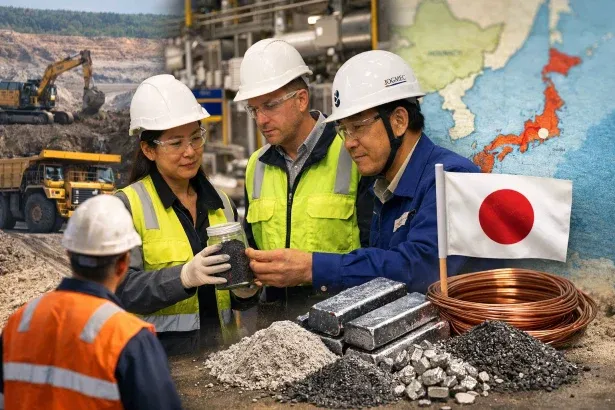
The geopolitical objective of the RESourceEU plan is the most contentious aspect for international trade partners. The goal to halve dependencies on third countries by 2029 is widely viewed as a “de-risking” maneuver aimed at China’s dominance in the rare earth and lithium processing sectors.
Brussels is leveraging a “club” approach, seeking to form Mineral Security Partnerships with resource-rich nations like Canada, Australia, and Namibia. These partnerships are intended to create a “transparent supply chain” that adheres to strict ESG standards, effectively creating a premium market for “clean” minerals that can bypass the volatility associated with more opaque supply routes.
However, achieving the 40% domestic processing target by 2030 remains a daunting task. While the EU has made strides in recycling technology, the energy costs associated with smelting and refining in Europe remain a significant hurdle. The $50 billion plan includes provisions for “Energy Partnership Grants,” which subsidize the installation of dedicated renewable energy sources for mineral processing facilities.
Public-Private Partnerships (PPPs) and Market Impact
The ECRMC is also pioneering a new model of public-private partnerships. Under the “Euro-Minerals Syndicate,” the EU will co-invest alongside private mining firms in early-stage exploration. This is a departure from traditional European policy, which largely left exploration to the private sector.
For junior miners, this represents a lifecycle shift. With government-backed equity, projects that were previously considered too risky or capital-intensive are now reaching Final Investment Decisions (FID). The market has already reacted; since the initial announcement of the RESourceEU plan, the European Mining Index has outperformed broader industrial benchmarks by nearly 12%.

Conclusion: A New Industrial Era
The launch of the $50 billion RESourceEU Action Plan marks the end of the era of “just-in-time” mineral sourcing for the European Union. By treating critical minerals as a matter of national security rather than a simple commodity trade, Brussels is signaling a long-term commitment to industrial self-sufficiency.
For operators and investors, the message is clear: the EU is no longer a passive observer in the global race for resources. The combination of mandatory domestic targets, streamlined permitting, and a multi-billion-euro stockpiling floor creates a unique environment for the mining sector. While the 2030 targets are ambitious, the financial and political weight behind them suggests that the map of global mineral power is being redrawn.
Market Snapshot: 2026 Strategic Metals
| Commodity | Current Price (MT) | 12-Month Change | EU Inventory Level |
|---|---|---|---|
| Lithium Carbonate | $42,500 | +14% | 45 Days |
| Cobalt | $38,200 | -2% | 90 Days |
| Neodymium | $112,000 | +22% | 30 Days |
| Copper (LME) | $10,850 | +8% | 15 Days |
Featured Lead: The 2026 Power Map
The “Invisible Demand Wall” is here. Don’t navigate the complex web of EU strategic reserves and global supply shocks without the right data. Get the 2026 Lithium Power Map today and see exactly where the new processing hubs and strategic projects are located.
? Download the Power Map Here





Keep me posted thanks.
…stay tune for more. We are writing a new book.