As of April 10th, 2026, the global energy landscape is grappling with a reality that market analysts have signaled for years: a structural, multi-decade supply deficit in the uranium sector. While lithium and copper often dominate the “green metal” headlines, the uranium forecast for 2026 suggests that the nuclear fuel cycle is entering its most volatile and supply-constrained period since the early 2000s.

The spot price of triuranium octoxide (U3O8) has stabilized above $88 per pound in early 2026, marking a significant ascent from late 2025 levels. However, this price point reflects more than just speculative interest. It is the result of a “perfect storm” involving the AI-energy nexus, aggressive decarbonization mandates, and a mining industry that simply cannot bring new supply online fast enough to meet a doubling of global demand.
The 50 Million Pound Gap: A Structural Reality
The fundamental driver of the current market is a 50-million-pound annual deficit that has already begun to manifest in utility procurement cycles. According to recent industry research, global demand is projected to reach 400 million pounds by 2040: more than double current consumption levels.
The primary issue is not a lack of uranium in the ground, but rather the “incentive price” required to extract it and the time required to permit it. Historically, uranium mining output reaches only 70% to 75% of its theoretical nameplate capacity. This operational inefficiency, combined with dwindling secondary supplies and mobile inventories that now measure in the tens rather than hundreds of millions of pounds, has left Western utilities vulnerable.
For decision-makers in the mining and energy sectors, the shift from a buyer’s market to a seller’s market is no longer a forecast: it is the operational reality of 2026. The return of long-term contracting by Western utilities, after nearly a decade of below-replacement buying, is placing immense pressure on a supply chain that has seen little capital investment for 15 years.
More Read

The AI-Energy Nexus: Fueling the Nuclear Renaissance
The most significant shift in the 2026 uranium forecast is the emergence of the AI-energy nexus as a primary demand driver. The exponential growth of data centers required to support generative AI and large language models has forced tech giants to reconsider their energy procurement strategies.

Intermittent renewables like wind and solar, while essential, cannot provide the 24/7 “five-nines” reliability required by massive computing clusters. Consequently, nuclear power has emerged as the only carbon-free solution capable of providing high-density, baseload power at scale. We are seeing a direct correlation between the expansion of digital infrastructure and the acceleration of nuclear capacity plans.
In the United States, current policy goals aim to quadruple nuclear capacity by 2050. This is not just about keeping old plants running; it involves the deployment of Small Modular Reactors (SMRs) and the revitalization of shuttered facilities. This surge in demand is a key pillar of The Skillings Power List: 10 Mining Companies Dominating the 2026 Energy Transition, as the intersection of big tech and heavy industry creates a new class of long-term power purchase agreements.
More Read


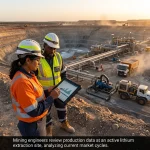
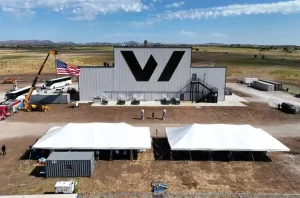
Caption: Modern mineral processing facilities are becoming increasingly critical as the industry moves toward higher-efficiency extraction to meet 2026 demand targets.
Supply Constraints: Why More Mining Isn’t an Immediate Fix
The assumption that higher prices will immediately trigger higher production is a fallacy in the uranium sector. The lead time for developing a new uranium mine averages between 12 and 14 years. This includes sequential permitting, environmental assessments, and the construction of specialized processing infrastructure.
Several key factors are currently throttling supply:
- Geopolitical Nationalization: Kazakhstan, which has historically been the world’s most prospective region for greenfield uranium exploration, has effectively moved toward a nationalization model. This has restricted foreign investment and created uncertainty regarding the availability of future production on the open market.
- Permitting Bottlenecks: Even as the U.S. doubles down on critical minerals with new funding bills, the specific regulatory hurdles for radioactive materials remain the most stringent in the mining world.
- Capital Expenditure Lag: Bank of America recently noted that uranium spot prices may need to hit $135 per pound by late 2026 to mathematically justify the capital expenditures required for next-generation mines.

Caption: A chart illustrating the widening gap between current uranium production and the projected demand spikes driven by global AI data center expansion through 2030.
Uranium Price Forecast 2026: Drivers and Scenarios
The market consensus for 2026 points toward sustained upward pressure on prices, with volatility driven by thin spot market liquidity.
- Bull Case ($135 – $150/lb): Driven by further delays in major Kazakhstan production restarts and an accelerated rollout of SMRs in North America and Europe. In this scenario, utility panic-buying for long-term security of supply could push prices to historic highs.
- Base Case ($95 – $115/lb): Reflects a steady increase as Western utilities continue to roll over contracts and the 50-million-pound deficit persists. This assumes modest production increases from Tier-1 miners but no major new “black swan” supply disruptions.
- Bear Case ($75 – $85/lb): Occurs only if there is a significant global economic slowdown that delays the construction of new data centers and nuclear facilities, or if major idled mines return to full capacity faster than anticipated (unlikely given current technical reports).
The role of technology in managing these costs is also increasing. Much like Codelco and Microsoft’s partnership in copper mining, uranium producers are beginning to use AI to optimize ore-sorting and leaching processes, though these efficiencies take time to impact the bottom line.
Geopolitical Realignments and Energy Security
The 2026 outlook is heavily influenced by the “bifurcation” of the nuclear fuel market. Western nations are aggressively moving to decouple their supply chains from Russian enrichment services and centralized Eastern production. This has created a premium for “Western-provenanced” uranium.
The strategic move by the EU and North America to establish critical mineral reserves is part of a broader effort to ensure energy sovereignty. This trend is discussed in detail in our analysis of the EU’s strategic move inside the $50 billion critical minerals reserve plan. Uranium is now viewed through the same national security lens as semiconductors and rare earth elements.

Caption: Strategic investment in underground infrastructure is essential for unlocking deep-seated uranium deposits that have been neglected for decades.
The Small Modular Reactor (SMR) Factor
By late 2026, several SMR pilot projects are expected to reach critical milestones. These reactors, which are smaller and easier to site than traditional large-scale plants, represent a fundamental shift in demand. Because SMRs can be deployed closer to industrial hubs and data centers, they provide a decentralized solution to the energy crisis.
However, each of these reactors requires a first-core load that is significantly higher than subsequent reloads. As dozens of SMRs move toward the commissioning phase globally, the “initial core” demand spike could catch the market by surprise. This is the “shortfall no one is talking about”: the fact that we are not just fueling the current fleet, but essentially “pre-loading” a new generation of nuclear infrastructure.
Strategic Implications for Investors and Operators
For operators, the focus in 2026 must be on “permitting speed to market.” Companies that can navigate the regulatory landscape and bring projects into the construction phase within this decade will capture the highest premiums.
For investors, the uranium forecast for 2026 suggests that the sector is no longer a “trade” based on sentiment, but a long-term play on the structural deficit. The underlying data indicates that even with current price appreciation, the market has not yet fully priced in the 1.7-billion-pound cumulative deficit projected by 2045.

Caption: A conceptual visual depicting the link between nuclear power generation and the massive, 24/7 energy requirements of AI-driven data centers.
Operational Risks to Monitor
Despite the bullish outlook, several risks could alter the trajectory of the 2026 market:
- Regulatory Shifts: Any change in government policy regarding nuclear subsidies or waste management could temper demand.
- Technical Delays: The mining industry is notorious for technical setbacks during the ramp-up phase of new projects.
- Enrichment Bottlenecks: Even if raw U3O8 is available, a lack of conversion and enrichment capacity in the West could create a “bottleneck” similar to what is currently seen in copper smelting capacity.

Caption: Rigorous exploration and core analysis remain the bedrock of discovering the next generation of high-grade uranium assets required to close the supply gap.
Conclusion: The Road Ahead
The uranium forecast for 2026 confirms that the industry is in a period of fundamental realignment. The supply shortfall is not a temporary glitch but a structural feature of a world that is simultaneously trying to digitize and decarbonize. With demand visibility at an all-time high and supply response hampered by decades of underinvestment and long permitting timelines, the “critical shortfall” will likely remain the dominant theme of the mining industry for the remainder of the decade.
Operators and investors who understand the nuances of the AI-energy nexus and the geopolitical constraints on production will be best positioned to navigate this high-stakes market. As we move deeper into 2026, the focus will shift from “if” a shortfall will occur to “how” the industry will manage the consequences of a market that is fundamentally undersupplied.