Social Media Snippet: Paladin Energy targets a 2027 FID for the Triple R uranium deposit, but a Métis Nation legal challenge over provincial consultation could reshape the Athabasca Basin’s regulatory landscape. #Uranium #Mining #Saskatchewan #EnergyTransition

In the frozen expanse of Saskatchewan’s Athabasca Basin, the race for high-grade uranium has entered a critical new phase. Paladin Energy, having completed its acquisition of Fission Uranium in late 2024, is now navigating a complex dual-track: managing a world-class geological asset while steering through a thickening thicket of legal and regulatory challenges. At the center of this tension is the Patterson Lake South (PLS) project and its flagship Triple R deposit.
As of April 2026, the project stands at a crossroads. While the geological potential of Triple R remains undisputed: boasting some of the highest grades and most accessible mineralization in the world: the timeline to production is lengthening. With a Final Investment Decision (FID) now slated for late 2027 and first production not expected until 2031, Paladin is finding that in the modern mining era, social license and judicial reviews are as critical to a project’s viability as the grade of the ore itself.
The Triple R Deposit: A Geological Standout
The Triple R deposit is the crown jewel of the Patterson Lake South property. Located in the emerging southwestern corridor of the Athabasca Basin, it has fundamentally changed the industry's understanding of the region’s potential. Unlike the traditional "unconformity" deposits that characterize the eastern side of the basin, Triple R is a basement-hosted, structurally controlled deposit that begins just 50 meters below the surface.
From an operational standpoint, this shallow depth is a game-changer. Most high-grade uranium mines in Saskatchewan require complex, deep underground engineering. Triple R’s proximity to the surface allows for a more straightforward mining approach, potentially lowering the initial capital intensity compared to deep-shaft peers.
More Read

The numbers supporting the project are formidable:

- Probable Reserves: 93.7 million pounds of U₃O₈ at an average grade of 1.41%.
- Indicated Resources: 114.9 million pounds at 1.94% U₃O₈.
- Production Profile: A projected 9.1 million pounds annually over an initial 10-year mine life.

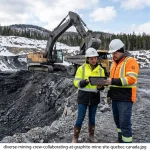
Caption: Geologists assess drill cores to determine the extent of high-grade mineralization in basement-hosted deposits.
Paladin’s strategy involves aggressive step-out drilling to further expand this resource. The goal is to convert the existing indicated resources into mineable reserves, potentially extending the mine life well beyond the current decade-long estimate. However, the path to extracting this value is currently blocked by more than just permafrost.
More Read

The Legal Headwinds: Métis Nation–Saskatchewan Challenge
While Paladin has secured Mutual Benefits Agreements (MBAs) with the Buffalo River Dene Nation and the Clearwater River Dene Nation, a significant legal hurdle has emerged from the Métis Nation–Saskatchewan (MN–S). The MN–S has initiated a judicial review challenge against the Government of Saskatchewan’s Duty to Consult process.
This legal maneuver targets the province's framework for indigenous engagement, alleging that the current system fails to adequately recognize Métis rights and interests during the environmental assessment and licensing phases of major resource projects. For Paladin and the PLS project, this creates a layer of "regulatory drift."
The provincial government formally approved the project’s Environmental Impact Statement (EIS) in February 2025, but the judicial review threatens to cast a shadow over that approval. If the courts find the consultation process lacking, it could force a restart of key engagement phases, potentially pushing the 2027 FID even further into the future. This is not a challenge unique to Paladin; it is a systemic risk currently being monitored by all operators in the basin, including NexGen Energy and Denison Mines.
The Regulatory Bottleneck: Federal Licensing
Beyond the provincial legal battles, the federal regulatory track remains the primary bottleneck. The Canadian Nuclear Safety Commission (CNSC) construction license process is notoriously rigorous. Fission Uranium: Paladin's predecessor on the project: submitted its application in April 2023. Two years later, the review is still ongoing.
The CNSC review process integrates environmental impact, technical safety, and indigenous consultation. In the current political climate, federal regulators are under intense scrutiny to ensure that "Green Transition" projects meet the highest possible ESG (Environmental, Social, and Governance) standards. This has led to a protracted "Request for Information" cycle that has contributed to the five-year gap between today and the projected start of production.
For investors, this timeline is a test of patience. However, Paladin’s management remains optimistic, recently securing an exemption from Canada’s non-resident ownership policy. This exemption allows the Australian-headquartered firm to maintain full control of the asset, a crucial victory for its long-term financing strategy.

Caption: A comparative timeline of Saskatchewan uranium projects shows the increasing duration of the federal licensing phase.
Competitive Landscape: The Battle for the Athabasca
Paladin does not operate in a vacuum. The Patterson Lake South project is part of a larger competitive landscape in the western Athabasca Basin.
- NexGen Energy (Rook I): Located immediately adjacent to PLS, NexGen’s Arrow deposit is the industry benchmark. Rook I is further along in the permitting process and boasts even higher grades. The success or failure of NexGen’s permitting strategy serves as a leading indicator for Paladin.
- Denison Mines (Wheeler River): While located on the eastern side of the basin, Denison is pioneering In-Situ Recovery (ISR) mining for uranium in Saskatchewan. If ISR proves successful and cost-effective, it could shift the investment focus toward deposits that are amenable to that method, though Triple R’s sheer grade remains a powerful counter-argument for traditional mining.
The competition for capital and skilled labor in the region is intense. As projects move closer to construction, the demand for specialized mining engineers and nuclear safety experts in Saskatchewan is expected to outstrip supply, potentially inflating CAPEX estimates. You can read more about the impact of skilled labor on project timelines in our analysis of international talent mobilization in mining.
The Global Supply-Demand Gap
The urgency surrounding the Triple R deposit is driven by a massive projected supply-demand gap in the global uranium market. As nations move toward decarbonization, nuclear energy has returned to the forefront of policy discussions.
The growth of Small Modular Reactors (SMRs) and the extension of existing reactor lives in the US and Europe have created a demand profile that current production cannot meet. Furthermore, the geopolitical shift away from Russian nuclear fuel has forced Western utilities to scramble for "friendly" supply.
Saskatchewan is viewed as the ultimate safe haven for uranium sourcing. However, "safe" does not mean "fast." The disconnect between the rapid need for fuel and the decade-long lead times for new mines is the defining challenge of the 2026 uranium market.
Government initiatives, such as the U.S. funding bills for critical minerals, aim to accelerate these timelines, but nuclear assets remain under a more stringent regulatory regime than copper or lithium. Similarly, the EU’s strategic move into critical minerals highlights the global trend toward securing long-term supply chains for the energy transition.

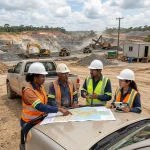
Caption: Strategic planning sessions increasingly focus on navigating the intersection of federal policy and regional mining operations.
Investment Outlook: 2027 and Beyond
For Paladin Energy, the path forward is clear but difficult. The company must:
- Resolve the MN–S Challenge: Either through the courts or through a direct settlement/partnership with the Métis Nation.
- Navigate the CNSC: Secure the construction license without further major delays.
- Secure Financing: The CAD 1.155 billion construction cost is a significant hurdle, though the high-grade nature of the deposit makes it an attractive candidate for project debt.
The Triple R deposit is a "generational asset." Its high grade and shallow depth provide a margin of safety that lower-quality projects lack. Even in a fluctuating price environment, a 1.41% U₃O₈ grade is likely to remain profitable.
However, the 2027 FID target should be viewed by investors as a "soft" deadline. In the Athabasca Basin, the rocks are rarely the problem: the paperwork is. As Paladin moves closer to its target, the industry will be watching closely to see if Saskatchewan’s regulatory environment can evolve to meet the speed required by the global energy transition.

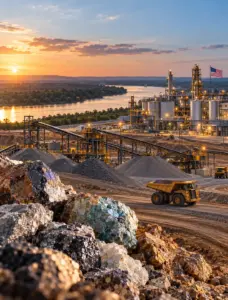
Caption: The intersection of government policy and mining operations is defining the success of junior and mid-tier explorers in 2026.
The Triple R deposit remains one of the most compelling stories in the mining industry today. It represents the potential for a massive new source of clean energy fuel, but it also serves as a case study in the modern complexities of resource development. For Paladin Energy, the prize is nearly 100 million pounds of uranium; the price is a marathon of legal and regulatory endurance.