2026 Lithium Power Map : Early Access Open ($59) | Get the latest sector data and secure your copy here: https://skillings.short.gy/LithiumPreSale

By Salini Krishnan
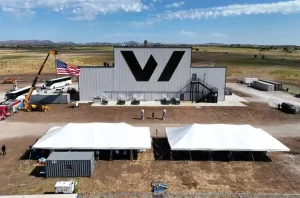
DELTA, BRITISH COLUMBIA : The North American battery supply chain reached a definitive operational milestone on April 17, 2026, as Mangrove Lithium officially inaugurated its Single Stack Plant (SSP) in Delta, B.C. The facility represents the continent’s first commercial-scale electrochemical lithium refinery, a development that shifts the regional focus from raw extraction toward the high-margin refining processes traditionally dominated by overseas competitors.
The opening of the Delta refinery comes at a critical juncture for the global battery revolution, as automotive manufacturers and grid-storage providers seek to de-risk their material sourcing. By utilizing a proprietary electrochemical process to convert lithium feedstock into battery-grade hydroxide, Mangrove Lithium is moving the needle on domestic self-sufficiency in the critical minerals sector.
Technical Breakthrough: The Electrochemical Advantage
Traditional lithium refining has long relied on energy-intensive chemical and thermal processes, often involving complex reagent cycles and significant waste output. Mangrove Lithium’s SSP utilizes an electrochemical refining process designed to be more economical and flexible than conventional methods.
More Read

The modular design of the facility: housed in Delta’s industrial corridor: allows for the processing of various feedstock qualities, including technical-grade lithium carbonates and brines. This flexibility is a core component of the company’s strategy to service a diverse range of upstream mining operations that may lack the internal capacity to reach battery-grade specifications independently.


“The electrochemical approach eliminates several traditional steps in the conversion process,” noted a company spokesperson during the ribbon-cutting ceremony. “By reducing the reliance on heavy chemical reagents, we are not only lowering the carbon footprint of the lithium produced but also significantly reducing the OpEx for the end-product.”
More Read

At its current capacity, the Delta plant is capable of producing 1,000 tonnes of battery-grade lithium annually. While modest in the context of global demand, the facility is sized to support the production of approximately 25,000 electric vehicles per year. More importantly, it serves as the commercial proof-of-concept for Mangrove’s technology before it scales to larger industrial hubs.
Margin Gravity: Refining Over Geology
The Delta milestone highlights a broader shift in the 2026 mining landscape: a theme identified by Skillings Mining Intelligence as “Margin Gravity.” For decades, the industry focused on the geology of the deposit as the primary driver of value. However, as resource nationalism and supply chain bottlenecks increase, the value is migrating toward the refining and conversion stages of the lifecycle.

In the current market, the ability to transform raw ore into a high-purity chemical ready for cathode manufacturing is where the highest margins are realized. Mangrove’s position in British Columbia allows it to capture this “gravity,” attracting interest from junior miners across the Pacific Northwest who are looking for local refining partners. By establishing a commercial footprint in BC, Mangrove is effectively shortening the supply chain, which previously required North American lithium to be shipped to China for refining before being returned as battery-grade material.
Strategic Context and Geopolitical Security
The project’s importance is underscored by the current geopolitical climate. As Western nations move to insulate their energy transitions from external disruptions, the establishment of “midstream” infrastructure is paramount. Mangrove Lithium’s facility received approximately $21.9 million in conditionally approved government support through Canada’s Critical Minerals Research Development and Demonstration (CMRDD) program.
This public-private alignment is part of a strategic realignment seen across the mining sector, where government policy actively de-risks infrastructure to ensure domestic mineral security. With nearly 90 percent of lithium demand now tied to the energy transition: including EVs and grid-scale storage: the Delta refinery acts as a strategic buffer against price volatility and export controls in other jurisdictions.

Local Ecosystem and Employment
The Delta facility is more than a technical demonstration; it is an economic anchor for British Columbia’s growing clean-tech sector. The site integrates seamlessly with existing industrial infrastructure in the region, utilizing BC’s relatively low-carbon power grid to further enhance the “green” credentials of the lithium produced.
“Building the ecosystem in British Columbia is about more than just one plant,” said Charles Pitts, CEO of SMR OPS 100K. “It’s about proving that the technical talent and the policy framework in Canada can compete on a global stage in the midstream sector, not just as a source of raw dirt.”
The facility has already created dozens of high-skilled jobs in electrochemical engineering and industrial operations, fostering a local expertise base that will be essential as Mangrove looks toward its next phase of growth.
Scaling Up: The Road to 20,000 Tonnes
While the 1,000-tonne Delta plant is the focus today, Mangrove Lithium has already signaled its intentions for aggressive expansion. The company is currently planning a second, significantly larger facility in Eastern Canada.
Targeted for a 20,000-tonne-per-year capacity, the proposed Eastern Canada plant would be capable of supporting 500,000 electric vehicles annually. This scale would place Mangrove among the major players in the global lithium conversion market and provide a direct link to the “Battery Belt” emerging in Ontario and the Midwestern United States.

This planned expansion will likely focus on processing spodumene concentrates, leveraging the vast hard-rock lithium resources found in Quebec and Ontario. By establishing a refinery in the East to complement the BC facility, Mangrove is positioning itself as a pan-Canadian solution for the battery materials deficit.
Market Snapshot: Lithium in Q2 2026
The commissioning of the Delta plant coincides with a period of stabilizing prices in the lithium market, following the volatility seen in 2024 and 2025. Market analysts suggest that “local” lithium: material that is extracted and refined within the same trade bloc: is beginning to command a premium due to tax incentives like those found in the U.S. Inflation Reduction Act (IRA).
| Metric | Delta (BC) Facility | Eastern Canada (Planned) |
|---|---|---|
| Capacity (tpa) | 1,000 | 20,000 |
| EV Equivalents | 25,000 | 500,000 |
| Technology | Electrochemical | Electrochemical / Spodumene |
| Primary Feedstock | Technical-grade Carbonate | Spodumene / Brine |
| Gov. Funding | $21.9M (CMRDD) | TBD |
Conclusion: A New Era for North American Refining
The inauguration of the Mangrove Lithium refinery in Delta marks the transition of the North American lithium industry from “exploration and potential” to “commercial and operational.” As the first of its kind, the SSP proves that electrochemical refining is a viable, sustainable path forward for the midstream battery supply chain.
For operators and investors, the Delta milestone is a signal that the “refining bottleneck” is finally being addressed. As more modular facilities like Mangrove’s come online, the North American battery ecosystem will continue to decouple from overseas dependencies, ensuring that the materials powering the energy transition are refined close to home.
For more in-depth analysis on the shifting dynamics of the lithium market, pre-order our 2026 Lithium Power Map.