By Charles Pitts
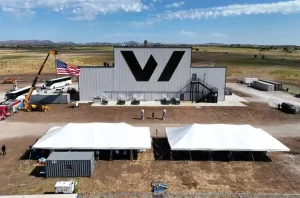
The landscape of American energy independence shifted significantly in late April 2026 as Ur-Energy (NYSE American: URG; TSX: URE) officially commenced uranium production at its Shirley Basin project in Wyoming. This operational milestone marks the first time uranium has been extracted from the historic district since 1992, effectively ending a 34-year hiatus for one of the United States’ most prolific uranium-producing regions.
The restart comes at a critical juncture for the global nuclear fuel cycle. With uranium prices testing decade-highs and domestic supply chains under intense scrutiny, the return of Shirley Basin represents more than just a corporate achievement; it is a fundamental expansion of the U.S. domestic nuclear fuel footprint. As the industry faces a deepening supply deficit and geopolitical shifts away from Russian imports, the reactivation of proven domestic assets is becoming the cornerstone of Western energy security strategies.
A Legacy Revived: From 1992 to 2026
The Shirley Basin district, located approximately 40 miles south of Casper, Wyoming, holds a storied position in the history of the American mining industry. Originally discovered in the 1950s, the district is widely recognized as the birthplace of commercial in-situ recovery (ISR) mining, with the first successful operations launching in 1963.
More Read

Between 1960 and 1992, the Shirley Basin site: then operated by Pathfinder Mines: produced over 51 million pounds of U₃O₈. However, the collapse of uranium prices in the early 1990s forced the site into a state of care and maintenance, followed by decommissioning. Ur-Energy acquired the property through its purchase of Pathfinder Mines in 2013, patiently waiting for market conditions to justify the necessary capital investment for a restart.

The “go” decision for construction was finally reached in March 2024. Following 24 months of construction and wellfield development, the company confirmed that uranium-bearing solution is now being captured from Mine Unit 1. The restart reflects a broader trend in the sector where established companies are revitalizing “brownfield” assets to meet the rising demand for carbon-free baseload power.

More Read

Operational Mechanics and Capacity
The Shirley Basin project utilizes In-Situ Recovery (ISR) technology, a method that is significantly less invasive than traditional open-pit or underground mining. ISR involves circulating a lixiviant (typically water fortified with oxygen and carbon dioxide) through the ore body to dissolve the uranium. The enriched solution is then pumped to the surface for processing.
Ur-Energy has designed Shirley Basin to function as a satellite operation to its flagship Lost Creek facility. Currently, the site is capturing uranium-bearing solution, which is then loaded onto ion-exchange resin. This uranium-loaded resin will be transported to the Lost Creek processing plant for final conversion into yellowcake (U₃O₈).
Key operational metrics for the Shirley Basin restart include:
- Licensed Capacity: 2.0 million pounds of U₃O₈ per year.
- Resource Base: Measured and Indicated mineral resources totaling approximately 9.1 million pounds.
- Mine Life: An anticipated nine-year operational window across three initial mining units.
- Total Corporate Capacity: Combined with Lost Creek, Ur-Energy now boasts a licensed production capacity of 4.2 million pounds annually.
This ~90% expansion of Ur-Energy’s production footprint arrives as the company aims to fulfill long-term sales contracts with major nuclear utilities. While initial concentrations are expected to improve as the wellfield matures, the first resin shipments are slated for summer 2026, pending final regulatory clearances for the transport logistics.
The Macro View: $150/lb and the Supply Deficit
The timing of the Shirley Basin restart aligns with a period of extreme volatility and upward pressure in the uranium market. Analysts have increasingly pointed toward a “perfect storm” of factors driving prices toward the $150/lb mark.
The primary driver is the structural deficit in global supply. For over a decade, secondary supplies and underfeeding at enrichment facilities masked a lack of primary mine production. As these secondary sources have dwindled, the industry has struggled to bring new capacity online fast enough to meet the demand of a global nuclear fleet that is growing for the first time in a generation.
The “Nuclear Renaissance” is no longer a theoretical concept. From the extension of existing reactor lifespans to the rapid development of Small Modular Reactors (SMRs), the demand for high-quality uranium is accelerating. This shift is mirrored in other sectors of the mining industry, such as copper and lithium, where the energy transition is forcing a massive re-evaluation of resource availability.
Furthermore, the geopolitical landscape has fundamentally altered the uranium trade. The U.S. and its allies have moved decisively to reduce reliance on Russian nuclear fuel, which previously accounted for a significant portion of the global enrichment and conversion market. This has created a premium for “Western-sourced” uranium, placing Wyoming at the center of a new industrial strategy.

Wyoming: The Strategic Hub for Western Fuel
Wyoming’s role in the global energy transition cannot be overstated. As the leading uranium-producing state in the U.S., it provides the regulatory framework and geological certainty required for long-term investment. The Shirley Basin restart is part of a broader regional surge that includes Uranium Energy Corp’s production start at Burke Hollow, further solidifying the state’s status as a critical minerals powerhouse.
The concentration of infrastructure in Wyoming: including processing plants like Lost Creek and the recently revived Shirley Basin: allows for significant operational efficiencies. By centralizing processing, companies can lower their all-in sustaining costs (AISC), making domestic production competitive even against lower-cost international jurisdictions.
For investors, the Shirley Basin restart serves as a proof of concept for the “hub-and-spoke” model. The ability to bring satellite mines online and feed existing infrastructure reduces the capital intensity of growth, a factor that is increasingly important as mining companies across the board report record-breaking financial results.
Looking Ahead: The 2026-2030 Outlook
As Shirley Basin ramps up toward full production, the market will be watching the cadence of its output closely. While the immediate supply impact in 2026 will be measured: due to the gradual nature of wellfield conditioning: the long-term significance is clear. Ur-Energy is now positioned as a mid-tier producer with the flexibility to scale production in response to price signals.
The broader uranium sector remains on high alert for further supply shocks. Challenges at major mines in Kazakhstan and Canada have left little margin for error. In this environment, the successful restart of a historic American mine like Shirley Basin provides a vital safety valve for domestic utilities.
“A pivotal moment for U.S. energy security” is how industry insiders are describing the restart. It marks the transition from a period of resource liquidation to a period of resource rebuilding. For the mining professionals and investors who have weathered the lean years of the uranium cycle, the return of Shirley Basin is a definitive signal that the industry has entered a new, high-stakes era.

Strategic Implications for Stakeholders
The implications of the Shirley Basin restart extend across several key groups:
- Utilities: Nuclear power plant operators now have access to a growing stream of domestic supply, reducing the “geopolitical risk premium” associated with their fuel contracts.
- Investors: Ur-Energy’s transition from a single-asset producer to a multi-site operation significantly de-risks the company’s profile and provides a clearer path to cash flow growth.
- Policymakers: The successful restart validates federal and state efforts to support the domestic nuclear fuel cycle, demonstrating that with the right price environment, American miners can deliver.
As we move deeper into 2026, the focus will shift from construction to optimization. The lessons learned at Shirley Basin will likely inform future restarts across the Western U.S., as the industry races to close the supply gap before the end of the decade.