By Charles Pitts
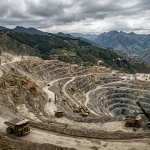
The Ghanaian government has issued a decisive regulatory boundary to the world’s largest gold mining firms, mandating a total transition to locally-owned contract mining operations by December 31, 2026. The directive, issued by the Ghana Minerals Commission, specifically targets Newmont Corporation, AngloGold Ashanti, and Zijin Mining, requiring them to overhaul their operational structures to comply with tightening local content laws in Africa’s leading gold-producing nation.
Under the new framework, all surface mining activities must be conducted by companies that are 100% Ghanaian-owned. For underground operations, the mandate requires at least 50% local ownership. While the policy aims to deepen domestic participation and retain economic value within the country, it has met with fierce resistance from labor unions who warn of a “race to the bottom” for worker wages and job security.
The Scope of the December 2026 Deadline
The Minerals Commission’s directive is the culmination of a regulatory shift that began in early 2025. While many major operators, including Gold Fields, have already transitioned to contract-mining models, the trio of Newmont, AngloGold, and Zijin had previously requested extensions to maintain their own workforces. Those requests have now been formally denied.
More Read

Regulatory correspondence issued in October 2025 and reaffirmed in January 2026 set the firm deadline. Failure to comply by the end of 2026 could result in severe financial penalties, operational restrictions, or the suspension of mining licenses. For the affected companies, the mandate necessitates a complex logistical and legal transition, involving the tendering of massive service contracts to local entities that must prove both financial capability and technical expertise.


Policy Rationale: Retaining the “Golden” Value
The push for 100% localization of surface mining contracts is part of Ghana’s broader strategy to move beyond being a mere exporter of raw ore. By mandating that the “picks and shovels” of the industry: the actual extraction and hauling: be owned and operated by Ghanaians, the government seeks to ensure that the massive capital expenditures of these projects circulate through the local economy.
More Read

This move aligns with other recent developments in the country, such as the inauguration of Ghana’s first gold refinery in Accra, which allows the nation to process up to 100 kilograms of gold daily. By pairing domestic refining with localized operations, the administration of President Nana Akufo-Addo is attempting to create a vertically integrated mining sector that benefits Ghanaian businesses and the national treasury more directly.
The Labor Crisis: GMWU’s “Irrevocable Opposition”
Despite the government’s focus on national economic gain, the Ghana Mineworkers’ Union (GMWU) has emerged as the most vocal critic of the 2026 mandate. In a strongly worded letter to the Minerals Commission dated April 23, 2026, the union described the policy as “dangerous, regressive, and economically unsound.”
The GMWU’s primary concern is the significant disparity in compensation between direct multinational employees and those hired by local contractors. According to union data, workers transitioning to contract mining arrangements often see their wages slashed by as much as 50% for performing the same labor.
“Contract mining has historically created precarious jobs and reduced household incomes,” the GMWU stated. The union also pointed to a pattern of local contractors failing to meet statutory obligations, including Social Security and National Insurance Trust (SSNIT) contributions and Tier 2 pension payments. For the thousands of workers at Newmont’s Ahafo or AngloGold’s Obuasi mines, the 2026 mandate is seen less as a triumph of local content and more as an erosion of the “decent work” gains achieved over decades of collective bargaining.

Corporate Impact: Newmont, AngloGold, and Zijin
The three companies at the center of the mandate represent the backbone of Ghana’s industrial gold output.
- Newmont Corporation: As the operator of the Ahafo and Akyem mines, Newmont is a critical pillar of the economy. The company recently integrated advanced PhotonAssay technology at its Ahafo site to streamline operations, but it now faces the challenge of handing over the keys to those operations to local contractors.
- AngloGold Ashanti: The redevelopment of the historic Obuasi mine has been a centerpiece of the company’s African strategy. The mandate for 50% local ownership in underground operations will require AngloGold to find partners capable of handling the high-tech, high-risk environment of deep-level mining.
- Zijin Mining: Through its Ghana unit, Zijin has reportedly been working with regulators since late 2025 to align with the framework. The Chinese mining giant is currently preparing technical transition plans and tenders to meet the 2026 cutoff.
The transition is not merely a matter of signing new contracts. It requires the identification of local firms with the balance sheets to acquire multi-million dollar haulage fleets and the technical safety records required by international mining standards.
Broader Context: Resource Nationalism in West Africa
Ghana’s move is part of a broader trend across the African continent, where governments are increasingly demanding a larger slice of the mining pie. From the DRC’s renegotiation of copper and cobalt contracts to Zimbabwe’s lithium export bans, the era of “hands-off” foreign mining is ending.
In Ghana, this trend has also seen the ratification of the Ewoyaa lithium project, which included enhanced royalty rates and local participation clauses. The 2026 mandate for Newmont, AngloGold, and Zijin is the latest iteration of this policy, signaling that “local content” is no longer a suggestion but a requirement for market entry and operational continuity.
The Road to December 2026
As the deadline approaches, the tension between the Minerals Commission and the GMWU is expected to escalate. The union has demanded a suspension of the directive pending a broad stakeholder consultation that includes the voices of the workers themselves.
For investors and operators, the 2026 mandate introduces a new layer of operational risk. While the move to contract mining can sometimes lower a major’s direct overhead and CAPEX, the potential for labor unrest and the challenge of finding qualified local partners could impact production targets in the short term.
As Africa’s top gold producer, Ghana’s success or failure in implementing this localization mandate will likely serve as a blueprint for neighboring nations. Whether this leads to a new era of Ghanaian mining billionaires or a decline in labor standards remains the defining question for the next 18 months.
Market Data Snapshot: Ghana Gold Production
| Company | Key Assets | Ownership Rule (2026) | Status |
|---|---|---|---|
| Newmont | Ahafo, Akyem | 100% Local (Surface) | In Transition |
| AngloGold Ashanti | Obuasi, Iduapriem | 50% Local (Underground) | In Transition |
| Zijin Mining | Golden Ridge | 100% Local (Surface) | Tendering Plans |
| Gold Fields | Tarkwa, Damang | 100% Local (Surface) | Compliant |
For more in-depth analysis on the African mining landscape and commodity forecasts, visit our mining review section.