By Charles Pitts

On March 16, 2026, the long-contested land exchange for the Resolution Copper project in Arizona reached completion, marking the most significant regulatory milestone in the project’s two-decade history. The transfer of approximately 2,400 acres of federal land to the joint venture between Rio Tinto and BHP follows a pivotal March 13 ruling by the U.S. Court of Appeals for the Ninth Circuit, which affirmed that the federal government had met its environmental and statutory obligations.
This development effectively clears the path for what is expected to become the largest copper mine in North America. For an industry currently grappling with a widening copper deficit in 2026, the unlocking of the Resolution deposit is more than a corporate victory; it is a critical pivot point for U.S. domestic mineral security.
The Scale of a Generational Asset
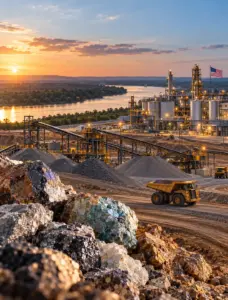
The Resolution Copper deposit, located near Superior, Arizona, is staggering in its proportions. Situated nearly 7,000 feet below the surface, the ore body is estimated to contain enough copper to produce up to 40 billion pounds over a 60-year mine life. At full production, the facility is projected to supply approximately 25% of the current U.S. copper demand.
For perspective, the United States has increasingly relied on imports to meet its refined copper needs, even as domestic demand accelerates. The completion of the land exchange allows Resolution Copper to move from a state of regulatory limbo into active project execution. The joint venture has already signaled an immediate commitment of $500 million in preliminary spending over the next 24 months to facilitate surface drilling, infrastructure upgrades, and initial underground development.
More Read



Navigating the Legal and Regulatory Landscape
The journey to the March 2026 land exchange was defined by intense legal scrutiny and a complex federal mandate. The exchange was originally authorized by Congress in 2014 as part of the National Defense Authorization Act, but it was conditioned on the completion of a comprehensive Environmental Impact Statement (EIS).
The primary legal challenge came from the San Carlos Apache Tribe and a coalition of environmental groups, who argued that the exchange of the Oak Flat area: a site of deep cultural and religious significance to the Tribe: violated federal law and treaty obligations. However, the Ninth Circuit’s final ruling determined that the U.S. Forest Service had complied with the National Environmental Policy Act (NEPA).
More Read

While the land exchange is now legally finalized, Resolution Copper still faces a gauntlet of state-level permitting requirements. These include water quality certifications, air quality permits, and detailed tailings management approvals from the Arizona Department of Environmental Quality (ADEQ). The project’s success will depend on its ability to navigate these local hurdles while maintaining its “social license to operate” in a region where water scarcity remains a top-tier political and operational risk.
The Strategic Importance: AI and the Energy Transition
The timing of this regulatory breakthrough coincides with a structural shift in global copper demand, driven largely by two pillars: the expansion of Artificial Intelligence (AI) infrastructure and the ongoing energy transition.
Copper is the fundamental conductor of the modern world. In the context of AI, the massive build-out of data centers requires specialized power delivery systems and cooling units that are significantly more copper-intensive than traditional computing hubs. Estimates suggest that AI-related demand could add hundreds of thousands of tons to global copper requirements annually by the end of the decade.
Simultaneously, the transition to a low-carbon economy remains the primary driver. Electric vehicles (EVs) require up to four times more copper than internal combustion engine vehicles. Wind and solar installations, along with the massive grid modernization projects required to link them to urban centers, are similarly metal-intensive.
The critical minerals strategy of the United States has increasingly focused on reducing dependence on foreign supply chains, particularly those influenced by geopolitical rivals. By securing a domestic source capable of meeting a quarter of the nation’s needs, the Resolution project is being framed by policymakers as a cornerstone of national security.

Technical Hurdles and Modern Mine Design
Extracting copper from 7,000 feet underground presents technical challenges that few mining projects in the world have ever faced. Resolution Copper will utilize “block caving,” an underground mining method that allows for the safe and efficient extraction of large, deep ore bodies.
In block caving, an undercut is excavated beneath the ore body, causing the rock to collapse under its own weight into “drawbells.” This material is then gathered and transported to the surface for processing. While high in initial capital cost, block caving offers lower operating costs and a significantly smaller surface footprint compared to traditional open-pit mining.
However, the depth of the Resolution deposit means miners will deal with extreme temperatures: sometimes exceeding 175 degrees Fahrenheit (80 degrees Celsius) in the rock. This necessitates world-class ventilation and refrigeration systems. The project is essentially an exercise in advanced robotics and remote-controlled machinery, as many of the high-risk tasks will be performed by autonomous systems to ensure worker safety. This shift toward high-tech operations is also reshaping the mining workforce 2026 outlook, shifting demand toward data analysts and remote operators over traditional manual labor.
The 2026-2030 Outlook: What Comes Next?
Now that the land exchange is complete, the immediate focus shifts to the “Enabling Phase.” This period will involve:
- Dewatering and Shaft Maintenance: Ensuring the existing Magma Mine infrastructure is stabilized and expanded to reach the deeper Resolution ore body.
- State Permitting: Securing the “Aquifer Protection Permit” and other critical Arizona state licenses.
- Community Engagement: Rio Tinto and BHP have committed to ongoing dialogue regarding the preservation of cultural artifacts and the long-term monitoring of water resources in the Superior basin.
Construction of the full-scale mine is expected to take several more years, with the first commercial production likely not occurring until the turn of the decade. However, the completion of the land exchange provides the “green light” required for the massive capital injections necessary for a project of this scale.
Conclusion: A New Era for Arizona Mining
The Resolution Copper land exchange is a rare example of a “mega-project” overcoming the “Permitting Valley of Death.” It stands as a testament to the persistence of Rio Tinto and BHP, as well as the strategic urgency felt within the U.S. government to secure base metals.
As the global market faces a potential supply crunch, the progress at Resolution serves as a bellwether for the industry. If the project can successfully navigate its remaining state permits and technical challenges, it will not only transform the economy of Arizona but will also provide the essential raw materials required for the next generation of American industrial and technological growth.

For professionals in the sector, the Resolution project is a reminder that while the regulatory path is long, the rewards for unlocking world-class deposits are foundational to the global economy. As we move further into 2026, the focus will remain on the execution of the work plan and the project’s ability to set a new standard for deep-underground mining in North America.
Skillings Mining Intelligence provides daily coverage of the most critical developments in the global mining industry. To learn more about our century-long legacy of reporting, visit our About Us page or explore our digital magazine.