By Charles Pitts

TORONTO : Agnico Eagle Mines Limited (TSX:AEM) has officially sanctioned the full-scale redevelopment of its Hope Bay gold project in Nunavut, marking one of the most significant capital commitments in the Canadian Arctic this decade. The Board of Directors approved a C$3.4 billion initial capital expenditure for the project, targeting first gold production by early 2030.
The decision signals a pivotal shift for the asset, which has remained under care and maintenance since Agnico acquired it from TMAC Resources in 2021. Following five years of intensive exploration and technical evaluation, the company has transitioned Hope Bay from a “marginal” prospect into a cornerstone of its 2030 growth strategy.
The redevelopment plan outlines an 11-year mine life with an average annual gold production of 408,000 ounces. At peak capacity, the mine is expected to exceed 450,000 ounces per year, cementing Agnico’s dominance in the Kivalliq and Kitikmeot regions of Nunavut.
Scaling the Arctic Frontier
The C$3.4 billion investment will fund the construction of a state-of-the-art processing facility at the Madrid deposit, a 14-kilometer all-season road network connecting the Doris and Madrid sites, and a significant expansion of the Roberts Bay port facilities. Unlike previous iterations of the project, which utilized smaller-scale mining methods, Agnico’s new plan leverages automated underground hauling and high-throughput milling to drive down unit costs.
More Read

“Hope Bay is no longer a satellite operation; it is a Tier One anchor,” said an industry analyst familiar with the project. “Agnico has spent the last few years proving that the Madrid and Boston deposits have the scale to justify a multi-billion dollar build. In this gold price forecast 2026 outlook, where bullion is consistently testing the $5,000 mark, the economics of Arctic mining have fundamentally transformed.”


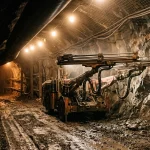
Advanced underground drilling technology is central to the Hope Bay redevelopment plan.
Strategic Growth in Nunavut
The approval of Hope Bay is a key component of Agnico Eagle’s broader Nunavut growth strategy. The company already operates the Meliadine mine and the Meadowbank Complex, which includes the Amaruq satellite pit. By 2030, the company expects its total Nunavut production to exceed 1.2 million ounces of gold annually.
More Read

This regional “clustering” strategy allows Agnico to share logistics, procurement, and specialized Arctic labor across its sites. The company has already begun discussions with the Kitikmeot Inuit Association (KIA) to update the existing Inuit Impact and Benefit Agreement (IIBA), focusing on long-term employment and infrastructure legacies for the region.
The project is also a primary beneficiary of the mining permits reform 2026 framework recently implemented by the Canadian federal government. Under the new Building Canada Act, Hope Bay was designated as a project of “National Strategic Interest,” allowing for a streamlined regulatory pathway and access to the Arctic Infrastructure Fund.
Gold Price Forecast and Economic Drivers
The timing of the approval coincides with a period of historic strength for the precious metals sector. Leading financial institutions, including J.P. Morgan and Wells Fargo, have revised their gold price targets upward for late 2026, with some analysts forecasting a trading range between $5,400 and $6,300 per ounce.
For Agnico Eagle, these prices significantly de-risk the high capital intensity of Arctic development. The projected all-in sustaining costs (AISC) for Hope Bay are estimated at $1,150 per ounce, providing a massive margin in a $5,000+ gold environment.
| Key Project Metric | Value |
|---|---|
| Initial Capital Expenditure | C$3.4 Billion |
| Average Annual Production | 408,000 oz Gold |
| Mine Life | 11 Years |
| First Production Target | 2030 |
| Estimated AISC | $1,150/oz |
“We are seeing a paradigm shift in how majors view the Arctic,” noted a senior consultant at Skillings. “The combination of high gold prices and more efficient mining news regarding federal permitting has made these large-scale, remote projects the new frontline for reserve replacement.”

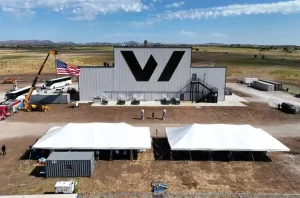
The logistical complexity of the Hope Bay project requires significant investment in roads and port infrastructure.
Navigating the Permitting Landscape
The 2026 permitting reforms have been a critical catalyst for the Hope Bay go-ahead. Historically, projects in the territories faced decade-long approval cycles due to overlapping federal and territorial jurisdictions. The new Major Projects Office (MPO) has successfully synchronized these reviews, cutting nearly three years off the expected permitting timeline for the Madrid deposit.
“The federal government’s $1 billion Arctic Infrastructure Fund is also playing a role,” said a policy expert. “By subsidizing the ‘first and last mile’ of infrastructure, they are making it possible for companies like Agnico to commit to C$3B+ spends without bearing the entire burden of northern logistics alone.”
Looking Ahead to 2030
Construction at Hope Bay is expected to ramp up in the summer of 2027, following the winter sealift. The peak construction workforce is estimated to reach 1,200 people, with a focus on maximizing Inuit participation.
Agnico Eagle’s commitment to Hope Bay serves as a benchmark for the Canadian mining industry. As the world transitions toward a more fragmented geopolitical landscape, the security of supply offered by stable jurisdictions like Nunavut is becoming as valuable as the gold itself.
Investors will be closely watching Agnico’s Q2 earnings call for further details on the procurement schedule and potential synergies with the Meliadine operation. For now, the greenlight on Hope Bay stands as a testament to the long-term viability of the Arctic as a premier mining destination.

Real-time monitoring and data integration will be used to manage the remote operations at Hope Bay.