By Charles Pitts

The convergence of artificial intelligence and baseload power has reached a critical tipping point. What began as a search for carbon-free electricity to power sprawling data centers has evolved into a strategic scramble for nuclear fuel. In 2026, the “Silicon-Nuclear Nexus” is no longer a theoretical trend; it is a multi-billion dollar reality where Big Tech firms: traditionally customers of the grid: have transformed into direct financiers and equity stakeholders in the uranium supply chain.
As hyperscalers like Microsoft, Amazon, and Google race to secure their AI future, they are fundamentally altering the economics of the mining industry. This shift is driving a structural supply deficit that analysts expect to persist throughout the decade, creating a new paradigm for both commodity prices and mining project finance.
The Stakeholder Shift: From PPA to Equity
Historically, technology companies interacted with the energy sector through Power Purchase Agreements (PPAs), essentially promising to buy electricity at a fixed price to help developers secure bank loans. However, the sheer scale of the AI energy nexus has rendered this model insufficient.
By mid-2026, the strategy has shifted toward direct involvement. Microsoft’s landmark 20-year deal with Constellation Energy to restart the Three Mile Island Unit 1 reactor served as the initial blueprint. Since then, we have seen a wave of capital injections directly into Small Modular Reactor (SMR) developers and the mines that will fuel them. Meta has announced initiatives totaling 6 GW of nuclear capacity, partnering with developers like Oklo and Vistra to ensure that their next generation of Llama models never faces a “brownout” risk.
More Read


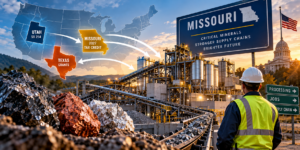
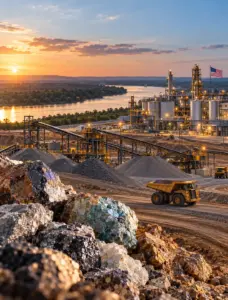
High-capacity mining operations are essential to meeting the renewed global demand for uranium and critical minerals.

This transition from “power buyer” to “energy stakeholder” is critical for the mining sector. When a credit-worthy tech giant with a trillion-dollar balance sheet provides a bankable revenue guarantee, it de-risks the capital-intensive process of bringing a new uranium mine online. For junior miners and developers, a Big Tech partnership is the new “gold standard” for project validation.
SMR uranium demand 2026: The structural deficit
The rapid adoption of SMR technology is the primary driver of this renewed urgency. Unlike traditional large-scale reactors that take decades to build, SMRs are designed for modularity and faster deployment: qualities that align perfectly with the rapid build-out cycles of AI data centers.
More Read

However, SMRs have specific fuel requirements. Many designs require High-Assay Low-Enriched Uranium (HALEU), a specialized fuel that currently has a constrained supply chain. This technical bottleneck has forced hyperscalers to look further upstream.
| Market Metric | 2026 Forecast (Base Case) | Impact on Mining Sector |
|---|---|---|
| Global Reactor Demand | 185 million lbs U₃O₈ | Higher utilization of existing mines |
| Primary Mine Supply | 165 million lbs U₃O₈ | Widening supply-demand gap |
| Annual Deficit | ~20 million lbs U₃O₈ | Upward pressure on long-term pricing |
| Hyperscaler CapEx | $15B+ (Nuclear/SMR) | Faster FID for new projects |
According to specialized industry data, the uranium price forecast for 2026 remains robust, with base-case scenarios targeting a $100–$120/lb range. This pricing environment is supported by a cumulative deficit expected to reach 300 million pounds by 2035. For the mining industry, this translates into a prolonged period of high margins and a mandate for rapid expansion.

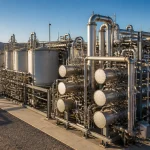
Deep-level extraction technology is being deployed to access high-grade uranium deposits as the global supply deficit widens.
Impact on Mining Stocks and Investment Flows
The “AI boom” has officially turbocharged uranium equities. Large-cap miners like Cameco and Kazatomprom are no longer just energy plays; they are being repositioned by institutional investors as “AI infrastructure” stocks. This thematic shift has attracted a new class of generalist capital that previously avoided the cyclical volatility of the mining sector.
The 2026 “catch-up trade” is particularly visible in the mid-tier and developer space. Companies with advanced-stage projects in tier-one jurisdictions: such as Saskatchewan’s Athabasca Basin or parts of the United States: are seeing aggressive M&A interest. As we have noted in our analysis of mining M&A deals in 2026, the entrance of non-traditional capital from the tech sector is driving valuations higher and shortening the time from discovery to production.

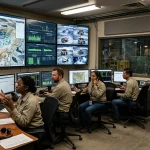
Modern control rooms integrate real-time data to manage the complex logistics of energy-critical mining operations.
Risks, Regulation, and the 2026 Outlook
While the “Silicon-Nuclear Nexus” offers a powerful growth engine, it is not without hurdles. The primary risk factors for 2026 include:
- Regulatory Bottlenecks: The Nuclear Regulatory Commission (NRC) and its global counterparts face immense pressure to streamline licensing for SMRs. Any significant delay in reactor approvals could dampen the immediate demand for new uranium fuel.
- Enrichment Capacity: Mining the ore is only the first step. The world currently lacks sufficient enrichment capacity to meet the HALEU requirements of next-gen reactors, particularly as Western nations move to decouple from Russian supply chains.
- Capital Volatility: While Big Tech has deep pockets, their investment timelines are often shorter than the 10-15 year lifecycle of a new mine. Bridging this “duration gap” remains a challenge for mining executives.
Despite these risks, the 2026 outlook for the uranium sector remains overwhelmingly positive. The integration of nuclear power into the AI data center stack has provided the mining industry with something it has lacked for decades: a high-growth, long-term, and credit-worthy source of demand that is decoupled from traditional utility cycles.

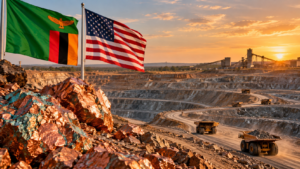
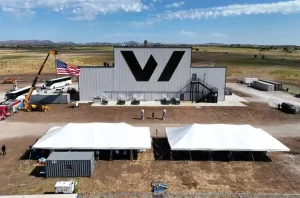
As the energy transition accelerates, remote mining infrastructure becomes a vital component of the global AI ecosystem.
For operators and investors, the message is clear: the energy requirements of the silicon world are being anchored in the bedrock of the uranium mine. The race to secure this supply is no longer just about power; it’s about the survival and scale of the digital age.