By Charles Pitts

The approval of RZ Resources’ Copi critical minerals project in New South Wales this week marks a decisive shift in the global race for resource security. While North American projects remain mired in regulatory bottlenecks, the strategic alliance between Washington and Canberra is now delivering more than just rhetoric. With the U.S. Export-Import Bank (EXIM) signaling up to US$450 million in support for the Murray Basin project, Australia is demonstrating how a streamlined regulatory environment, coupled with aggressive allied financing, is winning the “capital war” for critical minerals.
The NSW development approval for the A$693 million Copi project: a massive heavy mineral sands deposit containing rare earths, titanium, and zircon: is the first major fruit of the 2025 U.S.-Australia Critical Minerals Framework. For global operators and investors, the message is clear: the most efficient path to securing non-Chinese supply chains currently runs through the Australian outback.
The Copi Project: A Blueprint for Allied Supply
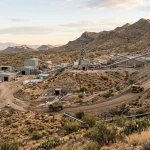
Located in the far southwest of New South Wales, the Copi project is poised to become one of the world’s most significant sources of monazite and xenotime: critical rare-earth-bearing minerals essential for high-strength magnets used in electric vehicles and defense technology. The project is designed to produce 400,000 tonnes of mineral ore annually over an 18-year mine life.
What distinguishes Copi from similar global assets is its financial and strategic integration with the United States. In early 2026, EXIM approved the project under its Engineering Multiplier Program (EMP), the first such approval for an Australian mining project since the Roy Hill iron ore mine in 2013. This “multiplier” effect is intended to de-risk the project for private lenders, creating a bridge for RZ Resources to reach a final investment decision (FID) by the end of 2026.
More Read



The US-Australia Framework: From Paper to Production
The geopolitical backdrop for this development is the United States-Australia Framework for Securing of Supply in the Mining and Processing of Critical Minerals and Rare Earths. Signed in late 2025, the framework was designed to combat China’s dominance in the sector by treating Australian projects as domestic U.S. suppliers for certain regulatory and financial purposes.
In 2026, this framework has evolved from a diplomatic memorandum into a functional financing engine. The “Single Point of Entry” mechanism between Export Finance Australia (EFA) and U.S. EXIM allows junior and mid-tier miners to apply for joint financing packages. For the Copi project, this coordination has resulted in a combined financing interest that could cover the majority of its capital expenditure, significantly reducing the cost of capital compared to projects attempting to navigate the open market or fragmented national subsidies.
More Read

Permitting Contrast: Why Australia is Pulling Ahead
The speed of the Copi approval: granted by the NSW Department of Planning, Housing and Infrastructure: stands in stark contrast to the permitting landscape in the United States and Canada. Despite federal efforts at mining permits reform 2026, many North American projects remain stuck in multi-year environmental review cycles or legal challenges from local stakeholders.
In Australia, the “Priority Project” status afforded to critical minerals has enabled a more cohesive approach. While environmental standards remain rigorous, the administrative process is characterized by greater transparency and fixed timelines. This efficiency is a primary driver for the current shift in institutional capital.
“Australia is proving that you can have high ESG standards without the ‘regulatory purgatory’ we see in other Tier-1 jurisdictions,” notes one Sydney-based resources analyst. “When you combine that with U.S. government-backed debt, the risk-reward profile for Australian assets becomes incredibly compelling.”

Investor Outlook: Identifying 2026 Market Trends
The “capital war” is fundamentally changing how investors evaluate the sector. As we move deeper into the year, the search for critical minerals stocks to buy 2026 is shifting toward companies that can leverage “friendshoring” financing.
Investors are increasingly prioritizing three factors:
- Jurisdictional Speed: Projects in regions with established “Critical Mineral Zones” or fast-track approvals, like NSW and Western Australia.
- Allied Financing: Stocks with formal Letters of Interest (LOI) or approval from EXIM, EFA, or Japan’s JOGMEC.
- Downstream Integration: Companies like RZ Resources that are planning to supply directly into the U.S. or Japanese magnet supply chains.
While the lithium market has seen significant volatility: as noted in our Lithium Market Outlook 2026: the demand for rare earths and titanium minerals remains robust due to defense and aerospace requirements.
Market Snapshot: Critical Minerals Project Pipeline 2026
| Project | Location | Primary Mineral | Funding Status (2026) | Est. Production |
|---|---|---|---|---|
| Copi Project | NSW, Australia | Rare Earths / Zircon | US$450M EXIM / EFA Support | Late 2028 |
| Burke Hollow | Texas, USA | Uranium | Production Update Pending | 2027 |
| Nolans Bore | NT, Australia | NdPr Rare Earths | A$840M Gov Debt Package | 2027 |
| Eneabba | WA, Australia | Rare Earth Refinery | $1.25B EFA Loan | 2026 (Ops) |
The Strategic Oversight of Allied Assets
Managing these multi-billion dollar strategic assets requires a level of technological integration that is becoming the new industry standard. At the Copi site, RZ Resources is expected to implement advanced fleet management systems and autonomous monitoring to meet the strict reporting requirements of its international financiers.
As explored in our analysis of autonomous haul trucks and 2026 ROI data, the integration of AI and real-time telemetry is no longer optional; it is a prerequisite for the transparency demanded by government-backed lenders like EXIM.

Conclusion: A New Era of Resource Diplomacy
The success of the Copi project’s approval process suggests that the U.S.-Australia alliance has successfully created a “fast lane” for critical mineral production. For the mining industry, the lesson of 2026 is that geological potential is no longer the sole determinant of a project’s value; the ability to navigate the intersection of geopolitical finance and regional regulation is now the ultimate competitive advantage.
As Australia continues to streamline its permitting processes, it is likely to remain the preferred destination for Western capital. While the U.S. continues to debate internal mining permits reform 2026, its capital is already voting: and it’s voting for Australia.